Beltane / May Day

For those who are interested in May Day/Beltane celebrations:

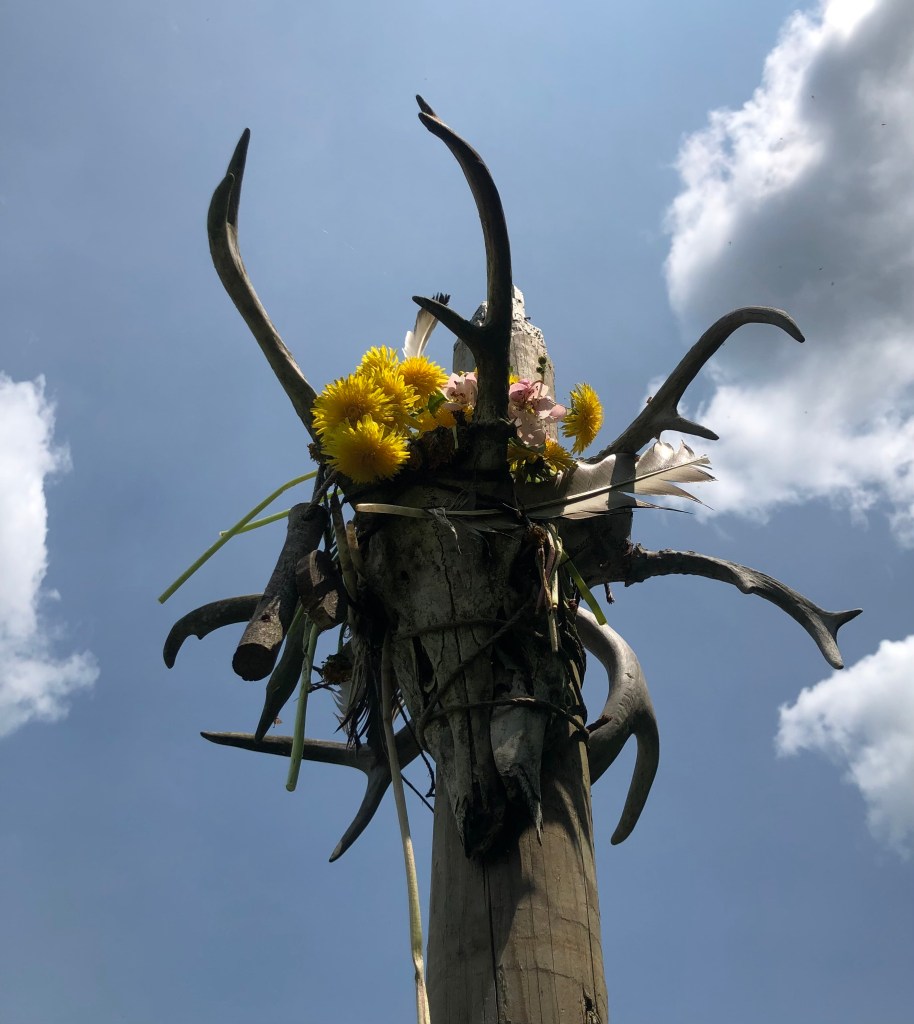
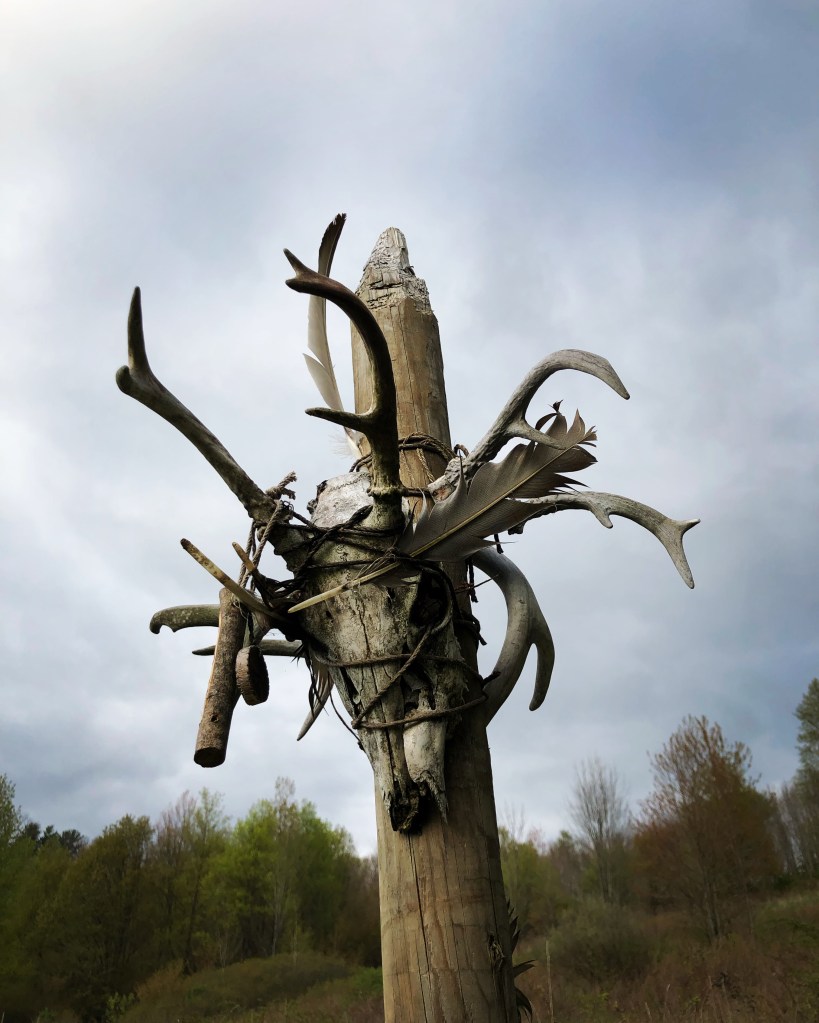
On Beltane, we uncover our Freyr idol (who is covered at the conclusion of Samhain) and carry him around the land in a small mock-wagon.

After this, we return Lord Freyr (Ingwaz/Fraujaz/Frodi) to his place on the land where offerings are made for his blessings and gifts.

We will conclude by performing a small purification rite in order to clear obstructions of body, mind, and spirit.

We will also host some small (less formal) activities over the weekend, get in touch if you want to facilitate something or plan a meeting.

Regarding “events”,

Although we would like to include everyone in these celebrations, we must be cautious with how many people we involve on sacred days. We feel that by being honest about this, it will deter confusion and/or people coming here for the “wrong reasons.”

We ask that only serious practitioners are present for main ritual functions in order to preserve the sanctity of the experience for those involved. Everyone has a job to do and no one should be looking to “hang out” or simply be entertained.

We dedicate this time of the year entirely to the Lord of Peace and Prosperity in hopes that all beings receive blessings of health, growth, and light.

If this sounds like something that interests you and/or your family, please don’t hesitate to reach out to us.

Hopefully in the near future we can have more hands available to accommodate more folks, but until then, we can only do so much.

Hailaz / Namaste

-Ansuz Society

Goþa Fara (Spring Equinox 2023)

We are happy to bring you this new song “Goþa Fara” on this beautiful and auspicious Spring Equinox.

‘Goþa Fara’ is a Gothic phrase meaning, “have a good journey,” and is meant here as a blessing to all beings embarking on new journeys, whether in life or in death.

This song, in particular, is dedicated to my Grandfather, who passed away this month at 94 years old, still standing tall.

May his travels be light and swift.

To all those who are honoring the Dawn goddess today, may these words bring benefit:

Hailaz Austrō, great goddess of Spring,

Lady of light, and slayer of darkness.

May our offerings encourage your loving guidance,

On this equal day and equal night;

Your affluent heat, and cosmic glow,

The gifts of prosperity, among us all.

We give to you, this song of praise,

Exchange our devotion for longer days.

Hailaz / Namaste

-Ansuz Society

Lord of the Wind

We’ve added a new song to the channel titled “Lord of the Wind.”

This is a devotional song to the All-Father, Odin. 

“…Holding wisdom old as time,

Elder god of masks and rhymes, 

Flames rise to lick the sky,

Send our gifts to those on high…”

May all beings benefit. 

Hailaz / Namaste 

-Ansuz Society 

Kali Ma

We’re very happy to bring you this new song in honor of the great mother Kali. 

Like the Germanic Mother Goddess, Kali has many different forms and names, also known as Durga, Parvati, and Mahadevi.

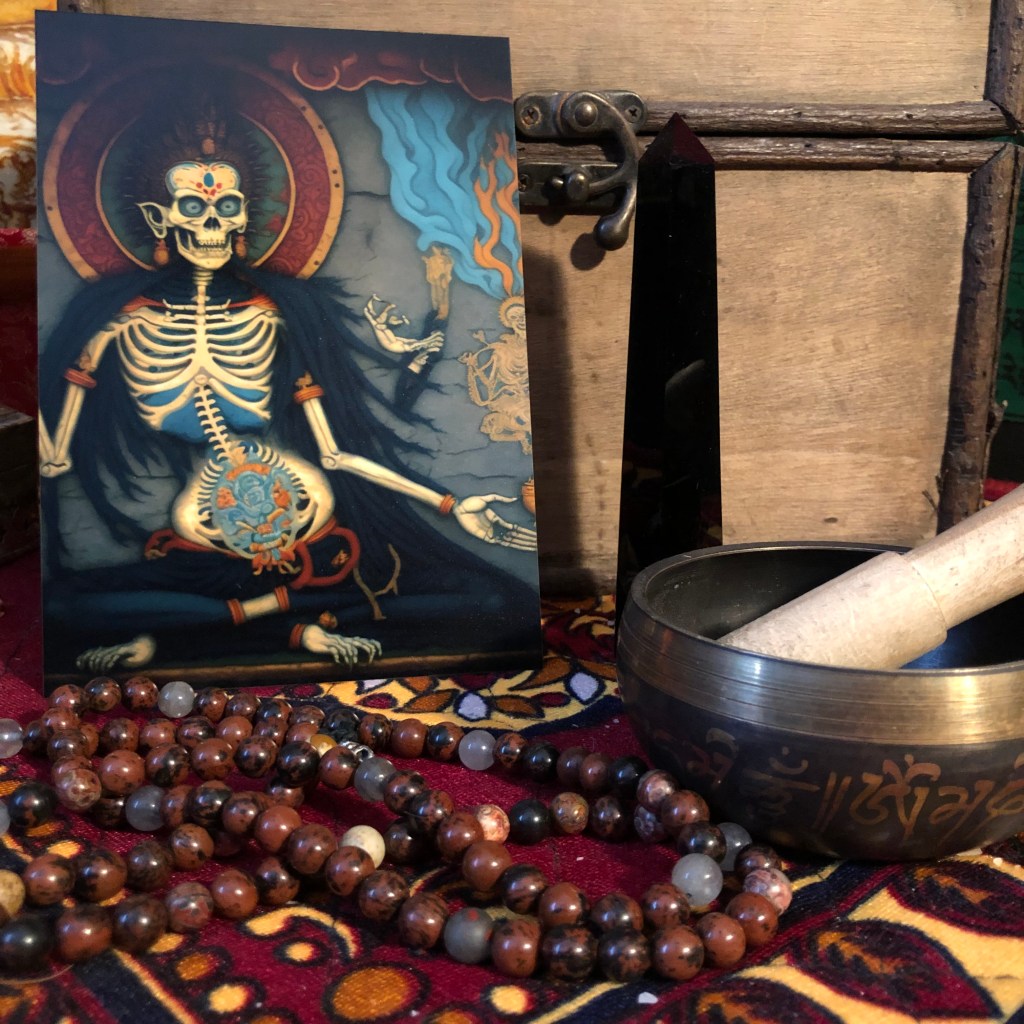
To many practitioners, Kali represents duality and the entirety of the moving cosmos, pure energy (Shakti).

We bow to the Great Mother in all her forms. 

May all sentient beings utilize divine energy. 

Our thoughts and love are extended to those affected by the Earthquakes in Turkey in Syria. 

Hailaz / Namaste 

Gautis Fraujō (Lady of Gaut)

We’re very happy to bring you this new song dedicated to the goddess Frigga/Freyja.

Although debated, we hold the belief that Freyja and Frigga are two faces of the same goddess; Freyja being a later form of the goddess with various versions of Frigga preceding her throughout the Germanic speaking world.

Some of these names include the Proto-Germanic Frawjǭ, Gothic Fraujō, and Old English Frōwe.All of these are titles designating a noble woman and translate to “Lady”, as one would call their king “Lord.”

Gautis Fraujō, therefor, can be read as The Lady of Gaut, or, the Wife of Odin.

We hope this short Gothic language prayer will be of use to your practice and that it brings you closer to this divine essence.

May all beings be embraced and nourished by her great love and beauty.

Recorded, mixed, and mastered January 2023 at Ansuz Society, Western New York.

All music and sounds by Ansuz Society.

Ending the Futhark with Dagaz

We end the Futhark with Dagaz (ᛞ) because we believe that after one realizes the true Self, represented by Othala (ᛟ), one can then “break the cycle” of saṃsāra, like the breaking of dawn on a new day. 

This process of enlightenment is represented by Dagaz.

In reality, whether you end with Othala or Dagaz, one can theoretically come to the same conclusions either way. 

These choices are not meant to be dogmatic, but philosophical. Make the decision on your own, based on research and practice. 

Hailaz / Namaste 

Society Priorities

Our mission is to aid and facilitate spiritual development within the sphere of our ancestral religions.

When it comes to socio-political matters, we believe it is up to each individual to make those decisions on their own.

We believe the body is a shell, concealing our true essence beneath. This essence transcends terrestrial limits.

In this way, the space we provide is meant to remove your attachment to the flesh, letting your spirit flourish; undistracted by the noise of the outside world.

We believe in living an ascetic lifestyle and are first and foremost concerned with humanities liberation, one person at a time.

Please, do not approach us if looking for a place to voice your political opinions, whether right or left, as we have nothing to offer in this regard.

Hailaz / Namaste

-Ansuz Society

Frau Holle

Frau Holle is a sprit of the woodland, lakes and ponds. A “spinster” and figure of reward and punishment.

She visits our dwellings during the winter months, often during the Twelve-Nights of Yule.

If the chores at home are not completed or if simple tasks are neglected, she appears as an ugly, old, disheveled witch with a fiery tongue and burning gaze. She will bestow chaos on the homestead.

If she finds that the home is orderly, that all tasks have been done, she appears as an ethereal figure dressed in flowing white. Frau Holle will then hand out gifts from her kitchen and garden – nuts and apples, fruits of the earth and baked goods.

Frau Holle has gone by many names in Germanic Mythology, including Mother Earth, Perchta, Odin’s Wife, Berchta, Frigg and several more.

The rolling fog is said to be the smoke from Frau Holle’s hearth. When she bakes, the whole sky turns red. On stormy evenings, bolts of lightening are known as Hollenzopf, “Holle’s braids,” revealing her long white hair.

In winter, she shakes her bedcovers and down pillows, filling the air with feathers which causes it to snow.

-Ansuz Society

What is Ansuz?

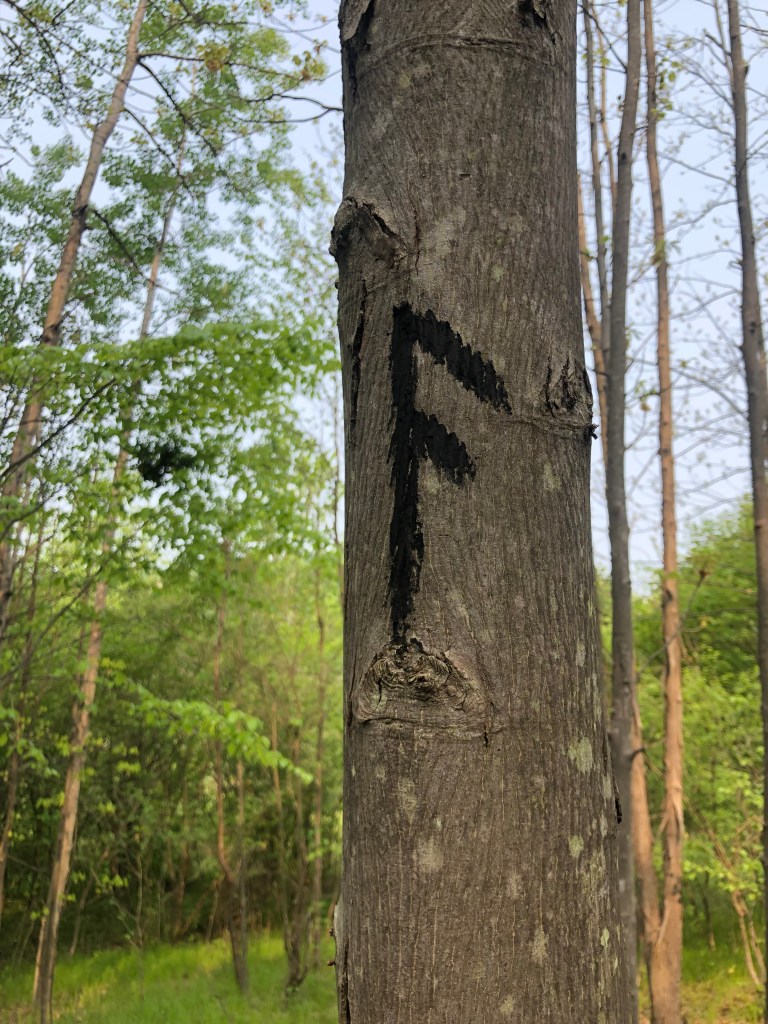
Ansuz is that which gives animation to the otherwise lifeless body. Ancient man associated the breath with life, and likewise, associated it with the spirit or soul. We are given insight into this rune in the very word animation. To “animate” means to “give life or spirit,” something the god Odin is known for gifting mankind with. It is said in ‘Voluspo’ verses 17 and 18:

“17. Then from the throng, did three come forth,

From the home of the gods, the mighty and gracious;

Two without fate, on the land they found,

Ask (man) and Embla (woman), empty of might.

18. Soul they had not, sense they had not,

Heat nor motion, nor goodly hue;

Soul gave Othin, sense gave Honir,

Heat gave Lothur, and goodly hue.”

Here we see mention of Othin as the “soul giving” god; one that grants the Self, the breath, and the life within us. Odin is the force that animates life as one would consider Chi or Prana. Ansuz can be related to the wind in this way, as the wind is the same as the breath. When we reach back into antiquity, we find the proto-Indo-European word hems- meaning “to engender, beget, give birth to,” eluding to this life-giving, all-encompassing force associated with the breath. The ancient man knew he was much more than just the physical workings of his body or impulses of the mind, therefore, the idea of the breath took on the utmost sacred context, as this is something that happens within us, invisible to the eye save the movement of the chest.

In Sanskrit, we have the relative words ásu meaning “life force, breath, spirit” and ásura meaning “godlike and powerful.” This word would evolve to become related to demons or foreign tribes in later Hinduism, similar to the Thurs of Germanic tradition. The original Asura can be equated with their cognate family of gods in the Norse pantheon, the Aesir, who were essentially Sky Gods. Ansuz encompasses this family of gods and ultimately represents the chief of the pantheon, Odin/Wotan/Wodanaz. 

In Old English, the word ōs means “god,” which gives us insight as to what this word might have meant to a pre-Christian pagan. It would be fair to say this idea of god was entirely wrapped up with the concept of the breath, the mouth, and sounds that are created from within it.

Another connection we find is in the word animism, meaning “a belief that an immaterial force animates the universe,” and “a belief that spirits inhabit some or all classes of natural objects or phenomena.” Here, we are clearly looking at this belief as a fully established religious understanding, the oldest of what we have currently been able to uncover when discussing the long history of human spiritual practice. With absolute clarity, we can see this ancient system and secret was carried through time and culture into the North in the form of Odin and through this particular rune, which carries enormous weight in the entirety of the Futhark. Ansuz represents this encompassing force, which has been utilized and studied as an occult science for thousands of years in countless forms of yoga and meditation; the breath is the bellows of the forge within.

In the ‘Old Icelandic Rune Poem’ it is said:

“Oss is the old Gaut,

and Asgards prince,

and Valhalla’s leader.”

Here it is clear that this rune is connected to Odin and further to the ancient “Gaut,” Odin’s title in the Gothic tongue, the oldest recorded Germanic language.

Of course, when discussing all of this, it would be wrong to not include speech, wisdom, and poetry in our analysis of Ansuz and its’ god form of Odin. In both the “Old Norwegian Rune Rhyme” and the “Old English Rune Poem” this rune is associated specifically with the mouth. In the ‘Old Norwegian Rune Rhyme” it is said:

“Oss is the way of most journeys;

But a sheath is that for swords.”

Here I think we are seeing another allusion to Gaut, which is a title meaning “to pour or flow out of.” This may mean that most journeys were undertaken on water as opposed to on foot; as the sail goes “the way” of the wind. It can also mean that one must cultivate good speech, as “the way” here most certainly pertains to a type of heathen dharma system. One must follow the way of wisdom on most journeys. The mouth (as the pen wasn’t exactly a means for these people yet) was the tool and portrayer of wisdom, expressing the ideas, memories, and inner workings of the human being. The second line could be referring to those who hold their tongue too often or treat their mouth as a sheath, as one who stays silent may often not be viewed as the wisest or most able.  The “Old English Rune Poem” reinforces these theories:

“Os is the source of all speech,

Wisdom’s upholder, and a comfort to counselors;

For every earl, happiness and hope.”

We must remember that the Germanic tribes prior to Roman conquest were a mostly illiterate and orally maintained people and culture. All of their stories and mythologies were encased and crystallized in poetry, song, and the runic system. With this in mind, we can understand why speech and it’s use, function, and manipulation, was of the most importance if one was to attain any merit in the realms of wisdom. Ansuz, in this way, is one of the most crucial runes for us to understand and incorporate if we are to learn the true secret beneath the layers of conscious existence.

-Ansuz Society