Cernunnos

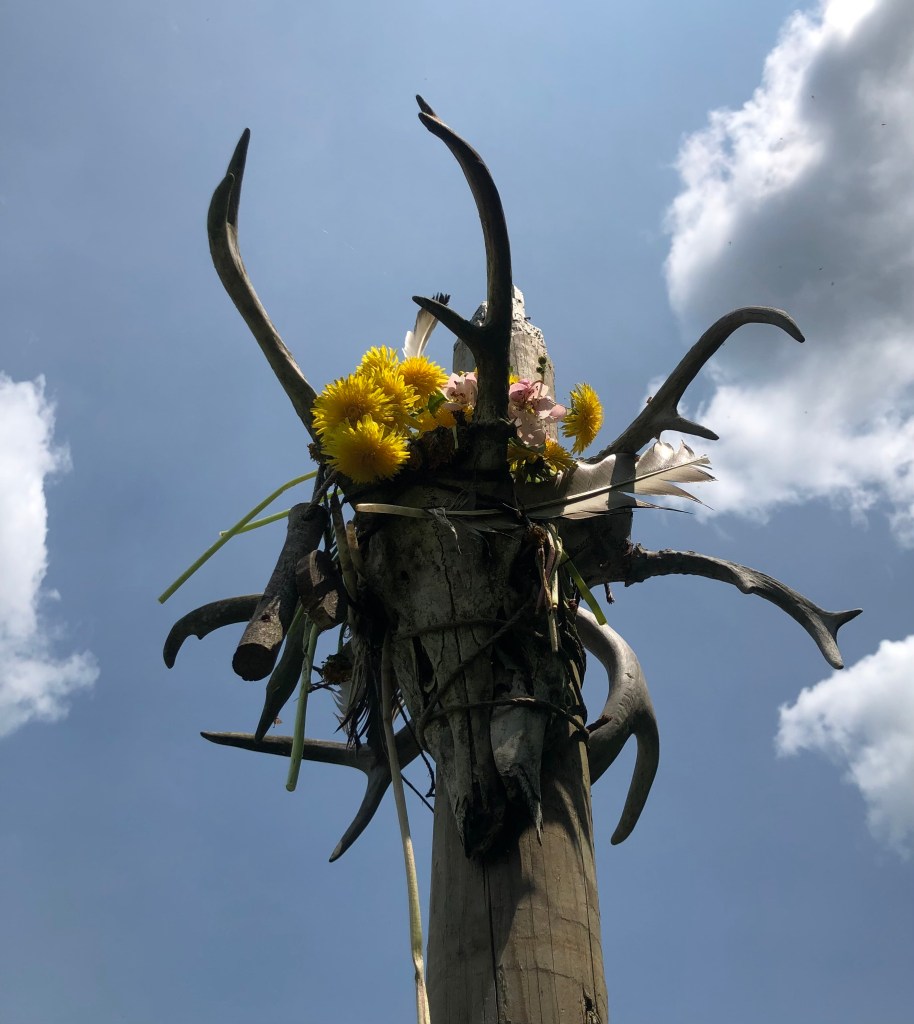
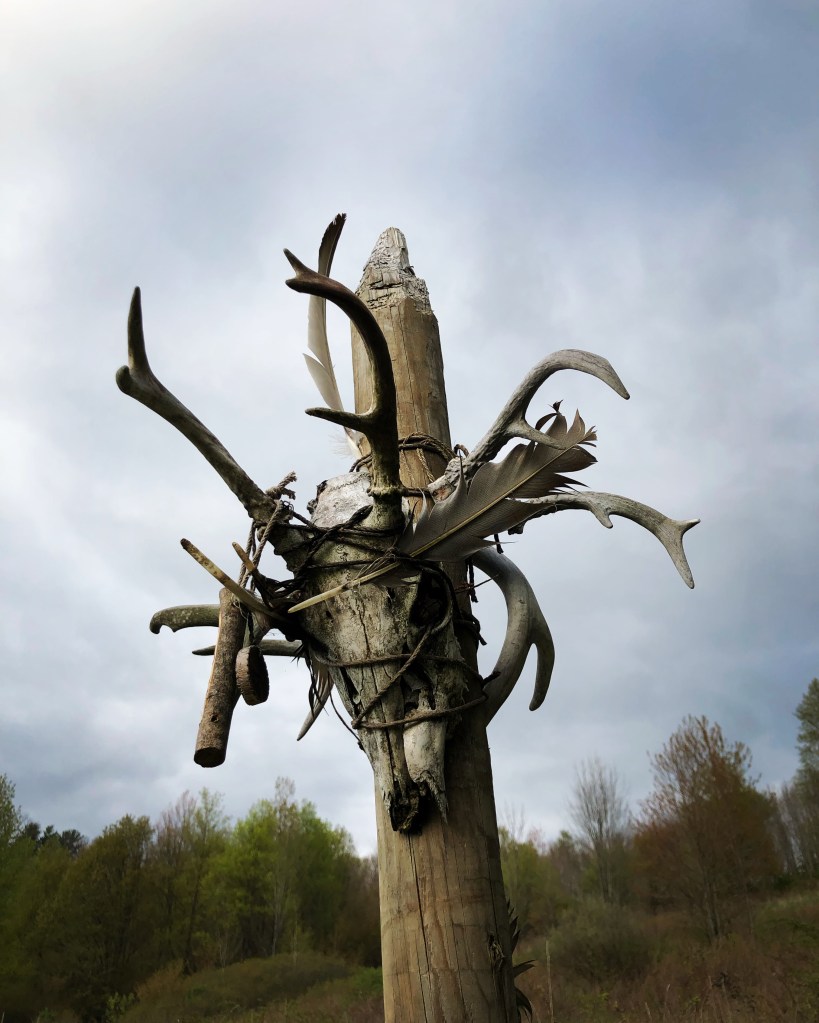
Cernunnos/Hurnaz represents the spirit, soul, or incarnation of the forest itself. Unlike most gods, which fill an archetypal form congruent to their other roles, Cernunnos isn’t necessarily one that the practitioner aspires to be(come), but rather, a spirit one asks for protection, aid, and blessings from. Our idol stands at the edge of our property where things are considered “ordered,” representing the liminal space between the safety of the homestead and the inherent dangers of the wilderness. With this in mind, and within a Germanic context, we see Cernunnos representing an older, ancient, natural “Jotun” or “Wight” type of spirit; one that we must form a relationship with if we want to have a completely unified connection and understanding of the forest and all of its life forms.

It is here we bring the dead we find and offer fruits and other foods for the wildlife, the children (and embodiment) of the forest. Cernunnos represents all landavetter and spirits residing in the mysterious woods.

This god, as all others, has many different venerative systems, especially based on where it is you are practicing. If in a more urban setting, one might view this god as the Roman’s or civilized Gaul’s did, as a fertility and commerce god. If in the rural or farther reaches of society, one might have a more direct relationship with this god as the embodiment of the forest, as one by the sea would visualize the entirety of the ocean as Poseidon or Njord. Likewise, many cultures practiced this type of veneration in association with their geographical surroundings. Volcanoes, mountains, forests, lakes, oceans, etc., all embodied a certain god form inherent within them. This is where polytheism and animism overlap, forming the mindset of many of our ancestors prior to Christianity.

May we all venerate the great spirits of nature.

Beltane / May Day

For those who are interested in May Day/Beltane celebrations:

On Beltane, we uncover our Freyr idol (who is covered at the conclusion of Samhain) and carry him around the land in a small mock-wagon.

After this, we return Lord Freyr (Ingwaz/Fraujaz/Frodi) to his place on the land where offerings are made for his blessings and gifts.

We will conclude by performing a small purification rite in order to clear obstructions of body, mind, and spirit.

We will also host some small (less formal) activities over the weekend, get in touch if you want to facilitate something or plan a meeting.

Regarding “events”,

Although we would like to include everyone in these celebrations, we must be cautious with how many people we involve on sacred days. We feel that by being honest about this, it will deter confusion and/or people coming here for the “wrong reasons.”

We ask that only serious practitioners are present for main ritual functions in order to preserve the sanctity of the experience for those involved. Everyone has a job to do and no one should be looking to “hang out” or simply be entertained.

We dedicate this time of the year entirely to the Lord of Peace and Prosperity in hopes that all beings receive blessings of health, growth, and light.

If this sounds like something that interests you and/or your family, please don’t hesitate to reach out to us.

Hopefully in the near future we can have more hands available to accommodate more folks, but until then, we can only do so much.

Hailaz / Namaste

-Ansuz Society

Goþa Fara (Spring Equinox 2023)

We are happy to bring you this new song “Goþa Fara” on this beautiful and auspicious Spring Equinox.

‘Goþa Fara’ is a Gothic phrase meaning, “have a good journey,” and is meant here as a blessing to all beings embarking on new journeys, whether in life or in death.

This song, in particular, is dedicated to my Grandfather, who passed away this month at 94 years old, still standing tall.

May his travels be light and swift.

To all those who are honoring the Dawn goddess today, may these words bring benefit:

Hailaz Austrō, great goddess of Spring,

Lady of light, and slayer of darkness.

May our offerings encourage your loving guidance,

On this equal day and equal night;

Your affluent heat, and cosmic glow,

The gifts of prosperity, among us all.

We give to you, this song of praise,

Exchange our devotion for longer days.

Hailaz / Namaste

-Ansuz Society

Lord of the Wind

We’ve added a new song to the channel titled “Lord of the Wind.”

This is a devotional song to the All-Father, Odin. 

“…Holding wisdom old as time,

Elder god of masks and rhymes, 

Flames rise to lick the sky,

Send our gifts to those on high…”

May all beings benefit. 

Hailaz / Namaste 

-Ansuz Society 

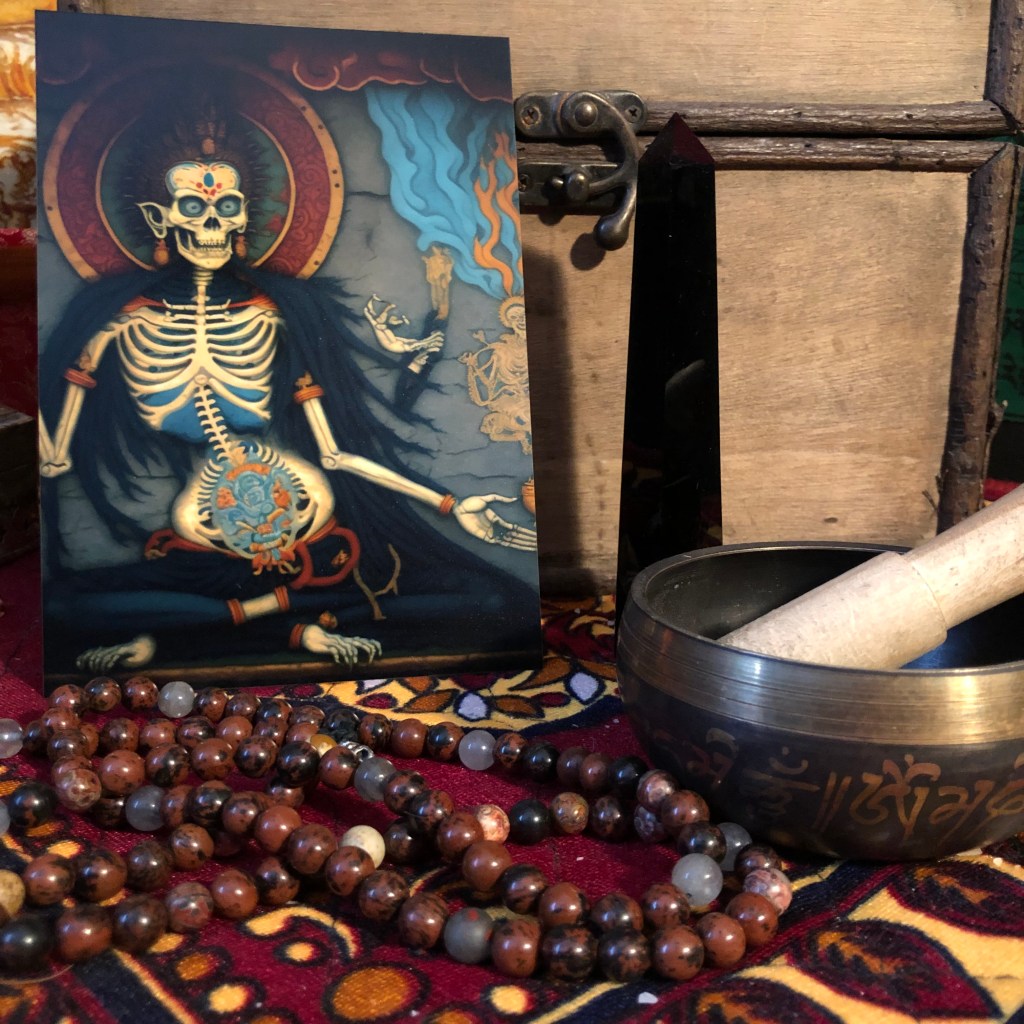
Kali Ma

We’re very happy to bring you this new song in honor of the great mother Kali. 

Like the Germanic Mother Goddess, Kali has many different forms and names, also known as Durga, Parvati, and Mahadevi.

To many practitioners, Kali represents duality and the entirety of the moving cosmos, pure energy (Shakti).

We bow to the Great Mother in all her forms. 

May all sentient beings utilize divine energy. 

Our thoughts and love are extended to those affected by the Earthquakes in Turkey in Syria. 

Hailaz / Namaste 

Gautis Fraujō (Lady of Gaut)

We’re very happy to bring you this new song dedicated to the goddess Frigga/Freyja.

Although debated, we hold the belief that Freyja and Frigga are two faces of the same goddess; Freyja being a later form of the goddess with various versions of Frigga preceding her throughout the Germanic speaking world.

Some of these names include the Proto-Germanic Frawjǭ, Gothic Fraujō, and Old English Frōwe.All of these are titles designating a noble woman and translate to “Lady”, as one would call their king “Lord.”

Gautis Fraujō, therefor, can be read as The Lady of Gaut, or, the Wife of Odin.

We hope this short Gothic language prayer will be of use to your practice and that it brings you closer to this divine essence.

May all beings be embraced and nourished by her great love and beauty.

Recorded, mixed, and mastered January 2023 at Ansuz Society, Western New York.

All music and sounds by Ansuz Society.

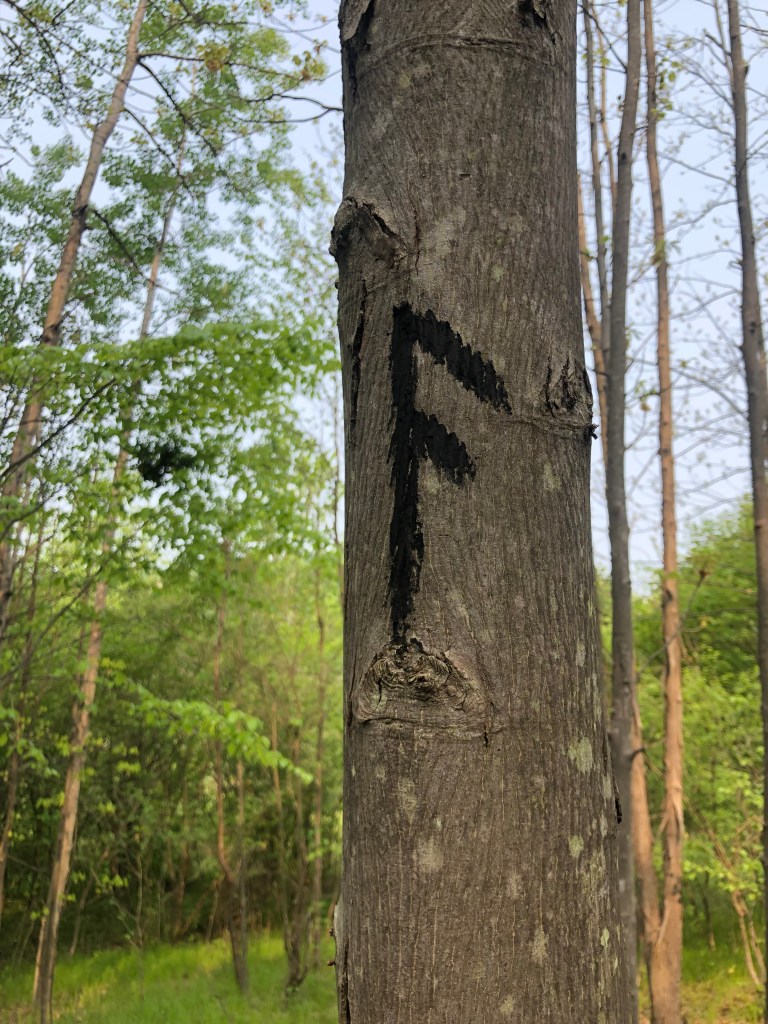
Ending the Futhark with Dagaz

We end the Futhark with Dagaz (ᛞ) because we believe that after one realizes the true Self, represented by Othala (ᛟ), one can then “break the cycle” of saṃsāra, like the breaking of dawn on a new day. 

This process of enlightenment is represented by Dagaz.

In reality, whether you end with Othala or Dagaz, one can theoretically come to the same conclusions either way. 

These choices are not meant to be dogmatic, but philosophical. Make the decision on your own, based on research and practice. 

Hailaz / Namaste 

Society Priorities

Our mission is to aid and facilitate spiritual development within the sphere of our ancestral religions.

When it comes to socio-political matters, we believe it is up to each individual to make those decisions on their own.

We believe the body is a shell, concealing our true essence beneath. This essence transcends terrestrial limits.

In this way, the space we provide is meant to remove your attachment to the flesh, letting your spirit flourish; undistracted by the noise of the outside world.

We believe in living an ascetic lifestyle and are first and foremost concerned with humanities liberation, one person at a time.

Please, do not approach us if looking for a place to voice your political opinions, whether right or left, as we have nothing to offer in this regard.

Hailaz / Namaste

-Ansuz Society

Frau Holle

Frau Holle is a sprit of the woodland, lakes and ponds. A “spinster” and figure of reward and punishment.

She visits our dwellings during the winter months, often during the Twelve-Nights of Yule.

If the chores at home are not completed or if simple tasks are neglected, she appears as an ugly, old, disheveled witch with a fiery tongue and burning gaze. She will bestow chaos on the homestead.

If she finds that the home is orderly, that all tasks have been done, she appears as an ethereal figure dressed in flowing white. Frau Holle will then hand out gifts from her kitchen and garden – nuts and apples, fruits of the earth and baked goods.

Frau Holle has gone by many names in Germanic Mythology, including Mother Earth, Perchta, Odin’s Wife, Berchta, Frigg and several more.

The rolling fog is said to be the smoke from Frau Holle’s hearth. When she bakes, the whole sky turns red. On stormy evenings, bolts of lightening are known as Hollenzopf, “Holle’s braids,” revealing her long white hair.

In winter, she shakes her bedcovers and down pillows, filling the air with feathers which causes it to snow.

-Ansuz Society