
Subscribe to continue reading
Subscribe to get access to the rest of this post and other subscriber-only content.

Subscribe to get access to the rest of this post and other subscriber-only content.
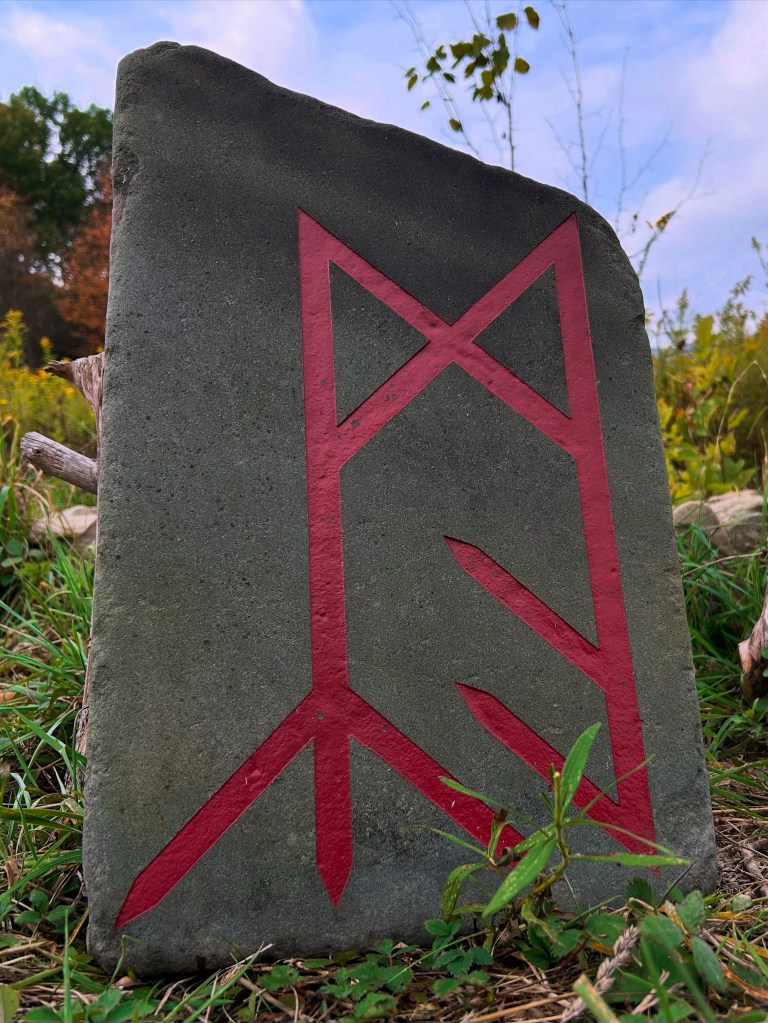
Tiwaz is an interesting rune, representing a broad spectrum of meanings, associations, and uses. In Proto-Germanic, Tiwaz means “deity/god,” later developing into the Norse god Týr. In most cases, it is agreed upon that Tiwaz is a rune of victory, war, warriors, justice, and the sky. Tiwaz stems from the Proto-Indo-European word deywós, meaning “god,” which was a deification of the daytime sky. When Tacitus wrote of the Germanic tribes, he spoke of a certain war god they worshiped, identifying it with the Roman god Mars. Tiwaz is cognate with the Greek god Zeus, another great sky god of the Pagans. The Luwians of Anatolia had a Sun-god named Tiwaz as well, with another epithet of Tati, meaning “father.”
There has been much debate over whether Tyr or Odin was the chief god of the Germans before Christianity, mostly due to this word and the emphasis on the god in Tacitus’ Germania. Not only this, but on the Negau helmets found in Slovenia, dated 450-350 B.C., we have a runic inscription reading “Teiva,” which would indicate ancient worship of this god. I think it is possible there was more emphasis on Tiwaz in some areas of Europe, although, it could have just been a term used for Odin. There are many names for Odin ending with the word –týr, including Valtýr (god of dead warriors) and Farmatýr (god of cargoes). When viewing Tiwaz (and its shape) through the lens of Odin, we can attribute this rune to his magic spear, Gungnir, which he hurls over enemies that are to be conquered. In Völuspá verse 23, it is said:
“On the host his spear
did Othin hurl,
Then in the world
did war first come…”
Evidence for Tiwaz being invoked in war or magical purposes can be found in Sigrdrífumál, verse 6, where the great valkyrie Sigrdrífa states:
“Winning-runes learn,
if thou longest to win,
And the runes on thy sword-hilt write;
Some on the furrow,
and some on the flat,
And twice shalt thou call on Tyr.”
In Old English, this rune/god was called Tīw. This is where we get our modern word Tuesday from, as the second day of the week in the time of the early English was called Tiwesdæg. The “Old English Rune Poem” states:
“Tyr is a certain sign, it keeps covenant well
with athelings; it is ever on course
above the night’s mists; it never misleads.”
This poem invokes Tiwaz as a “certain” sign, meaning one that is unwavering. Tiwaz is stable and stoic, as Tyr is a god of honor, justice, and judgement. This is another reason why Tiwaz can be seen as a “pillar” that holds up the sky. This is reflected in another Old English word, tīr, meaning “fame, glory, honor.” As an Aesir god, his duty is to reign over judgement and order, helping to protect the gods from the forces of chaos. His purpose is unclouded in their ranks, representing stability within social and cosmic law. The last line mentions this rune as a star, likely Polaris, which has been used to navigate the northern hemisphere since antiquity. With this perspective, one can see the Tiwaz rune when looking at the “Little Dipper.” Dr. Svoboda writes in “Vastu: Breathing Life into Space” about Polaris and its significance:
“This resonance between life and the northern direction is significantly enhanced by the eternal presence in the northern sky of the polestar, Polaris. The northern pole of the Earth’s axis of rotation points almost directly at Polaris, which makes the heavens appear to rotate around the star, and makes it a reliable guide to north. The polestar’s relative immobility garners it the Sanskrit name Dhruva (‘fixed, stable, immovable’).”
When assigning Polaris to Tiwaz, we can see why some rune adepts have perceived this rune as a “World Pillar” or “Irminsul.” The apparent reliability of the polestar’s location provided ancient man with a “certain” celestial guide, directing one towards north. Like the World Pillar, Tiwaz stands for stability and union between Earth and Sky.
The “Old Norwegian Rune Rhyme” is less descriptive but more cryptic in tone, stating:
“Tyr is the one-handed among gods.
Oft the smith has to be blowing.”
This poem invokes Tyr’s mythological context of being one-handed, as he is said to have had one bitten off by the wolf Fenrir. The second line refers to Tyr as a war-god, as during wartime, a smith is hard at work making weapons and tools of battle. Tyr is usually identified with the sword, and thus, would further connect him closely with the smith and smithing. The mysterious tone of this poem is likely due to poetic artistry.
The “Old Icelandic Rune Poem” adds another element to the previous poem, stating:
“Tyr is the one-handed Ase, and the wolf’s leftovers,
And the helmsman of holy sites.”
Here we see the same concepts brought up as in the former poem, although, the second line clarifies the connection with the wolf, as “leftovers” refers to Tyr after having his hand bitten off. The “helmsmen” of holy sites is an interesting line, showing Tyr’s role as a mediator, judge, or presence of justice. Tyr is truth, law, and vigilance.
Tyr’s shape has been said to symbolize a pillar holding up the sky, perhaps giving deeper insight into his role in the ancient worldview of the Pagans. Tiwaz was a protector and upholder of the glorious daytime heavens, the unobstructed Sun and fair weather on the land. Another Proto-Indo-European root word for Tiwaz is dyew, meaning “sky, Heaven” and “to be bright.” Together, with the notion of a god, I believe it is without doubt that we are looking at a sky-god representing the unobstructed Sun. The glory of the daytime sky was synonymous with God and Heaven.
In conclusion, it is clear that Tiwaz, in his many forms and titles, has persisted for many thousands of years throughout time and culture. Whether associated directly with the sky, Heaven, and Sun, or whether associated with honor, oaths, and justice, we see a god of high rank and merit. No matter which pantheon we look at, Tiwaz can be found in some way, ranking highest or near the top. The Old English associated this rune highly with honor, fame, and glory, while the continental tribes associated Tiwaz more directly with war and victory. Either way, Tiwaz can be attributed to warriors, weapons (spears/swords), and victory in battle. For modern Pagans, we shouldn’t overlook this god in our practice, as Tuesdays should be dedicated to his admiration and veneration. Tiwaz is a good god for those interested in criminal justice, honor, or warfare. In this respect, Tiwaz has long been a god of warriors and military personnel. Therefore, practicing Pagans in the military should look to this god for protection and guidance. May he protect you always and fill you with the courage and stability to do what is right.
-Wandering the Runic Path: Esoteric Analysis of the Germanic Runes
Samhain is a time when the spirits of nature, the dead, and the gods are most likely to emerge to interact with the living. During these days, when daylight becomes shorter and shorter, nature around us seems to die and shed its vitality, leaving stalks, trunks and branches barren, resembling bones protruding from the soil. This is a time when we are meant to shift our focus from outdoors to indoors and shed our dead weight from the previous year, like the trees shed their leaves. By doing this, we are mirroring the process of nature and turning our energy inward. With Samhain come the final harvests, meaning that soon the workload will be drastically cut down and many daily activities will change. This time is to now be replaced with indoor tasks such as tending to animal pens, preserving food, repairing tools, spiritual practice, and performing various crafts such as woodworking, writing, or blacksmithing.
It is customary to make offerings to the deities, ancestors, and wandering spirits during this time in order to receive their favors, blessings, and good luck. We please the spirits to avoid their wrath. We offer to the ancestors to uphold family honor. We give our veneration to the gods to gain their power and visage. By performing rituals during this particular time of year, one enables themselves to better access various forces and gain insight into the past, future, and matters regarding cause and effect within the present which will aid one’s progress moving forward.
In “A History of Pagan Europe” by Jones & Pennick, they write:
“Samhain (1 November). This was the most important festival of the year, showing the pastoralist, rather than agricultural, origin of the calendar. Samhain was the end of the grazing season, when flocks and herds were collected together, and only the breeding stock set aside from slaughter. It was a time of gathering-together of the tribe at their ritual centre for rituals of death and renewal, dedicated to the union of the tribal god (in Ireland, the Daghda) with a goddess of sovereignty, the Morrigan, or, more localised, Boann, deity of the River Boyne.”
As the last of the great harvests, Samhain brings reward and celebration, the end of one year and the transition into the next. According to many European tribes, Samhain marked the turning point between the years and represented the New Year celebration of their cultures. With Samhain we descend into “night,” resembling the womb of the goddess or the abode in which she resides. The goddess reigning over this time of year was almost always in the form of a grim, fate-controlling hag or crone, such as Hel, Frau Holle, or the Morrigan.
In “Celtic Mythology and Religion,” Macbain writes:
“Equal to Beltane in importance was the solemnity of Hallowe’en, known in Gaelic as Samhuinn or ‘summerend.’ Like Beltane it was sacred to the gods of light and of earth; Ceres, Apollo, and Dis also, must have been the deities whose worship was honoured. The earth goddess was celebrated for the ingathering of the fruits; Apollo or Belinus and Proserpine were bewailed for their disappearing from earth, and Dis, who was god of death and winter’s cold, and who was especially worshipped by the Celts, as Caesar says, was implored for mercy, and his subjects, the manes of the dead, had special worship directed to them. It was, indeed, a great festival—the festival of fire, fruits, and death.”
In reference to Norse and Germanic paganism, we see the worship of elves and land spirits was also common during this time. In modern Germanic paganism, many people celebrate Samhain under the name Álfablót (Elf Sacrifice), which is when harvests are reaped and sacrifices are made to the elves and gods. Elves and the dead are strongly connected to the ancient burial mounds of the Pagans, therefore, much of the activity surrounding this festival would have likely involved distributing offerings to the gods and conducting sacrifices directly upon the mound (or grave) of the dead. This is where the elves were thought to reside.
In our own Samhain/Álfablót practice, the fair-weather god Freyr, king of the elves, is given one last celebration of reverence, being the center focus of the rites and rituals of the two-day celebration. He is invoked and offered substantial food and drink, as well as prayers and songs, showing devotion and thanks to the spirits and deities of abundance and prosperity. The event begins on the last day of October (Halloween) and ends the night of November 1st, when Freyr is returned to his resting place until the first of May. This cycle is reflected in “Myths and Symbols in Pagan Europe,” where Davidson writes:
“He [Freyr] is said to have brought good seasons and prosperity to the land, and so when he died the Swedes brought great offerings to his mound, and believed that he remained alive and potent in the earth. The connection which seems to exist between Freyr and the elves and land-spirits thus provides an additional reason to associate them with the dead in their graves.”
Because of these associations, we place the death and rebirth of Freyr (the power of good weather and abundance) within this span of time (Nov 1-May 1). However, this is not the only way to do things nor is it recommended to everyone, as how one celebrates these sacred events revolves much around one’s lifestyle, geography, deity devotion, and overall means. For us in Western New York, this timeline coincides seamlessly with the natural cycle of the weather, and therefore is easy to follow. For those in a different climate or location, this may not make as much sense, and it is recommended to follow the patterns around you regarding these things.
In “Sorcery and Religion in Ancient Scandinavia,” Vikernes gives us further examples pertaining to the Nordic new year and pre-Christian Halloween customs. He writes:
“The first holiday of the year was New Year’s Day, better known in English as Halloween (“initiation evening”), and in Gaelic as Samhain (“summer’s end”). The sorcerers and later the gods (i, e. religious kings) and their challengers dressed up as different creatures with access to the realm of the dead. They fasted and hung their clothes in a tree or the gallows, to make it look as if they had hanged themselves. They wounded themselves with a spear, to bleed, smeared ash or white mud all over their bodies to look like the dead, they put on masks and sacrificed a cow or an ox on the grave mound, so that the blood poured down and into the grave underneath; into the realm of the dead. They then blew a horn, in the Bronze Age a lure, to open up the entrance to the realm of the dead. They then travelled into hollow trees, caves in the mountain, holes in the ground, or more commonly into the burial mounds. These were all seen as entrances to the realm of the dead. Inside, in the darkness of the grave, a woman was waiting for them, sprinkled in the sacrificed animal’s blood and dressed like the queen of death. They then took at least some of the objects their dead forebears had been buried with and brought them back out.”
As we can see, Samhain (or Álfablót) type celebrations were not only distinct to Celtic and Germanic culture, but rather appear as a pan-European tradition representing a celebration of the dead, the ancestors, and the final harvests of the year. It is clear that no matter which form of paganism(s) one practices, the celebration and event known to us now as Halloween is of very ancient and sacred importance. Not only as a transitional period between the seasons, but as a time when it was believed to be easiest to pierce the veil between dimensions and interact with beings outside of our normal cognition. It is because of the superstitions and Pagan worldviews of the past that we have many (if not all) of our current yearly celebrations in the West.

Rune classes will be available again starting in October.
These will be focused on the Elder Futhark and be catered to each individuals current level of use, study, and interests.
Lessons will be private, either in person or via zoom. No fee or donation required, just a genuine urge to learn the runes in the traditional oral fashion.
Please use the contact form for all questions and inquires.
Hailaz
Eihwaz is a rune of life, death, rebirth, endurance, strength, and the eternal cycle of change. This rune represents the Axis Mundi, the metaphysical center of the world. In the Germanic tongues, this would have gone by the name Irminsul, Donar’s Oak, or Yggdrasil, and represented the great World Tree of Pagan cosmology. This tree was believed to connect all the realms of existence, resembling the “shamanistic” cultures of Eurasia, associating it with Odin’s magical abilities and techniques. These practices allow him to travel as he pleases around the 9 different worlds of the cosmos, linked together by the great World Tree. The word Yggdrasil gives us this clue, as ygg(r) means “terrible one” and drasil means “steed,” reading something like “The Steed of the Terrible One.” This alludes to Odin’s ability to use this tree (or pillar) to travel outside of himself.
When looking at the rune poems, we only have one which speaks of Eihwaz directly, as the other two poems invoke the rune Ýr instead, connecting it more so to the previously mentioned Yggdrasil. The “Old English Rune Poem” states:
“Yew is on the outside an unsmooth tree,
Hardy and earth-fast, fire’s keeper,
Under-rung by its roots, best on the estate.”
This poem has a mysterious tone to it, although objective in its observation. The ancient Yew trees of the UK are highly impressive giants to behold, reaching back in time over 2000 years in some cases. These trees, like the first line says, are quite “lumpy” and gnarled, having many twists and turns. It isn’t hard to imagine why our ancestors used this tree to represent so much in their lives, as its immense canopy and knotted sprawl resembles the growth of family “trees” and essentially all concepts that seem to “branch” or “stem” from one another. The second line alludes to the endurance that Yew trees exhibit, boasting long life spans. The last line pertains to these trees having wild and intense root systems. This would make them “best on the estate,” as the Yew has a fairly slim chance of being knocked down by wind or storm.
It must be noted that while the Anglo-Saxon runes do include Eihwaz under the name ēoh, which means “Yew,” they also include another rune in their Futhorc; the rune Ýr (ᚣ), which distinctly means “Yew bow.” It is strange that the Anglo-Saxon Futhorc retains the original Eihwaz rune while also incorporating the Younger Ýr rune as well. This, to me, does indicate a significant difference in the two runes, and perhaps any attribution to bows and arrows may be strictly given to the Ýr rune, while the Eihwaz rune retains a predominant symbol of the World Tree: life, death, and rebirth.
My theory is that the Anglo-Saxons had, by this time, new geographical associations with the runes. Once they got to England, they must have been in total awe of the Yew trees. Either this, or they noticed how their Celtic adversaries/neighbors held this tree in high regard. We can see evidence for this connection in the Proto-Celtic word iwos, meaning “yew.” Perhaps these mighty Yew trees were not as common or prominent as was the Oak or other sacred trees on the continent. I believe evidence for this can be found in the absence of any word for “Yew” in the Gothic language, enforcing the Celtic influence on this word and rune. In its original form, Eihwaz would have likely been associated with the Oak, as in Gothic, the work aik means “Oak.” Not only this, but the root word eih, in Old High German, also means “Oak.” We can assume this rune came from the East, and not the West, therefor, the word Eihwaz would have most likely been a formal name for the Oak. When looking for past reference to Indo-European World Trees, the Oak is by far the most frequently described, with other minor references to Birch, Beech, Apple, Olive, and certain types of Evergreens; in this case, most notably the Yew.
The Younger runes of the North would later evolve in connection with these older runes, invoking again the infamous Yew tree. Although, their Futhorc would no longer contain the Eihwaz (ᛇ) rune. Instead, they carry over only the Ýr rune in the form of (ᛣ), associating it more directly with the Yew tree. The “Old Norwegian Rune Rhyme” states:
“Yew is the winter-greenest of trees,
It is wont for what burns to singe.”
This poem invokes the “evergreen” concept, which in the Pagan north was a symbol of eternal life. This is one reason for the incorporation of the “Yule Tree” in the winter customs, as it was a sacred reminder of beauty, life, and strength. The second line, I believe, is referring to its excellent quality as firewood, as Yew wood has been said to burn the brightest. We have no mention of bows here, so it must have been more-so acquainted with hearth-fire, life, and hope.
Lastly, the “Old Icelandic Rune Poem” gives us another angle to view this rune, in connection to the death of Baldr. It is said:
“Yew is a bended bow,
and iron eager to break,
and an etin’s arrow.”
Here, we first see mention of the bow. As stated before, the Yew was among the top choices, if not the best choice for bow making in the Heathen north. Therefore, Eihwaz / Ýr can be associated with bows, arrows, and archery. It has been theorized that this can also relate to “tension,” as the pulled bow string is very tense and holds a lot of energy within it. This, some say, can be associated with death when life’s energy is finally released. The last line can without doubt be associated with the events surrounding the death of Baldr. Baldr is killed (technically) by the etin (giant) Loki’s arrow/dart made of mistletoe, something that grows on various trees and was of a highly medicinal and magical use in the north. Of course, it is the blind god Höðr who throws the dart, but it was Loki who planned the act. This story can be found in Gylfaginning in Snorri’s “Prose Edda.”
In conclusion, we can see that Eihwaz is connected to the primordial World Tree of the European peoples, whether in the form of the Oak, the Yew, or any other tree that our ancestors venerated as a sacred center. Its association to eternal life, death, rebirth, and endurance can be seen in the symbolism of the evergreen; the ancient symbol of everlasting existence. We’ve also uncovered direct evidence concerning the possibility that this rune was originally a symbol of the Oak tree, as this was the most sacred tree cross-culturally amongst ancient Europeans, being idolized extensively from Ireland to Finland, Portugal to Greece. The Oak was the main representation of the World Tree cosmology. Therefore, this rune can not only take the meaning of “Yew,” but also of “Oak.” This, to me, would all depend on the geography surrounding the one using the runes.
-Wandering the Runic Path: Esoteric Analysis of the Germanic Runes
Isa is among the most powerful of runes, although, easily overlooked due to its simple form. On the outside, this rune represents ice and the powers inherent within “frozen” states of being; nearly removed from the degradation of time. When looking for etymological clues during the research of this rune, I was unable to break free from the “ice,” so to speak. No matter where I searched, there wasn’t much material stretching this rune out. So, most of what we can say about Isa is largely subjective, although, some basic core concepts have been generally accepted as interpretations, such as focus, patience, and stillness. These ideas we will explore more as we dive further into this mysterious rune.
Isa is a word that hasn’t changed much since its’ theoretical use in Iron Age Germania. We still see it quite clearly in the English word ice and German eis, even loaning itself to Japanese in the form of aisu. At the root of Isa is the Proto-Indo-European h₁eyH- meaning “ice, hoarfrost, rime,” most likely referring to the icy residue left upon sprawling steppe landscape in cold months. Later, this would evolve into the Old Norse íss, which also means “ice.” This word, likewise, is used as a kenning or poetic reference to a sword, which clearly resembles the long, sharp icicles that hang from roofs and rafters in the winter.
The “Old English Rune Poem” gives us a beautiful description of this rune, stating:
“Ice is extra cold and immensely slick,
It glistens clear as glass, most gemlike,
A frost-wrought floor, fair to behold.”
The first line seems to have a precautionary feeling to it, expressing the obvious physical qualities of the rune. The second line starts to unfold the more metaphysical associations that the Anglo-Saxons attached to it, as ice can have a “mesmerizing” effect on the observer; clear like glass and mimicking the beauty of a fine gemstone. The final line shows that the ice was held in reverence by our ancestors, as the force held in Isa is one of beauty, radiance, and power. It is in this sense that we can attribute qualities like focus, stillness, and even a sense of “peace” to Isa.
Isa represents meditation, concentration, and patience. Isa is still and quiet, as one who is meditating. Isa is concentrated matter; power focused inward. Isa is a force of patience, taking long periods of “human time” to affect its surroundings. We can attribute a great energy and power to Isa, the same force inherent in continents of ice and gargantuan glaciers that carve the face of the Earth. This is an unseen and long-lasting power, extremely “dense” and focused; opposite to the quick and clearly observable power of fire which consumes all. It is with this evidence that we can grant this rune half of the powers fundamental in the Norse creation myth.
With Isa, we can invoke the now familiar concept of “Odin’s 9,” being a rune that is unchanged whether right side up or inverted. In relation to Odin, it is said that he is the offspring of the ice giant Bestla and the primordial being Borr, connecting him and the giants/jötunns directly to this rune. This evidence enforces theories about Isa regarding the past and its’ association with memory. Ice freezes and “locks” matter within it, encasing things and moments in a space beyond time. Essentially, ice holds the memories of the past within it. This has been further reinforced in modern science, as it has been proven that water can actually carry information within it. Isa slows and halts the forces of change.
This brings up the god/giant Mímir. Mímir translates to “memory” and further connects to Proto-Indo-European (s)mer- which means “to fall into thinking, remember, care for,” or essentially, meditation. This applies connection to Isa and to Odin, as meditation and the unlocking of “memories” is one of Odin’s most sought-after goals, consulting often the head of Mimir for advice and counsel. It is with this evidence that, I would argue, Isa is synonymous with the traditional symbol of the “crystal ball” that magicians, wizards, and various occultists have been said to consult throughout history. Mimir’s head could very well be associated with a large, clear gemstone or crystal, one which Odin uses for prophecy, wisdom, and focus.
Within Isa we also have a key to creation, as this rune represents a building block of design; the ancient and primordial ice that met with the all-encompassing “heat” or furious fire in the middle expanse of Ginnungagap (yawning abyss). With Isa we can see the ancient concept of Germanic “duality.” Not as one dealing necessarily with good and evil, but with “fire and ice”; chaos and order, change and stillness.
The ”Old Norwegian Rune Rhyme” gives us two rather obscure lines regarding Isa, stating :
“Ice we call a broad bridge;
A blind man needs to be led.”
Surely the Norwegians experienced a difference in form and force of ice than their ancestors from the steppe, as the first line alludes to massive and expansive “bridges” of ice. The second line seems to me to indicate that if one is “blind” or inexperienced that he will need to be led safely over these “bridges of ice.” Here we can see this rune is able to be applied to many circumstances in life where one is potentially “blind,” making this rune a more practically applicable concept.
Lastly, we will refer to the “Old Icelandic Rune Poem,” where it is said:
“Ice is the rind on a river, and a wave’s roof,
And a danger for doomed men.”
Here we have a more objective picture of this rune. We see its form as the “rind” or crust/peel of the river, referring to the layer of ice upon the top of bodies of water. We also have a reference to oceanic ice as the “wave’s roof,” something the Icelanders would have had an intimate relationship with. Lastly, the obvious is stated as a warning, that this rune is danger for men who are “doomed.” On land or sea, if you are unprepared for ice, indeed you will likely be doomed.
To conclude, it is without a doubt evident that Isa holds immeasurable power within it. Although it is arguably the “quietest” of all the runes, I think as with people, this is a sign of a different type of power; one that is slow, focused, precise, calm, and internalized. Cunningness as opposed to a purely aggressive, outward force. Isa is mastery over the forces within, a “silence” that is akin to serenity. With Isa we can associate deep and focused acts of meditation, a Shiva-like “stillness” that deeply reverberates within, radiating a crystal brilliance internally. This is the clear awareness of Odin; clear, bright, and entirely concentrated.
-Wandering the Runic Path: Esoteric Analysis of the Germanic Runes
Padmasambhava, also known as Guru Rinpoche, was a legendary tantric Yogi and the founder of Vajrayana Buddhism in Tibet, bringing the religion from India around the 8th century and establishing the first Tibetan sect now known as the Nyingma (Old School). He is considered by many to be the second Buddha, foretold by Shakyamuni (Gautama Buddha) to reveal the tantric/esoteric (Vajrayana) teachings and to propel and protect Buddhism in the degenerate age (Kali Yuga).
Jigme Khyentse writes in the book “White Lotus,”
“Before he [Shakyamuni] passed into mahaparinirvana, the Buddha prophesized that his activities would be prolonged and his teachings propagated and protected by Padmasambhava, whom Tibetan Buddhists frequently refer to as Guru Rinpoche, the Precious Master.”
Vajrayana is an outgrowth of Mahayana Buddhism and involves a wide collection of practices aimed at providing liberation (nirvana) in a single lifetime, hence its name meaning “Thunderbolt Vehicle.” This differs from the Mahayana (Great Vehicle) path where it can take an untold number of lives (incarnations) to accomplish complete liberation. Because of this difference in philosophy, the indigenous Tibetan and Himalayan peoples could only be persuaded by the infinite power of the Vajrayana and were quite reluctant to adopt Buddhism prior to Padmasambhava’s arrival.
Through various trials and tribulations, Padmasambhava was able to subdue the powerful gods and beings who inhabited the region of Tibet. In doing so, he gained their favor and service in return, incorporating them into the Buddhist religion as protectors and stewards of the Dharma. This is why we see numerous gods from other pantheons mentioned in the rituals and myths of tantric Buddhism, as Vajrayana practitioners of all nationalities seem to include their own ancestral deities into their practice. This is easily observed in the Tibetan, Japanese, Chinese, and Mongolian variants of Vajrayana, where each culture has created a syncretic and unique flavor of religious practice, not completely removed from its source but rather philosophically reformed and reworked.
The mantra of Padmasambhava OM AH HUM VAJRA GURU PADMA SIDDHI HUM is one of the most popular and powerful mantras used in Tibetan Buddhism, recited often to instantly evoke the Guru, gain enlightenment, and achieve siddhi (occult power). It can be translated in many ways and has various levels of meaning, but a general interpretation of the syllables would be:
OM AH HUM – Purifies body, speech, and mind.
VAJRA GURU – Perfect Teacher.
PADMA – Lotus, synonymous with nature of mind.
SIDDHI – Occult power, success in practice, accomplishment.
HUM – The syllable of enlightenment, the unshakable nature of ultimate truth.
Padmasambhava permeates everything and exists everywhere, nestled into the very fabric of space and time. At the time of his death (parinirvana), he achieved “Rainbow Body,” dissolving into light and leaving behind nothing but hair, nails, and clothing. He is known also as Padmakara (Lotus-Born), meaning he is born in our minds, existing eternally in the unstained regions of our consciousness, quickly summoned by this sacred formula. This mantra should be recited as often as needed, whether for guidance, protection, clarity, wisdom, or any other purpose.
OM AH HUM VAJRA GURU PADMA SIDDHI HUM
Subscribe to get access to the rest of this post and other subscriber-only content.
Subscribe to get access to the rest of this post and other subscriber-only content.
Lughnasadh is named after the Celtic Sun god Lugh. This is a time when the first harvests of the year would be brought in and prosperity would begin to be felt amongst the community. Summer is fully in bloom and the golden fields and vibrant flowers mirror the glory of the powerful Sun above. During this time, people would feast and make offerings to the gods with the first fruits of the year. During Lughnasadh, there would be singing, music, games, competitions, and much more, as the people could finally begin to enjoy the rewards of their hard work so far that year. Traditionally, Lughnasadh is the first of the 3 great harvest celebrations, kicking off the sacred celebrations when humans reap the results of what they have sown.
In “Celtic Mythology and Religion,” Macbain writes:
“It is called in Scottish Gaelic “Lunasduinn,” in Irish “Lunasd,” old Irish “Lugnasad,” the fair of Lug. The legend says that Luga of the Long Arms, the Tuatha De Danann king, instituted this fair in honour of his foster-mother Tailtiu, queen of the Firbolgs. Hence the place where it was held was called Tailtiu after her, and is the modern Teltown. The fair was held, however, in all the capitals of ancient Ireland on that day. Games and manly sports characterised the assemblies. Luga, it may be noted, is the sun-god, who thus institutes the festival, and it is remarkable that at ancient Lyons, in France, called of old Lug-dunum, a festival was held on this very day, which was famous over all Gaul.”
Wrestling tournaments, races, and various games would have been held during this time in honor of the god Lugh, who is known for being highly skilled in many different areas. Archery, stone lifting, and weight throwing contests were said to have occurred, continuing into the modern day with summer events like the Highland Games. Sacrifices were also common in Pagan times, generally of a bull, and a feast would be made from its flesh, while a portion of the blood and other pieces were given to the gods.
In “A History of Pagan Europe” by Jones & Pennick, it is said:
“Lughnasadh (1 August, also called Bron Trograin) appears to have been imported into Ireland at a later date, perhaps by continental devotees of Lugh, who in the Irish pantheon is a latecomer, the ildánach, master of all skills, more modern in character than the other goddesses and gods. Correspondingly, Lughnasadh differs from the other three festivals in being agrarian in character, marking the harvest, and baking of the first loaf from the new grain. The deity honoured at Lughnasadh was Lugh, who was said to have instituted the games in honour of his foster-mother, Tailtiu. Tailtiu (Teltown) is in fact the name of the site of the festival in Tara. It is an ancient burial ground, and its name is thought to mean ‘fair’ or ‘lovely’, so if it ever was associated with a presiding goddess of that name, like Demeter in Greece she would have ruled both the Underworld and the fruits which sprang from it.”
In modern Germanic Pagan practice, Lughnasadh is recognized as Freyfaxi or “Frey Day,” replacing the Celtic Lugh with the Norse Freyr. Special and careful thanks are given to Lord Ingwaz/Yngvi/Freyr during this time to honor his power and acknowledge his benevolence. A general sense of peace should be felt on this day as well as an internal feeling of gratitude for all one has in life. As a god of wealth, Freyr makes us reflect on the things that make us feel a sense of prosperity in our lives.
In “Sorcery and Religion in Ancient Scandinavia” by Vikernes, it says:
“The 15th day of Alfheimr was Harvest Sacrifice (No. Slatteblot), also known as Wake-Up-Day, known from Gaelic as the festival of Lugh (“light”). The day marked the beginning of harvest. Before harvest could begin the grain spirit was killed and burned, or it was – in the shape of a goat made from last year’s straw – cut into bits and pieces and buried in the field’s four corners and in the field itself. By the time of the Bronze Age the spirit of light and grain had become a goddess and a god, Sibijo and Fraujaz, known from the Scandinavian mythology as Sif and Freyr respectively. The grain deity was still represented by a straw figure in animal form – usually a goat. In addition to this, the god was cut down with a sax, sickle or scythe in a sword dance. Finally, a symbol of the god, usually a loaf of bread or (in the most ancient of times) a cone, was cut into bits and pieces and buried with the straw animal in the field/meadow. The grain spirit had to die and be buried in the ground for new grain to come. They took the first straw harvested and made a new animal of it, then stored it in a safe place for next year’s Harvest Sacrifice.”
In summary, whether celebrating Lughnasadh or Freyfaxi, this is a time when the first fruits of the year are reaped and specific rituals are undertaken to ensure the fertility of the land. Skills are put on display and the community is brought together under a common aim: prosperity, happiness, and peace. It is important to give thanks to natural and local spirits for their blessings, and to the gods for their gifts. During Lughnasadh, we revel in the light, we feast, and we celebrate our good fortune.

 Ansuz Society