Ostara / Equinox Hails!

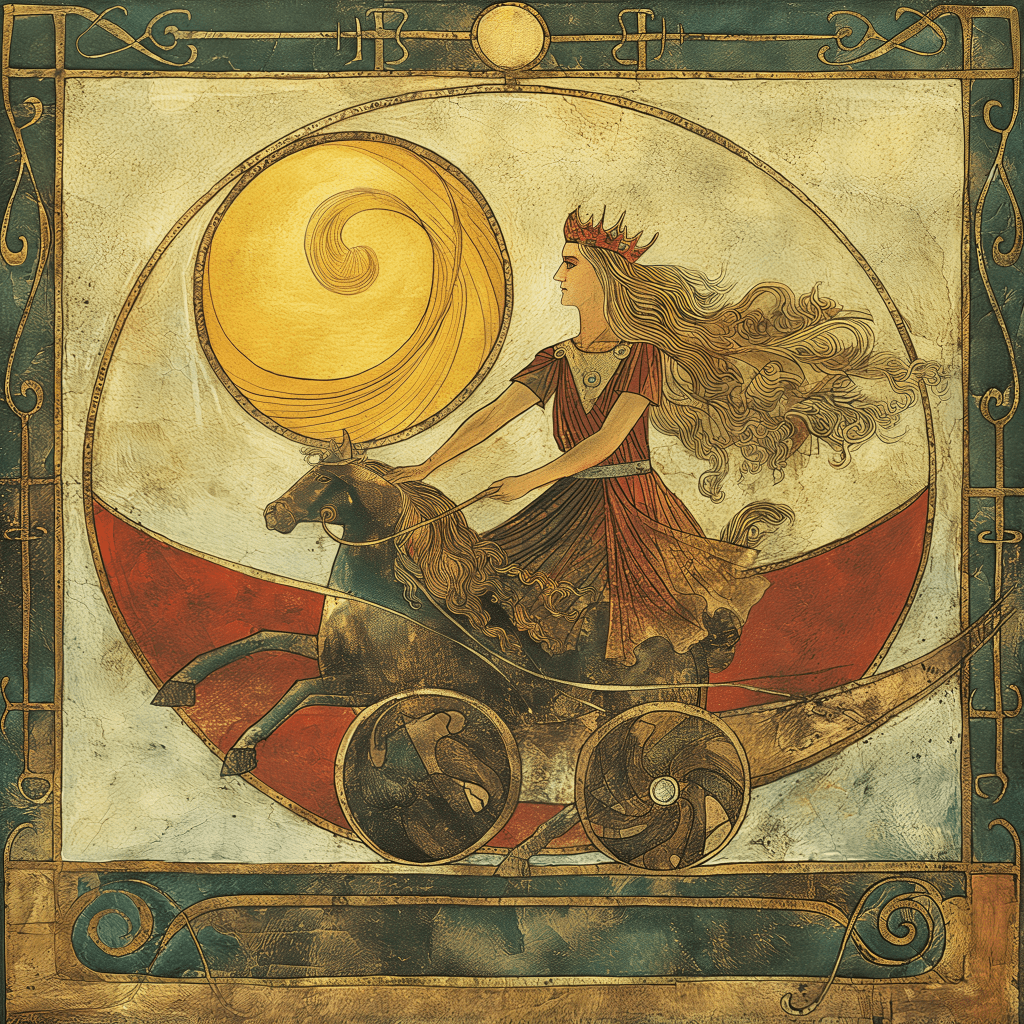
The Spring Equinox marks the traditional Easter celebration, the moment when the Sun crosses the equator from south to north. This is when animals like rabbits, deer, chipmunks, and other creatures of the forest begin to have their offspring. Various flora also emerge around this time, dotting the landscape with hints of color. During the Spring Equinox we pay special attention to the great Goddess in her youthful form of Ostara, Goddess of the Dawn. Ostara is associated with the rising Sun in the East, fertility, and light; a beacon of joy and good fortune. To many ancient Germanic Pagans, Ostara was credited with Springs deliverance. From her name we derive the modern word Easter, nodding to the Pagan origins of this holiday. To Ostara we make offerings and pray for a good year, thanking her for the return of the light. In one particular myth, Ostara transforms a bird into a rabbit who would then lay colorful eggs for her, showing us where the core symbolism of our modern holiday came from.

Hailaz Austra!

#ostara #spring #equinox #paganism

Kenaz

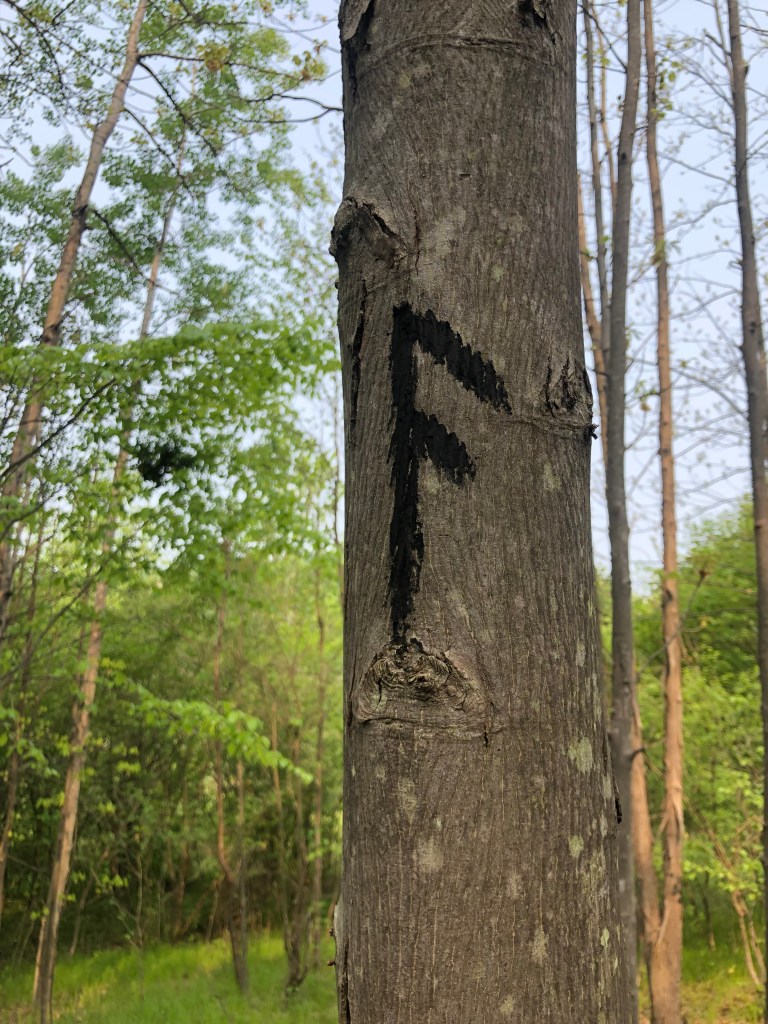
ᚲ / C / K

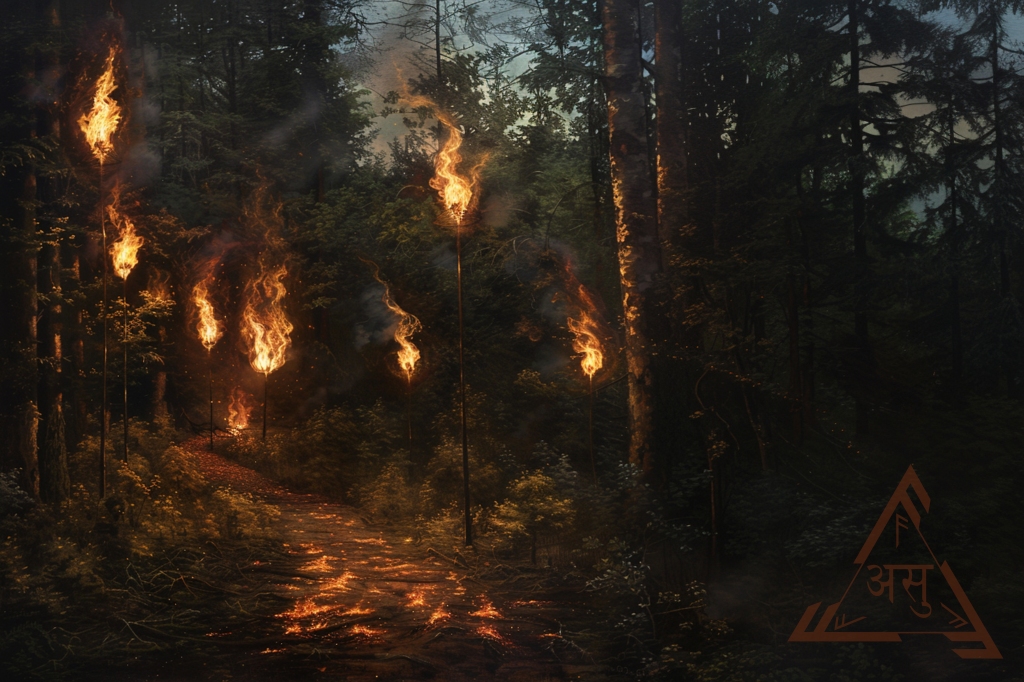
Kenaz is a particular rune, changing dramatically in context from Elder to Younger runes. The continental Germans seemed to hold this rune in a more positive light than their Scandinavian neighbors in the North. Kenaz is a reconstructed word from Proto-Germanic meaning “torch,” associated with creative fire, skills, knowledge, and teaching. The torch is that which illuminates the darkness, showing us the way in places unknown. This has been equated with an internal creative “spark” as well, which I think is reflected in the hard “k” sound represented by this rune. If we look to the Gothic language, we find evidence for this theory in the kindred word kōnja which refers to pine sap. This must be directly related to the torch, as pine/spruce has long been a favored wood for this use. 

The Gothic name for this rune is kosma/kusma, stemming from kunnan meaning “to be able, to know how,” referring to one’s inner abilities and skills. This word travels through time and tribe almost unchanged in sound and meaning, showing up in modern English in the words know and keen. In my opinion, the best example of this concept is crystallized in the Swedish word konst, meaning “art, knowledge, science, magic, secret,” and in the cognate German word kunst meaning “skill, craft, ability, magic.” This internal power of knowledge, associated with a craft or specific artistic focus, is the secret “light” side of the Kenaz rune, symbolizing our ability to make things known, to teach them, and to exhibit mastery in arts, crafts, intellectual or occult matters. 

 When looking for clues in the rune poems, the only evidence we find in relation to a “torch” is from the ‘Old English Rune Poem,’ where it states: 

“Torch is known by each of the living through its fire

-bright and blazing- it burns oftest

Where the athelings are at ease indoors.”

 Here it is clear that the word “torch” is denoting skill as a display of one’s “inner fire.” This is something (as a torch in the dark) that all can witness. “Bright and blazing” is the external effect of mastery and true skill in craft, as creation is a bright and blazing power. The last line denotes a sense of peace inherent in the “athelings,” which means “nobles, lords, heroes.” This clearly reminds an English reader of the word athlete, which signifies “those competing to win a prize.” I believe this relates to the calm felt within an extremely wise, skilled, or focused group; where everyone’s flame is burning bright and clear, all can feel a sense of ease and comfort. We get another look at this concept with the Old English word kennan which means “to make known, declare” but also “to bring forth, produce.” This is essential to the function of a craftsmen, artist, musician, or anyone who actively works with creative energies and systems. 

 In Old Norse, this rune is represented in the word kaun, meaning “sore, ulcer, boil,” and carries a much more sinister and harmful aspect associated with it. In most old poetry and analysis, it seems this rune was more of a curse or fetter than something used for anything “positive.” Although, in some Freemason rites, it has been shown that the Younger rune (ᚴ) is still in effect as a “torch,” as it mimics the man holding his sword (torch) at this angle during initiation rituals. As one walks through this “tunnel of torches,” he is “illuminated/initiated” into a new reality. 

 In the ‘Old Norwegian Rune Rhyme” it is said: 

“A sore is a curse for children;

Bale makes a man pale.” 

 Likewise, in the “Old Icelandic Rune Poem” it is said: 

“A boil is bale for bairns, and a scourgeful spot,

 And a home for flesh-rot.” 

 Here we see how our Scandinavian ancestors viewed this rune, as a much darker and fearful tone is taken with it. They viewed this rune in the context of evil and pain, without any allusions to a “lighter” aspect within the poetry. However, all these physical ailments have in common the sensation of “burning” within those experiencing it. This gives us insight into the deeper layers of the rune, where “fire” is still present, albeit in a new form. This rune was probably used strictly as a curse unless by the most skilled of sorcerers, who may have been able to turn this internal strife and struggle into acts of creation or transcendence. If looking at the Younger Futhorc as a whole, we see Kaun landing next to another very sorcerous and powerful rune, Hagal, the hail stone of transformation. Seeing these very destructive and feared runes side by side, as fire and ice respectively, shows a sort of miniature Ragnarök within the cycle of the Futhorc, enhancing the importance of viewing them in their respective “aetts” or groups, as here we end the first and begin the second. This is something I plan to venture into with more thought later… 

 To conclude, Kenaz is a rune steeped in much power and is tied together throughout all linguistic changes in the concept of an internal “fire” or a “burning” sensation. We have the older associations with torches, knowledge, creation and skill; being associated with teachers, students, craftsmen, and artistic masters. We also have the concept of “keenness” tied in, being exceptionally skilled and knowledgeable, “sharp” of mind and highly productive. In the North, this rune carried a more malicious nature, representing sickness, pain, and struggle. When approaching this rune from all the previous angles, we see a very wide range of meanings one can attribute to this rune, depending mostly on which system of runes one is working with. If using the Elder or Anglo-Saxon runes, this rune is viewed in relation to the torch. If using the Younger runes, it is likely you will associate this rune with pain or sickness.

Taken from the book “Wandering the Runic Path: Esoteric Analysis of the Germanic Runes” by Hrukjan.

Lord of the Earth (Ingwaz)

Our newest song is a farewell to Freyr (Ingwaz) until his resurrection in May.

As the embodiment of fair weather and the inhabited, fertile, cultivated spaces of man, Freyr is returned to his mound on Nov 1st as Winter descends on our area of the country. Freyr remains covered until May 1st, when he will be returned to his rightful position on the land as guardian and provider of abundance.

During the Winter, when walking past the altar and mound of Freyr, one is encouraged to drop coins through cracks in the mound. This guarantees that one remains blessed by the god during Winter and also ensures that when he is returned in May, there will be extra resources for the celebration.

Freyr represents the male aspects of the Earth, being revered as a god of fertility, abundance, and prosperity. His rune is Ingwaz, the primordial seed, which symbolically represents the gestative powers of the Earth itself. Freyr is the great overseer of farming and agriculture, creating peace and harmony in the lives of humans and the animals they work with.

The song includes a short prayer and list of offerings given to the god during celebrations. May it aid in your connection to Freyr and further your attainment of success.

Lyrics:

From the land, of golden sun
Bathed forever, in the light
God of days, without night
In Alfheim…

Milk and sugar
Seeds and wine
Herbs and fire
Flowers and pine
Coins and blood
Runes and water
Meat and eggs
Bones on the altar

Ingwaz, Lord of the Earth
Crops in the field, wood in the hearth
Carry the fire, to the tables
Of the gods…

Milk and sugar
Seeds and wine
Herbs and fire
Flowers and pine
Coins and blood
Runes and water
Meat and eggs
Bones on the altar

Journey to the Sun (New Song!)

This is our last song for the Summer and a celebration of all the experiences of the year thus far.

We hope your Summer was full of great experiences and new lessons learned.

May all beings thrive under the Sun.

May all beings rise to new heights.

Hailaz / Namaste

-Ansuz Society

sun #summer #music #travel

Yarrow Lore (Achillea millefolium)

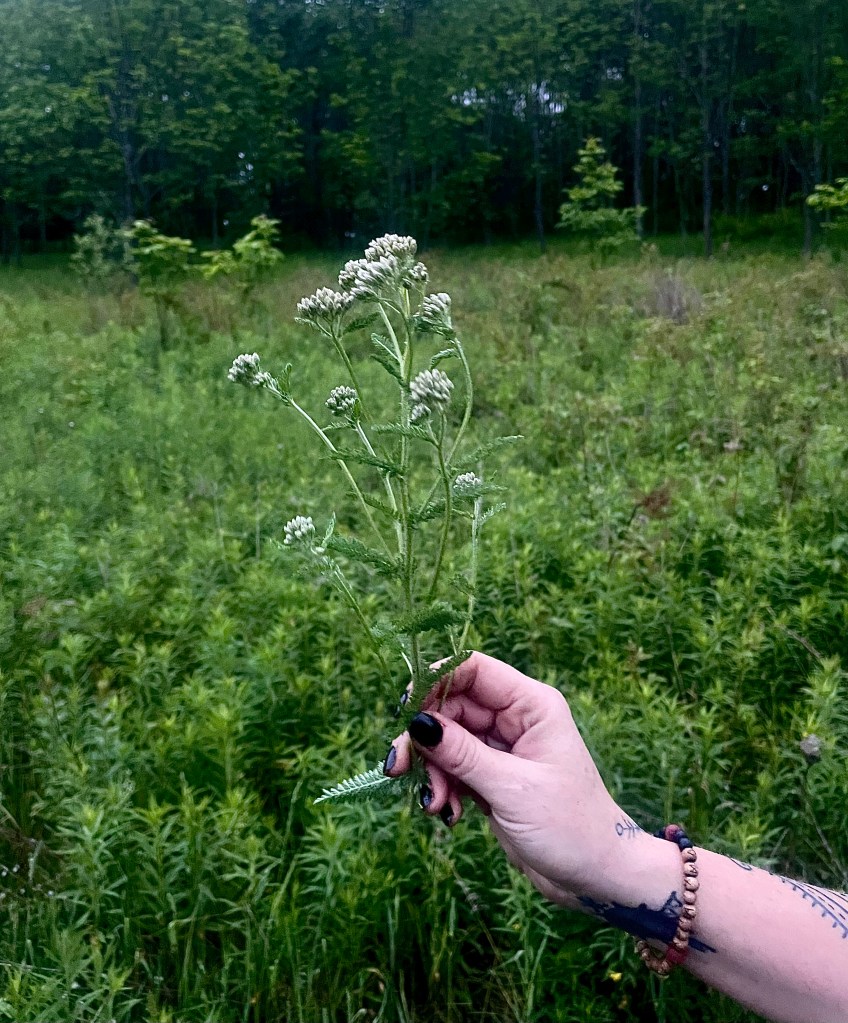
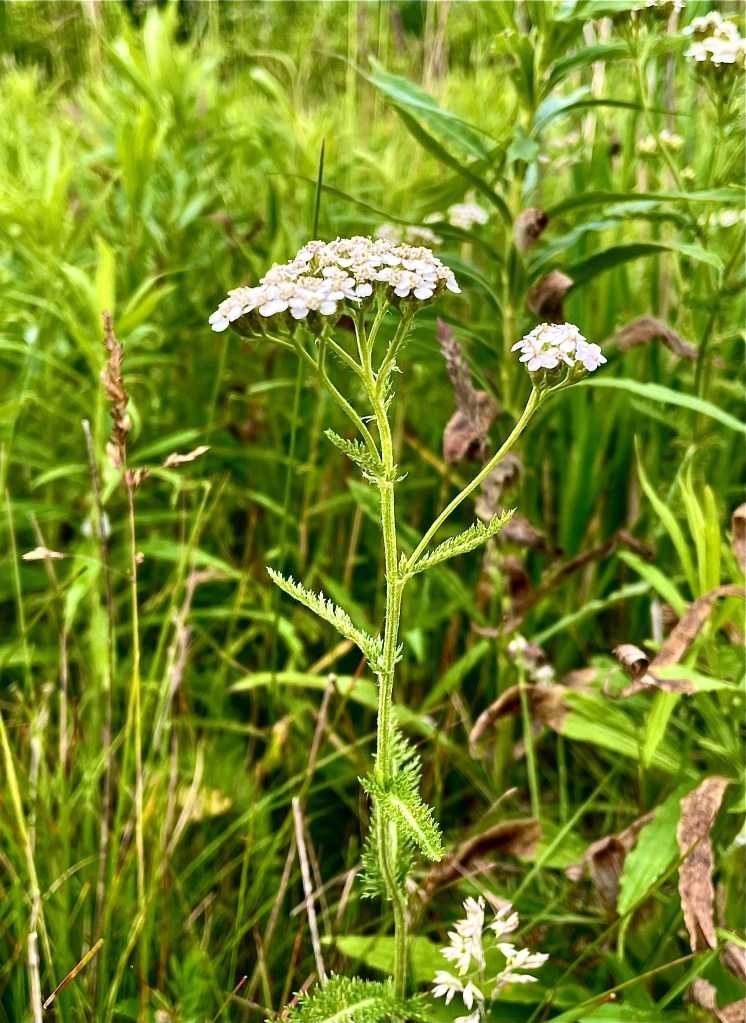
The scientific name for the common yarrow plant (Achillea millefolium) translates to ‘a thousand leaves’, in reference to the tiny, lacy, fern-like leaves. It is also called plumajillo (“little feather”) due to the shape and wispy characteristics of the leaves. Other names include chipmunk tail, milfoil, bloodwort, nosebleed plant, woundwort and field hops. The common name of yarrow may be derived from the Celtic word garw, which means “rough” and could be associated with yarrow’s ability to thrive in inhospitable conditions.

Yarrow was (scientifically) named after the Greek warrior Achilles, whose longevity in battle was credited to being dipped in a warm bath of yarrow shortly after birth. Later, it’s said that he used yarrow leaves to heal the wounds of his men. In keeping with this heroic legacy, yarrow is one of our strongest allies for heavy or hemorrhagic bleeding and first-aid herbalism.

Yarrow has long been associated with the occult and divination practice. It was considered an “herb of witches” due to its outstanding healing power. This could also have given rise to some of the common names for yarrow, such as bad man’s plaything, elf’s herb, devil’s plaything, devil’s herb and devil’s nettle. The Druids selected stems of yarrow to forecast weather for the season. The Irish included this as one of the herbs of St. John and hung it on houses as protection from sickness. In Celtic folklore, yarrow was used in handfasting and wedding rituals. It is said that yarrow keeps a newly married couple happy and at peace for seven years. I am not sure what happens after those seven years! Yarrow was also used by the Chinese as an oracle for foretelling the future.

Yarrow has been used in old European love charms for millennia. This plant is said to be a cure for heartache and has been used as a love charm. When the herb is pressed into a small sachet and placed under one’s pillow, it provokes dreams that can reveal the identity of one’s true love.
One Gaelic incantation that is recited when plucking yarrow goes like this: “I will pluck the smooth yarrow that my figure may be sweeter, that my lips may be warmer, that my voice may be gladder. May my voice be like a sunbeam, may my lips be like the juice of the strawberry…”
The Farmer’s Almanac published an article in 1986 that included an article titled “How to Find the Perfect Mate”. Several superstitious acts were listed, beginning with “Pluck a stalk of yarrow and stick it up your nose. If a drop of blood appears, your love is true.”

Yarrow was used by the Saxons as an amulet. These served as protection from all sorts of ailments and robbery. While it was used for security purposes, at the same time it could serve evil intents as well. Other legends state that when going on a journey, one should pull ten stalks of yarrow, keep nine, and throw the tenth away (as an offering to the spirits), place the nine under your right heel and evil spirits would have no power over you.

Amidst all the lore and practical uses, yarrow is also a ceremonial and mind-altering medicine. It is mildly psychotropic, and many herbalists have reported shifts in consciousness after taking high doses. When fermented in ale or mead, yarrow’s intoxicating effects seem to be enhanced. You won’t experience these effects if you’re taking yarrow in standard medicinal doses.

Yarrow Practical Uses

Yarrow is one of the most ancient herbs for practical medicine and ceremonial healing. Its pollen has been found in Neanderthal burial sites. Traces of yarrow leaf have been found in the teeth of a 50,000 year old Neanderthal man.  

Yarrow is a joy to gather as it usually symbolizes the first days of Summer here in Western New York. For ceremonial and divinatory use, yarrow is traditionally gathered on Midsummer’s Day. Otherwise, it can be harvested soon after the flowers have opened and once the morning dew has dried.  

Yarrow was named for the Greek warrior Achilles, whose longevity in battle was credited to being dipped in a warm bath of yarrow shortly after birth. Later in life, it’s said that he used yarrow leaves to heal the wounds of his men. 

Yarrow is a strong ally for heavy bleeding and also works as an antiseptic. It finds its way into the medicine cabinet as a diaphoretic for colds and flu, made from yarrow’s flowers. It is also used as a bitter for improving digestion when taken before a meal as an aperitif and is effective for stomach and menstrual cramps and intestinal flus. 

Yarrow’s roots have anodyne and anti-inflammatory qualities that can be used for tooth and teething pain. A frozen or cold cloth soaked in a decoction or diluted tincture will reduce inflammation when chewed. 

It may also be used as a mild sedative to promote sleep or to calm anxiety. As a traditional divinatory and ritual herb, yarrow has been used in Native American sweat lodges, Chinese oracular ceremonies and European love charms for millennia.  

A wash of the leaves or flowers will disinfect wounds and can be followed by a chew-and-spit poultice of fresh or dried leaves to stem bleeding and speed healing. Fresh yarrow leaves are preferred, as the dried leaves seem to lose their volatile oils very easily. 

Astringent tannins in yarrow have made it a valued remedy for the reproductive system among midwives and herbalists. 

Dried, powdered leaves are great for the medicine cabinet. A centuries-old Romani remedy is that it can be applied to cuts and wounds to prevent infection and stop bleeding. A pinch of the powder in the nose will also help quickly curb a nosebleed. Refrain from inserting fresh yarrow leaves into your nostrils. 

Tincture ratios and dosage: 

Leaf: Fresh (1:2 using 95% alcohol) or dry (1:5 using 50% alcohol); preparation 1–3 ml, three times a day. 

Flower: Fresh (1:2 95% alcohol) or dry (1:5 50% alcohol); preparation 1–3 ml, three times a day. 

Root: Fresh (1:2 95% alcohol) or dry (1:5 50% alcohol); preparation 1–3 ml, three times a day. 

Infusion ratios and dosage: 

Leaf: Infusion of 1 to 2 teaspoons (5–10 ml) of the dried leaves per 1 cup (240 ml) of boiling water, up to three times a day. Higher doses can be used acutely, as needed, for a short period. 

Flower: Infusion of 1 to 2 teaspoons (5–10 ml) of the dried flowers per 1 cup (240 ml) of boiling water, up to three times a day. 

Root: Decoction of 1 to 2 teaspoons (5–10 ml) of the dried roots per 1 cup (240 ml) of boiling water, up to three times a day. 

Avoid ingesting during pregnancy. Both internally and externally, yarrow may cause side effects for those with Asteraceae sensitivity (contact dermatitis, photosensitivity, and allergic reactions) although reactions are very rare. Be sure of your yarrow identification, as there are poisonous look-alikes, including poison hemlock.  

Be safe! 

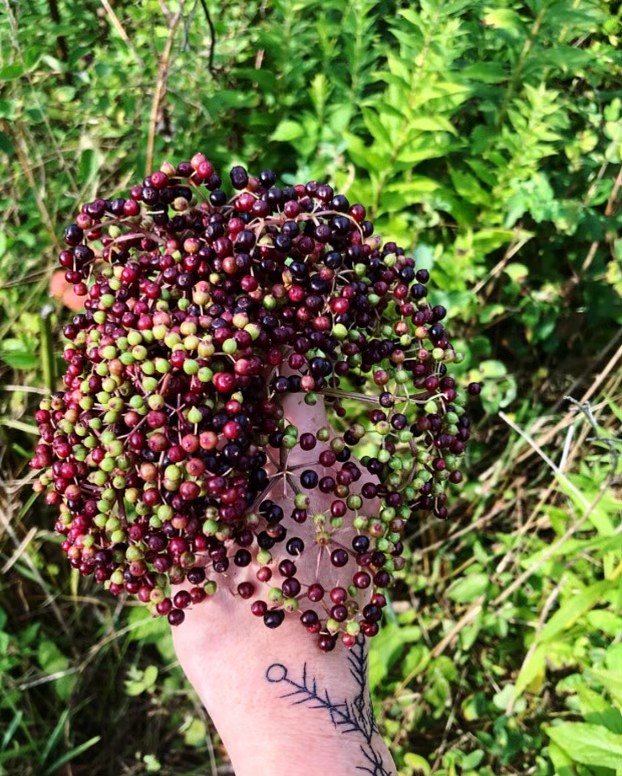
Elderberry and Elder Lore

One could spend a lifetime soaking up Elderberry lore. Please, if we have missed something important, let us know!

Elder can be found most prominently in European history and mythos. Elderberry gets its name from the Old English aeld, which means “fire.”  This association with fire comes from archeological evidence suggesting the use of its hollow branches to blow into fire to get it going.

In Celtic Ogham, the Ruis (ᚏ) symbol represents the Elder. In Old Irish, ruise means “red” or “redness”. This Ogham refers to blushing, intense emotions, shame, being red in the face and the glow of anger. It also refers to the practice of using Elderberries to redden one’s cheeks. Ruis shows sacrifice must be made in order to gain. We must face our failures and pain on our path to achievements.

Elder is sacred to many goddess-traditions and especially to the goddess Frau Holle. It is said that Frau Holle lived inside of the elder bush and she has been referred to as the Elder Mother. Frau Holle has been represented in various ways in several cultures and has gone by many names in Germanic mythology including Mother Earth, Perchta, Odin’s Wife, Frigg, Holda, and several more. She has many faces.

Frau Holle is alternately a hag and a nurturing mother, believed to be a bridge between life and death; communicating with and helping souls to pass over. She holds the power to unleash a variety of magicks on all beings and things in the world. Not one part of the Elderberry bush is to be cut or burnt without permission from her. If one does, you may experience her wrath.

In Danish, the Elder Mother is called Hyldemoer and is associated with Elves, commonly perceived as living within the roots of the Elder tree. Elder wood was considered dangerous to use when building cradles for fear that the Elder Mother could torment or steal the child away.

In an ancient Irish collection of stories known as “The Lays of Fionn Mac Cumhail”, there is a tale called “The Headless Phantoms”. In this tale, Fionn stays in a strange and otherworldly house where elder logs are burnt. He spends the evening being forced to face a myriad of horrible monsters.

The Romani were so fearful of the wrath of the Elder Mother that they would go through great lengths to inspect each bundle of firewood to be sure there was no Elder before casting it upon the fire. It is said that “should you doze off under an Elder bush, you may be taken away to the otherworld or you may never wake at all.

The Elder is known as a great protector and powerful ward against evil. Elderberries are still commonly planted in gardens to watch over the plants. Leaves of the bush were placed above doors to ward off witches. Elderberries on windowsills are supposed to keep vampires from entering. The vampire’s compulsive need to count all the berries would keep them occupied until dawn.

It has also been used in a variety of burial rituals. Green Elder branches were placed in fresh graves to protect the dead from evil spirits. Carrying or wearing any part of the Elder would protect you from harm. Elderberry oil (or water) has been used in blessing rituals. Among Christian traditions, the Elder was a fearful symbol of sorrow and death. In medieval times, some Europeans would tie Elderberry twig hoops to parts of the body that had rheumatism and believed that this would cure it. The Romans created hair color from the dark juice of the berries.

Non-Profit Approval

Last year, during the time between Samhain and the November Full Moon, we carried out a 9 day ritual which covered many different aspects of reverence and renewal.

On the evening of the full moon, we concluded ritual operations by dropping off our letter for non profit approval at the local post office. Since then, we have been waiting patiently for the process to unfold.

Today, we finally found out that we are indeed approved by the state of New York to operate as a not-for-profit corporation. This opens up many doors for the future and will give us the opportunity to put together more events to benefit all.

Our purpose and dream for this project since the beginning was to create a space for all beings to practice on this path; a spiritual center that can be a source of refuge whether one is near or far. Whether Pagan, Hindu, Buddhist, or nondenominational, we aim to create a Sangha of practicing individuals with mutual respect and understanding for one another.

We are very happy to share this news with you.

May all beings thrive.

Hailaz / Namaste

-Ansuz Society

Lord of the Wind

We’ve added a new song to the channel titled “Lord of the Wind.”

This is a devotional song to the All-Father, Odin. 

“…Holding wisdom old as time,

Elder god of masks and rhymes, 

Flames rise to lick the sky,

Send our gifts to those on high…”

May all beings benefit. 

Hailaz / Namaste 

-Ansuz Society