Samhain/Álfablót

Samhain is a time when the spirits of nature, the dead, and the gods are most likely to emerge to walk amongst the living. During these days, when daylight becomes shorter and shorter, nature around us seems to die and shed its vitality, leaving trunks and branches barren, resembling bones protruding from the forest soil. This is a time when we are meant to shift our focus from outdoors to indoors and shed our dead weight from the previous year. By doing this, we are mirroring the process of nature and turning our energy inward. During this time of year come the final harvests, meaning that the workload is drastically cut down and many daily activities change. These hours were to now be replaced with indoor tasks such as tending to animals, repairing tools, spiritual practice, and performing various crafts such as woodworking, writing, or blacksmithing.

It is customary to make offerings to the deities, ancestors, and wandering spirits during this time in order to receive their favors, blessings, and good luck. We please the spirits to avoid their wrath. We offer to the ancestors to uphold family honor. We give our veneration to the gods to gain their power and visage. By performing rituals during this particular time of year, one enables themselves to access various forces and gain insight into the past, future, and matters regarding cause and effect within the present which will aid one’s progress moving forward.

In “A History of Pagan Europe” by Jones & Pennick, they write:

“Samhain (1 November). This was the most important festival of the year, showing the pastoralist, rather than agricultural, origin of the calendar. Samhain was the end of the grazing season, when flocks and herds were collected together, and only the breeding stock set aside from slaughter. It was a time of gathering-together of the tribe at their ritual centre for rituals of death and renewal, dedicated to the union of the tribal god (in Ireland, the Daghda) with a goddess of sovereignty, the Morrigan, or, more localised, Boann, deity of the River Boyne.”

As the last of the great harvests, Samhain brings reward and celebration, the end of one year and the transition into the next. According to many European tribes, Samhain marked the turning point between the years and represented the New Year celebration of their cultures. With Samhain we descend into “night,” resembling the womb of the goddess or the abode in which she resides. The goddess reigning over this time of year was almost always in the form of a grim, fate-controlling hag or crone, such as Hel or the Morrigan.

In “Celtic Mythology and Religion,” Macbain writes:

“Equal to Beltane in importance was the solemnity of Hallowe’en, known in Gaelic as Samhuinn or ‘summerend.’ Like Beltan it was sacred to the gods of light and of earth; Ceres, Apollo, and Dis also, must have been the deities whose worship was honoured. The earth goddess was celebrated for the ingathering of the fruits; Apollo or Belinus and Proserpine were bewailed for their disappearing from earth, and Dis, who was god of death and winter’s cold, and who was especially worshipped by the Celts, as Caesar says, was implored for mercy, and his subjects, the manes of the dead, had special worship directed to them. It was, indeed, a great festival—the festival of fire, fruits, and death.”

In reference to Norse and Germanic paganism, we see the worship of elves and land spirits was also common during this time. In modern Germanic paganism, many people celebrate Samhain under the name Álfablót (Elf Sacrifice), which is a time when harvests are reaped and sacrifices are made to the elves and gods. Elves and the dead are strongly connected to the ancient mounds of the Pagans, therefore, much of the activity surrounding this festival would have likely involved distributing offerings to the gods and conducting sacrifices directly upon the mound (or grave) of the dead. This is where the elves were thought to reside.

In “Sorcery and Religion in Ancient Scandinavia,” Vikernes gives us further examples pertaining to the Nordic new year and pre-Christian Halloween customs. He writes:

“The first holiday of the year was New Year’s Day, better known in English as Halloween (“initiation evening”), and in Gaelic as Samhain (“summer’s end”). The sorcerers and later the gods (i, e. religious kings) and their challengers dressed up as different creatures with access to the realm of the dead. They fasted and hung their clothes in a tree or the gallows, to make it look as if they had hanged themselves. They wounded themselves with a spear, to bleed, smeared ash or white mud all over their bodies to look like the dead, they put on masks and sacrificed a cow or an ox on the grave mound, so that the blood poured down and into the grave underneath; into the realm of the dead. They then blew a horn, in the Bronze Age a lure, to open up the entrance to the realm of the dead. They then traveled into hollow trees, caves in the mountain, holes in the ground, or more commonly into the burial mounds. These were all seen as entrances to the realm of the dead. Inside, in the darkness of the grave, a woman was waiting for them, sprinkled in the sacrificed animal’s blood and dressed like the queen of death. They then took at least some of the objects their dead forebears had been buried with and brought them back out.”

As we can see, Samhain (or Álfablót) type celebrations were not only distinct to Celtic and Germanic culture, but rather appear as a pan-European tradition representing a celebration of the dead, the ancestors, and the final harvests of the year. It is clear that no matter which form of paganism(s) one practices, the celebration and event known to us now as Halloween is of very ancient and sacred importance. Not only as a transitional period between the seasons, but as a time when it was believed to be easiest to pierce the veil between states and interact with beings outside of our normal cognition. It is because of the superstitions and pagan worldviews of the past that we have many (if not all) of our current yearly celebrations.

Om Tare Tuttare Ture Svaha

We’ve just released another mantra track on our channel, may it benefit all beings.

Tara is a prominent goddess in both Hindu and Buddhist traditions, representing the feminine aspects of the Supreme, whether as an emanation (Mahavidya) of the great Durga or as a female embodiment of the Buddha. Tara has an exceptionally wide array of forms depending on which religious pantheon one is focusing on, varying from entirely wrathful forms to completely peaceful ones. These different emanations are necessary according to each individuals’ particular inclinations (due to karmic imprints) or specific school of practice.

In Vajrayana Buddhism, Tara is believed to have 21 forms with varying attributes, colors, and characteristics.  She is invoked for protection and liberation from obstacles, to dispel poisons and bad dreams, and to destroy demons or other harmful spirits. Tara is revered as a loving mother and is often referred to as the “Mother of All Buddhas.” She guards sentient beings against fear, anxiety, and disease. Tara is often Green in color, representing all the activities of the Buddha, but white is also common, used for achieving long life and longevity. Other forms and colors exist as well. The seed syllable of Tara is TAM.

The Sanskrit word tā́rā means “star”, stemming from the Proto-Indo-European word h₂stḗr, which refers to stars (or planets) and means “shiner or glower.” Her mantra is OM TARE TUTTARE TURE SVAHA which means “Praise to Tara the Swift Liberator, Hail!” Above her sits Amitabha, Buddha of Boundless Light.

“…Homage to her whose face is like one hundred full autumn moons

And who blazes with light like that of thousands of stars…

…Homage to her whom Indra, Agni, Brahma, Vayudeva,

Vishvakarman, and Ishvara present offerings…”

#tara #mantra #protection #buddhism #goddess

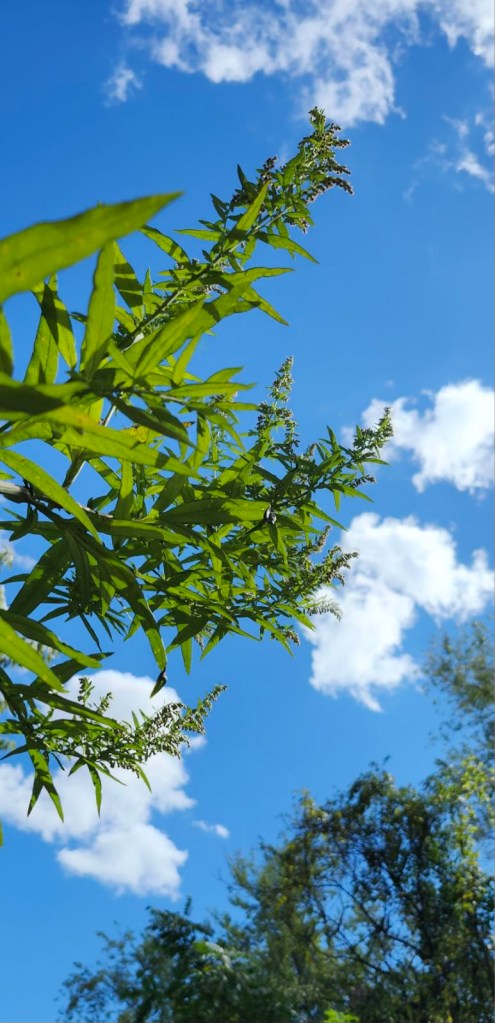
Mugwort: Stepping Towards the Divine Feminine

An herb as powerful as Mugwort is an invaluable way to connect and learn more about Goddesses of not only Greek, but Norse and Celtic mythology. Mugwort and its association with women, those who protect and champion women, as well as those seeking to expand their metaphysical world through dream and deity work, is as important today as it was thousands of years ago. 

Artemis, the namesake of Mugwort, is the logical starting point. Artemis is a goddess of the hunt, the moon, and especially of female initiation and protection. She is associated with girls and women, but is also a goddess to boys and men in rites of initiation and the hunt. All who wish to learn more and work with her are welcome, as she is a goddess for everyone. Mugwort, having derived its name from her, is the mother herb mirroring her mothering prowess. 

However, in the Greek mythos, she was not a goddess to suffer fools gladly. She vehemently defended her virginity and reputation as the greatest of hunters. Some sources suggest she was the patron goddess of the fearsome women warrior tribe, the Amazonians. A passionate and ferocious fighter for what she believes is right, a beacon for those who need strength.

Of everything that Artemis is known for, Mugwort is most closely related to her powers as midwife, a deity for both comforting women in labor and the newborn. Mugwort is also an important herb for dream and trance work, lending itself nicely to moon rituals, as Artemis was also a goddess of the moon. Using Mugwort in its tincture form, or burning as a smudge stick, will help to expand consciousness and enter a trance state for magical work. Adding Mugwort into your meditation on Artemis during the moon, especially the full moon, will greatly enhance communication.

In Norse mythology, Frigg, the most powerful volva, was believed to be the first practitioner of seidr magic. Frigg is the wife of Odin and a fiercely protective mother of Baldur. She is the goddess of family, motherhood, fertility and the balance of love and wisdom. Mugwort works perfectly with Frigg as it is an herb whose main use has been for assistance in prophetic dreaming and the overall health of women. 

Runes that can be used when invoking Frigg are Fehu, Pertho and Berkano. Fehu, when related to Frigg, is a female rune for fertility concerned with livestock, and especially newly born cattle in spring. Fehu is always a rune of productivity. It can also be used for spiritual or artistic creativity, carrying a fiery power within. Fehu can also represent certain aspects of the life force.

Freya Aswin correlates Pertho with birth. Pertho can also be used to help find hidden aspects within yourself. The joining of these attributes with Frigg, who governs birth and is involved with weaving fate (through work as a volva and through seidr magic), very nicely encapsulates the magic of Mugwort. 

The Berkano rune indicates birth, being rooted, and the feminine, has been called a rune of ‘bringing into being’, the first protection given to children at birth. Both Artemis and Frigg were known as unrelenting defenders of children and women. Incorporating Mugwort when working with Frigg can be very beneficial.

The goddess of Celtic mythology most closely associated with Mugwort is Brigid. Brigid is known as a goddess of fire, poetry, and healing; a maternal goddess who embodies the divine feminine. She is like spring, representing new beginnings.

As a goddess of fire and hearth, she was said to watch over all the fires in the homes of Ireland. She was closely associated with the sun and the warmth of spring, the time of renewal and rebirth. Mugwort is also an herb closely associated with fertility, the goddess, and of womanhood. Brigid, as a goddess that protected the flame (which was so important for ancient people’s survival), is like a mother radiating maternal compassion. 

Poetry (and creativity) have always had close ties with the metaphysical and dream world, a world that Mugwort works so well in. Brigid was called upon to help with creativity and inspiration, especially with bards, who held a very high position in Celtic society. Bards were the keepers of history and culture, and Brigid was often invoked to help inspire creativity. 

Brigid was also a goddess of healing. She was often called upon to help cure sickness and injury, as her touch was said to have healing powers. In addition to being a healer of sickness and injury, she was a goddess of childbirth, watching over women in labor. Her presence helped ease pain and ensured a safe delivery. She was also a protector of children and was asked by parents to watch over children’s safety and health. Brigid and her divine energies align well with Mugwort and its properties. 

Wunjo Rune Analysis

Wunjo is the liberating power of bliss; the levity associated with fulfillment and satisfaction in one’s life and with one’s deeds. This blissful ecstasy can otherwise be associated with our concept of joy, happiness, and pleasure. We get a glimpse of this rune in the “Old English Rune Poem,” where it is said: 

“Wynn is borne by him who knows little of woes,

 Of soreness and sorrow, and himself has- 

 Bounty and bliss, and plenty of strongholds too!” 

Throughout the poem, we see a clear picture of true contentedness; a metaphysical ease that embraces one whom has for themself created the circumstances for bliss; a momentary freeing of the soul from any bonds of anxiety, woe, or sorrow. One who has conquered their aspirations. 

Wunjo also has a connection to wishes, in the sense that fulfilled wishes lead to these feelings of delight, enjoyment, ecstasy etc. Combined with the lessons of other runes, we know that our wishes must be paired with correct action in order for them to be fulfilled; runes like Raido (for control), Thurisaz (for willpower), and Ehwaz (for movement) come to mind here, among plenty of others.  

Therefore, it is wise to not look at wishing as a mere fantasy or common prayer, but rather a goal or outcome we’d like to see accomplished; something we want to facilitate or create. Wunjo/Wunsch/Wish of the old Germanic peoples was a force (or deity/spirit) of inspiration; one knew their wishes would only be fulfilled by their actions in life, rather than in pure lip-service. This is how one honored the Wunsch/Wish deity, who bestowed blessings upon those who completed their goals. This god of the Wish has been equated to Odin, as Grimm states in Teutonic Mythology: 

(Wuotan/Wunsch) is himself the bestower of all bliss.”  

It is certain that this “face” of Odin was one of importance and great reverence, as we find reference to him in “Grímnismál” as Óski, meaning “God of Wishes, Wished For.” This wish granting, bliss bestowing deity is usually associated with a tool, weapon, or item that symbolizes and or directs the gifts towards those who have earned them. This is seen in the German wunschelris, meaning “wishing twig,” the predecessor to the English “magic wand.” We also have the “wishing hat” of Wuotan, the “Horn of Plenty” or “Wheel of Fortune” of Fortuna, which in Sanskrit translates to mano-ratha or “wheel of the mind.” This alludes to Wunjo as a needed force of momentum to keeping one’s “wheel” moving forward. Another Indo-European deity who functions in this way would be Kamaduh/Kamadhenu, the “wishing cow.” 

Another concept that we can include here is that of the Old Norse fylgja, meaning “one who follows man, companionship” and is associated with a type of “guardian angel” spirit who attaches itself to those it chooses, bestowing them with luck, blessings, and bliss. Fairies, elves, and dwarves are also known to grant wishes, associating these beings with the Wunjo rune.  

Wunjo is closely related to the feeling of love, whether intimate or familial. We see this is the Proto-Indo-European root word wenh-, which means “to love, win” and “to wish.” Many word offspring have come from this root and it seems this sound denotes a sort of happiness, kindness, and affection. We see another related word in the Latin venia meaning “kindness, mercy, grace” and in the modern English/Old French word venial meaning “able to be forgiven, worthy of forgiveness.” In both words we see connections associated with Wunjo, as during the process of forgiveness one shows great love. Some more words derived from these concepts are the Proto-Germanic word wanjaną which means “to make accustomed to,” indicating an act of extreme care and kindness to guests. Wunjo is this process, formula, and understanding; the living phenomenon of the Wish, of love, and kindness. Wunjo is the creation of bliss, joy, and satisfaction in life. 

One more concept that could be drawn from this rune is that of indulgence or intoxication. Rather than embodying a stupefied version of these words, however, one is meant to reach states of ecstasy and spiritual dominance through these particular indulgences, using pleasure as a tool to create Wunjo, or bliss, associated with the divine; a piercing into the veil of reality. This can be seen in the Proto-Italic word wenjā meaning “indulgence.” The earlier visited Latin word venia also has a co-meaning of indulgence. In this respect, we can see a clear connection with pleasure and the realms of love and bliss. 

It is acceptable to deduce that Wunjo is a symbolic representation of the sensation of love, satisfaction, and joy in life. This feeling has permeated man for thousands of years with a clear and definitive expression. We can see a direct development of sounds and words associated with Wunjo forming their own substratum of conceptual framework, all revolving around this original sound/word wenh-. To our linguistic forefathers, the Proto-Indo-Europeans, we can assert that the “W” sound carried a euphoric and ecstatic vibration for those who spoke it. 

-Wandering the Runic Path

Constructing and Maintaining an Altar for Odin

This process is something that is done differently by almost everyone, as there has never existed a pan-Pagan dogma regarding this type of activity. However, most would agree that when constructing an altar in the Germanic fashion, there are 4 main pieces to consider. These 4 pieces we will cover here along with other ideas for what one can add to their setup. Having an altar dedicated to spiritual activity is important, as it gives one a place to conduct work that is vital to the human experience.

First, one must find a location that one is drawn to, perhaps isolated in the forest at the foot of a particularly powerful tree, a secret natural site, or inside one’s home in a secluded area. Second, it is recommended that an organic “table” be present in the location to conduct exchanges and make offerings, such as a stump or flat stone. If there is not, one should build something for this purpose. This can be a simple platform, or it can be an entire temple, this all depends on the person’s means and dedication. Third, the deity with which one wishes to communicate (in this case Odin) needs a home or place to inhabit on the altar. This can take the form of a special tree, stone, idol, statue, image, or in some cases, the skull of an animal or human. Generally, the deity is thought to reside in this location indefinitely, although, some will argue that they are only meant as temporary dwellings for the gods and spirits to reside in while the operant conducts their business. The fourth piece, especially important in the case of Odin (but also relevant to any Pagan altar), would be the drinking vessel in which we offer libations.

Once one has completed these 4 tasks, the altar is ready to be blessed and put into immediate use. Blessings include fumigation, galdr, and various invocations to protect the space. Some other things to consider placing on the altar are offering bowls, incense vessels, candles, a set of runes, and a place to leave meat or gifts intended for Odin’s ravens and wolves. Aside from these things, it is up to one’s discretion what they choose to exchange with the High One.  When it comes to maintaining this space, one must keep things fairly organized and clean. This shows respect to the deity and helps one stay disciplined.

Strive to replace the rune set every year, if made of wood. If the runes are made of stone, they should be washed, cleansed and re-consecrated through galdr and one’s own blood. Last, libations should be made according to your means, but it is recommended to refresh the drinking vessel either every 3 days, 9 days, 45 days, and/or on full Moons. When throwing out the old libation, it should be offered to a tree or local spirit, never put into the drain or trash.

May this be of use to new and current practitioners.

Hailaz!

Annual Summer KTD Trip

Back at headquarters after a very busy and powerful weekend at KTD.

Two empowerments were given (Stainless Ushnisha and Stainless Light Rays), both related to the construction of stupas, the consecration of the items therein, and the clearing away of obstacles. These were given by Khenpo Lodrö Dönyö Rinpoche, abbot of the Mirik Monastery. This is something we would like to sponsor here at some point in the future.

After that, the monks began a 7 day Chakrasamvara puja at the request of the Karmapa, whose father passed away.

It is always rejuvenating to visit this holy site, but, it is also hard to leave. If you find yourself in the area, you should certainly stop by.

May all beings thrive.

“There is an old saying that the path is the goal and goal is the path. You make your journey, you get to your destination, and arriving at your destination brings on another question: how to proceed from there? In that way each goal itself becomes the path. Particularly from the tantric point of view, you don’t achieve anything except path. Discovery of the path is achieving.”

-Trungpa Rinpoche

Karma Triyana Dharmachakra

Gebo Galdr

…it is clear that when speaking about ancient Germanic Pagan ethics and morals, Gebo was the law. Gebo drives our interpersonal relationships, applying to both the physical and divine. All relationships revolve around a giving and receiving mechanism of some form. This balance of nature was represented by the ancient Germans in the form of the equal armed, crossing X.

-Wandering the Runic Path

Om Cham Chandraya Namaha

We recorded another version of the popular mantra OM CHAM CHANDRAYA NAMAHA this Spring and are happy to share it with you.

This mantra is dedicated to the Moon god Chandra, also known as Soma, and can be translated many ways, such as “Homage! I Drink/Eat of the Moon!”.

The word cham comes from the Proto-Indo-European word kʷem which means “to swallow,” implying that one absorbs the energy of the Moon as one does when drinking water or eating food.

Chandra means “glittering/shining” and is a word used for the Moon personified. This light (or shine) is what we take in during meditation, transforming it into clarity of mind and peace in spirit.

Namaha comes from the Proto-Indo-Iranian word námas (respect, homage) which derives from the Proto-Indo-European word némos, meaning “to bend, sacrifice, worship.”

As this is chanted and visualized, one gives reverence with each repetition for the illuminating clarity that is given by the great Shining One, filling one’s consciousness with calm images of crystals, water, and moonlight.

Praise to the Shining One!

Rahu, Ketu, and the Eclipse

In Vedic astrology, eclipses are seen as a symbol of revenge or as a bad omen.

According to mythology, eclipses are caused by the Chaya Graha (shadow planets) Rahu and Ketu, who were once part of a divine serpent. The story is traced back to a time before creation in the tale of the churning of the ocean, known as the Samudra Manthan. The churning of the ocean represents our consciousness. After an awful and lengthy war, the devas (gods) and asuras (demons) cooperated to churn the galactic material called the Milk Ocean. The churning poured forth several gifts and treasures. They included the goddess of wealth Lakshmi, the wish-fulfilling tree Kalpavriksha, the wish-fulfilling cow Kamadhenu, and Dhanvantari, who carries a pot of amrita and a book of medicine called Ayurveda. Amrita is a Sanskrit word that means “immortality” and is a drink (or nectar) intended only for the gods.

A serpent demon (Svarabhānu) aspired to become invincible. Sitting between Surya (the Sun) and Chandra (the Moon), Svarabhānu disguised himself as a deva and managed to take a sip of Amrita during Samudra Manthan. Surya and Chandra recognized the imposter and informed Mohini (the female form of Lord Vishnu), preserver of life and order, who quickly decapitated him. As they were now immortal, Lord Vishnu needed to find a place for them, so he put them in two specific points in the sky.

The head of the serpent demon (without the body) became Ratu, who fell on one side of the sun. The tail without the head that fell on the opposite side of the sun became Ketu. The sun stopped all movement in order to keep Rahu and Ketu from meeting one another. Twice a year they can create confusion and exact revenge by consuming the Sun and Moon causing the world to suffer from darkness.Rahu swallows the Sun, and Ketu, the Moon. But only for a short while as the Sun and Moon have also taken in the amrita. Offerings of coal, mustard, sesame, saffron and lead are made to appease Rahu. For Ketu, offerings of lead, sugar, saffron and sesame are made along with offering food to a dog with black and white fur.

As seen above, eclipses can be seen as highly inauspicious. Light and power diminish which corrupts their positive qualities and creates disturbances in the natural order of things. It is believed that auspicious work should only be started in the light. Because of this, beginning any new ventures during this period of darkness is not recommended, as it can bring upheavals, obstacles, and turmoil.

#eclipse #vedic #astrology #rahu #ketu

Om Mani Padme Hum

The six-syllable mantra Om Mani Padme Hum (Tib. Om Mani Peme Hung) is the most popular mantra in Tibetan Buddhism and has been chanted for over 1500 years. The mantra can originally be found in the Kāraṇḍavyūha Sūtra and is associated with the deity Avalokiteśvara (Tbt. Chenrezig) whose name means something like “Lord of the World.” The mantra itself has many different meanings associated with it, but most commonly it is translated as something like “Hail the Jewel in the Lotus.” This phrase is an homage to the great “jewel” of primordial awareness (Buddhanature) that exists within the hearts of all sentient beings. May all beings thrive under the watchful eyes of compassion.

ॐ मणि पद्मे हूँ / Om Mani Padme Hum

#ommanipadmehum #avalokiteshvara #buddhism #mantra #meditation