
Subscribe to continue reading
Subscribe to get access to the rest of this post and other subscriber-only content.

Subscribe to get access to the rest of this post and other subscriber-only content.
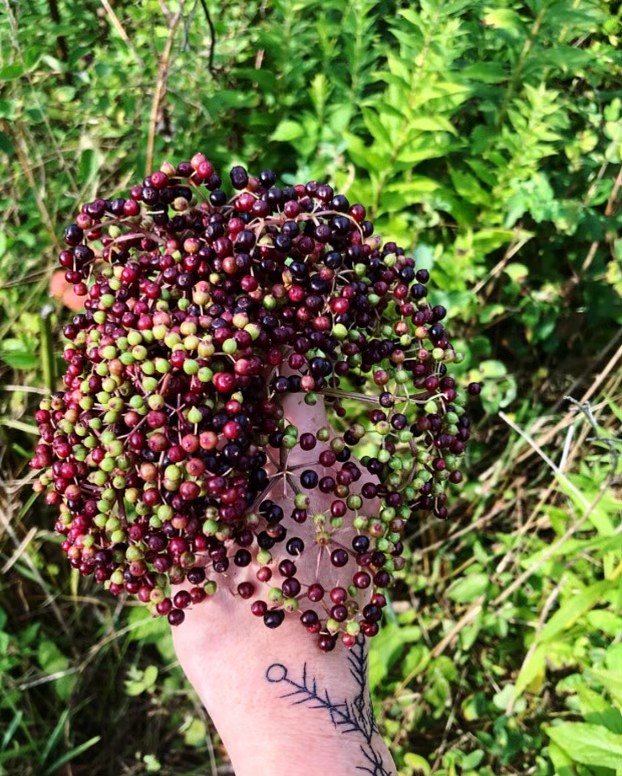
One could spend a lifetime soaking up Elderberry lore. Please, if we have missed something important, let us know!
Elder can be found most prominently in European history and mythos. Elderberry gets its name from the Old English aeld, which means “fire.” This association with fire comes from archeological evidence suggesting the use of its hollow branches to blow into fire to get it going.
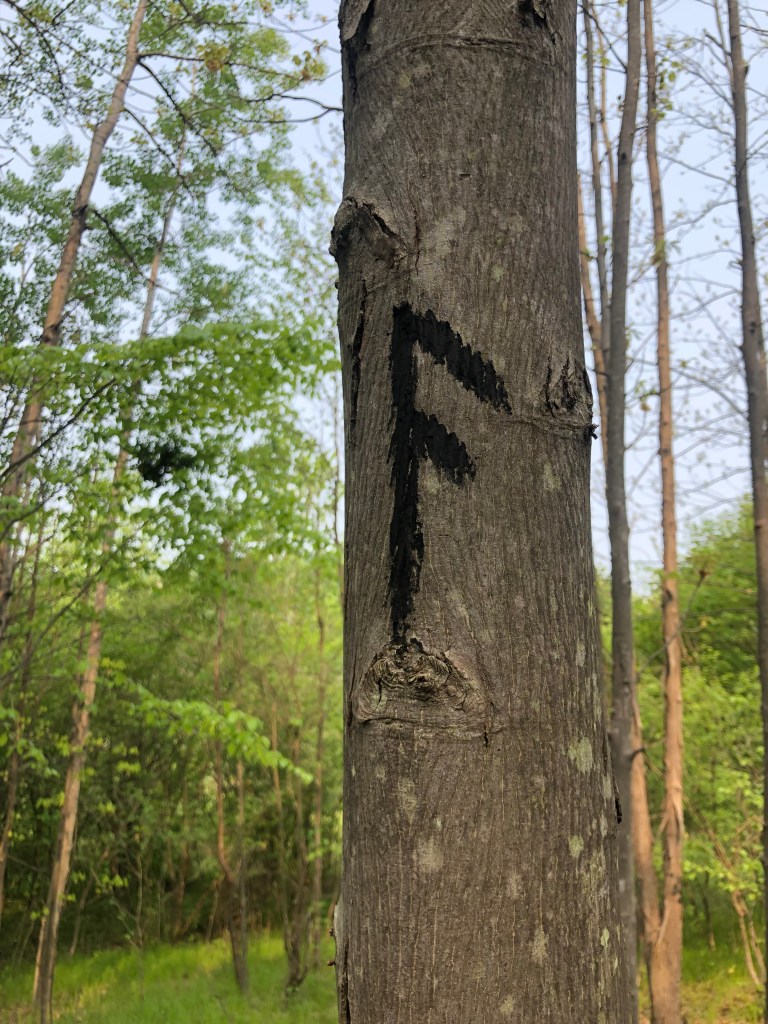
In Celtic Ogham, the Ruis (ᚏ) symbol represents the Elder. In Old Irish, ruise means “red” or “redness”. This Ogham refers to blushing, intense emotions, shame, being red in the face and the glow of anger. It also refers to the practice of using Elderberries to redden one’s cheeks. Ruis shows sacrifice must be made in order to gain. We must face our failures and pain on our path to achievements.
Elder is sacred to many goddess-traditions and especially to the goddess Frau Holle. It is said that Frau Holle lived inside of the elder bush and she has been referred to as the Elder Mother. Frau Holle has been represented in various ways in several cultures and has gone by many names in Germanic mythology including Mother Earth, Perchta, Odin’s Wife, Frigg, Holda, and several more. She has many faces.
Frau Holle is alternately a hag and a nurturing mother, believed to be a bridge between life and death; communicating with and helping souls to pass over. She holds the power to unleash a variety of magicks on all beings and things in the world. Not one part of the Elderberry bush is to be cut or burnt without permission from her. If one does, you may experience her wrath.
In Danish, the Elder Mother is called Hyldemoer and is associated with Elves, commonly perceived as living within the roots of the Elder tree. Elder wood was considered dangerous to use when building cradles for fear that the Elder Mother could torment or steal the child away.
In an ancient Irish collection of stories known as “The Lays of Fionn Mac Cumhail”, there is a tale called “The Headless Phantoms”. In this tale, Fionn stays in a strange and otherworldly house where elder logs are burnt. He spends the evening being forced to face a myriad of horrible monsters.
The Romani were so fearful of the wrath of the Elder Mother that they would go through great lengths to inspect each bundle of firewood to be sure there was no Elder before casting it upon the fire. It is said that “should you doze off under an Elder bush, you may be taken away to the otherworld or you may never wake at all.
The Elder is known as a great protector and powerful ward against evil. Elderberries are still commonly planted in gardens to watch over the plants. Leaves of the bush were placed above doors to ward off witches. Elderberries on windowsills are supposed to keep vampires from entering. The vampire’s compulsive need to count all the berries would keep them occupied until dawn.
It has also been used in a variety of burial rituals. Green Elder branches were placed in fresh graves to protect the dead from evil spirits. Carrying or wearing any part of the Elder would protect you from harm. Elderberry oil (or water) has been used in blessing rituals. Among Christian traditions, the Elder was a fearful symbol of sorrow and death. In medieval times, some Europeans would tie Elderberry twig hoops to parts of the body that had rheumatism and believed that this would cure it. The Romans created hair color from the dark juice of the berries.
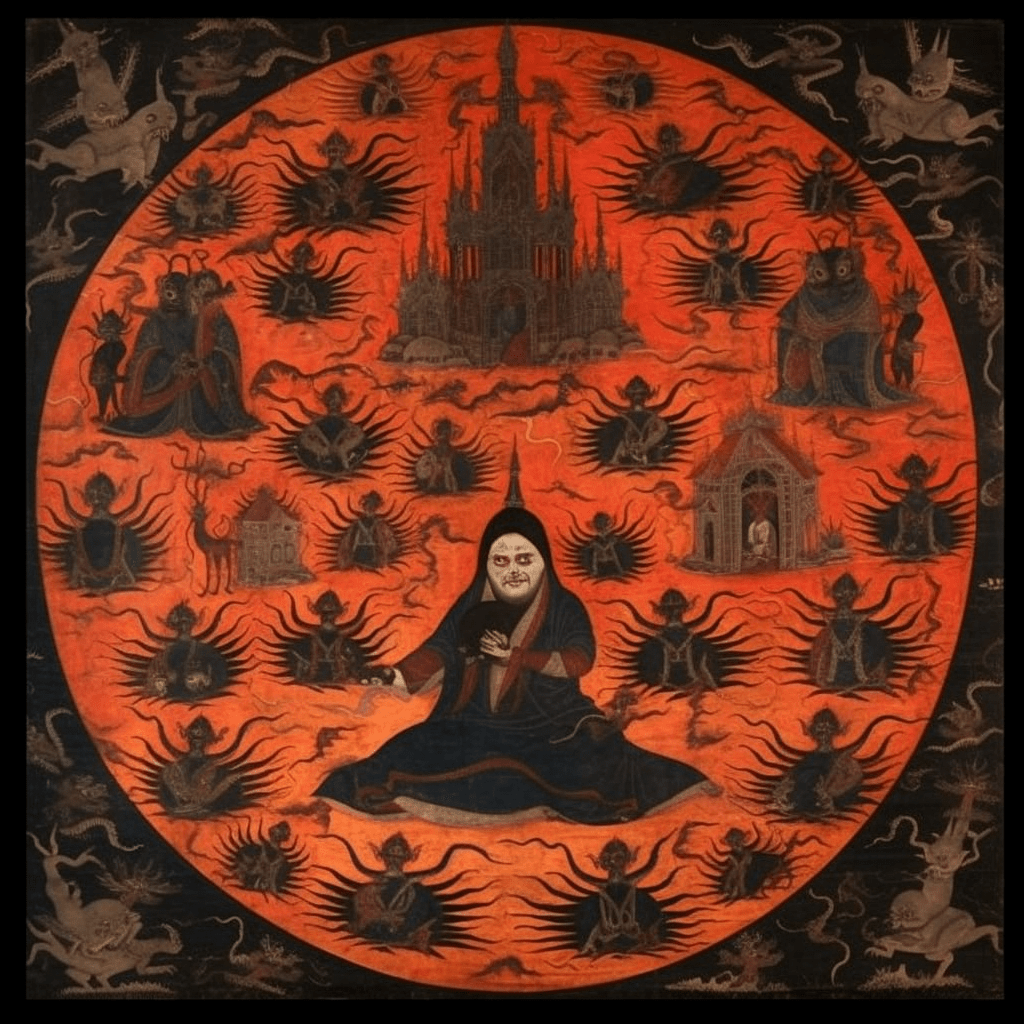
“…We tend to think of Mara as something ferocious that is going to come along and cut us up or drag us off; it is not necessarily that dramatic or that overtly unpleasant. Mara is anything that obstructs the practice of Dharma and seduces you into abandoning the practice of Dharma and favoring worldly activities…”
-K.K.R.
Mara is a Sanskrit word meaning “death” and has relation to the Vedic god of death Mrtyu. This word stems from a more archaic Indo-European root mer-, which means “to die.” With this in mind, and in the context of Buddhism, we can associate Mara with anything that makes our focus on the Dharma “die”, become distracted, or diminish.
It is important that we consider all distractions in our practice as potential incarnations and activities of Mara. If it is more applicable to your vocabulary, viewing these distractions as demons can be equally beneficial. However, this concept isn’t to be externalized in meaning, as the root of Mara lies within us and not on the outside. Even in the case of a wild animal devouring us, we cannot view the animal as Mara, but instead, our attachment to our own body as the essence of Mara’s activity.
Mara(s) can generally be classified into four different categories. The first applies to our “unskillful” emotions such as greed, hate, and ignorance. The second applies to death and the circumstances that cause death. The third applies to conditioned existence and its symptoms. The fourth applies to the being Mara and his daughters, who tried to prevent Gautama Buddha from attaining liberation on the night of his enlightenment.
Although some of these have “external” sounding features, it is important to remember that all phenomenon we experience as Mara can be associated with our own ignorance in perception, and therefor, exist within us as obscurities. For instance, during meditation, a barking dog only exists as a Mara/demon in the sense that our perception is being disturbed by it, due (most likely) to our attachments to silence, control, and comfort. If one shifts their perception to pure emptiness, one makes their mind like the space inside a cave, where sound may enter and echo, but ultimately, moves through like wind and attaches to nothing.
If our mind rests in this realization of emptiness, then all external phenomenon move through it like clouds in the sky or waves in the ocean.
May all sentient beings conquer the Maras that obstruct their Dharma practices.
Hailaz / Namaste
Last year, during the time between Samhain and the November Full Moon, we carried out a 9 day ritual which covered many different aspects of reverence and renewal.
On the evening of the full moon, we concluded ritual operations by dropping off our letter for non profit approval at the local post office. Since then, we have been waiting patiently for the process to unfold.
Today, we finally found out that we are indeed approved by the state of New York to operate as a not-for-profit corporation. This opens up many doors for the future and will give us the opportunity to put together more events to benefit all.
Our purpose and dream for this project since the beginning was to create a space for all beings to practice on this path; a spiritual center that can be a source of refuge whether one is near or far. Whether Pagan, Hindu, Buddhist, or nondenominational, we aim to create a Sangha of practicing individuals with mutual respect and understanding for one another.
We are very happy to share this news with you.
May all beings thrive.
Hailaz / Namaste
-Ansuz Society
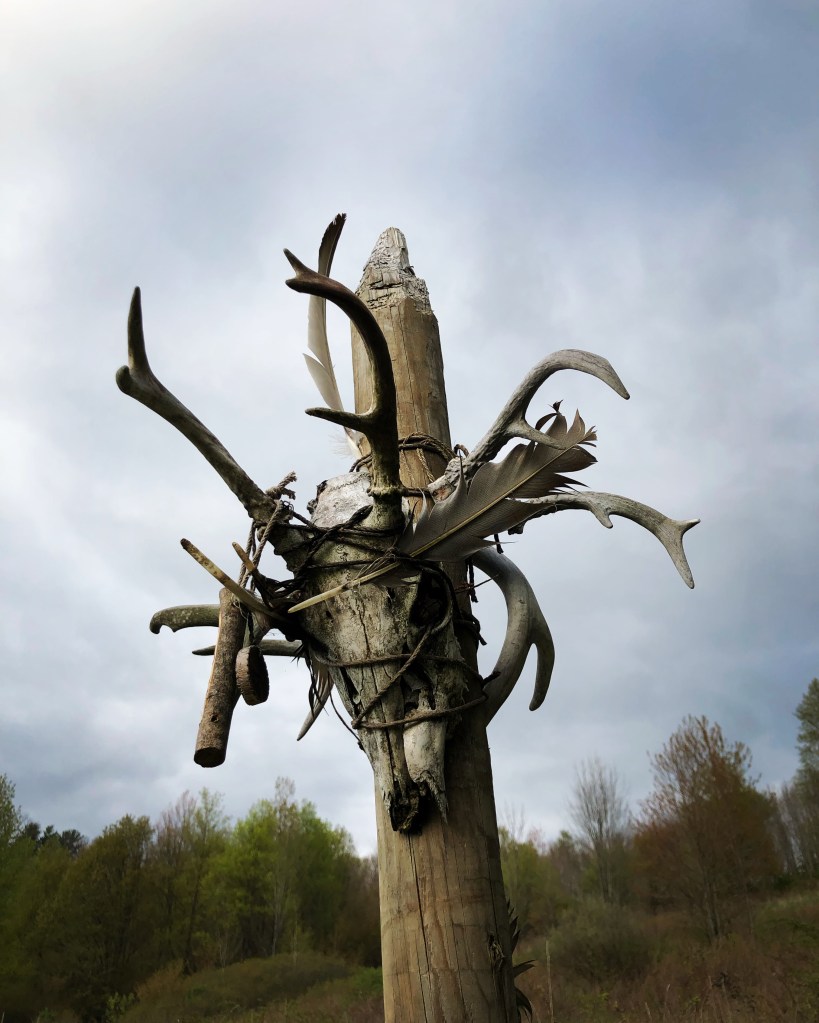
Cernunnos/Hurnaz represents the spirit, soul, or incarnation of the forest itself. Unlike most gods, which fill an archetypal form congruent to their other roles, Cernunnos isn’t necessarily one that the practitioner aspires to be(come), but rather, a spirit one asks for protection, aid, and blessings from. Our idol stands at the edge of our property where things are considered “ordered,” representing the liminal space between the safety of the homestead and the inherent dangers of the wilderness. With this in mind, and within a Germanic context, we see Cernunnos representing an older, ancient, natural “Jotun” or “Wight” type of spirit; one that we must form a relationship with if we want to have a completely unified connection and understanding of the forest and all of its life forms.
It is here we bring the dead we find and offer fruits and other foods for the wildlife, the children (and embodiment) of the forest. Cernunnos represents all landavetter and spirits residing in the mysterious woods.
This god, as all others, has many different venerative systems, especially based on where it is you are practicing. If in a more urban setting, one might view this god as the Roman’s or civilized Gaul’s did, as a fertility and commerce god. If in the rural or farther reaches of society, one might have a more direct relationship with this god as the embodiment of the forest, as one by the sea would visualize the entirety of the ocean as Poseidon or Njord. Likewise, many cultures practiced this type of veneration in association with their geographical surroundings. Volcanoes, mountains, forests, lakes, oceans, etc., all embodied a certain god form inherent within them. This is where polytheism and animism overlap, forming the mindset of many of our ancestors prior to Christianity.
May we all venerate the great spirits of nature.
We’re very happy to bring you this new song in honor of the great mother Kali.
Like the Germanic Mother Goddess, Kali has many different forms and names, also known as Durga, Parvati, and Mahadevi.
To many practitioners, Kali represents duality and the entirety of the moving cosmos, pure energy (Shakti).
We bow to the Great Mother in all her forms.
May all sentient beings utilize divine energy.
Our thoughts and love are extended to those affected by the Earthquakes in Turkey in Syria.
Hailaz / Namaste
Frau Holle is a sprit of the woodland, lakes and ponds. A “spinster” and figure of reward and punishment.
She visits our dwellings during the winter months, often during the Twelve-Nights of Yule.
If the chores at home are not completed or if simple tasks are neglected, she appears as an ugly, old, disheveled witch with a fiery tongue and burning gaze. She will bestow chaos on the homestead.
If she finds that the home is orderly, that all tasks have been done, she appears as an ethereal figure dressed in flowing white. Frau Holle will then hand out gifts from her kitchen and garden – nuts and apples, fruits of the earth and baked goods.
Frau Holle has gone by many names in Germanic Mythology, including Mother Earth, Perchta, Odin’s Wife, Berchta, Frigg and several more.
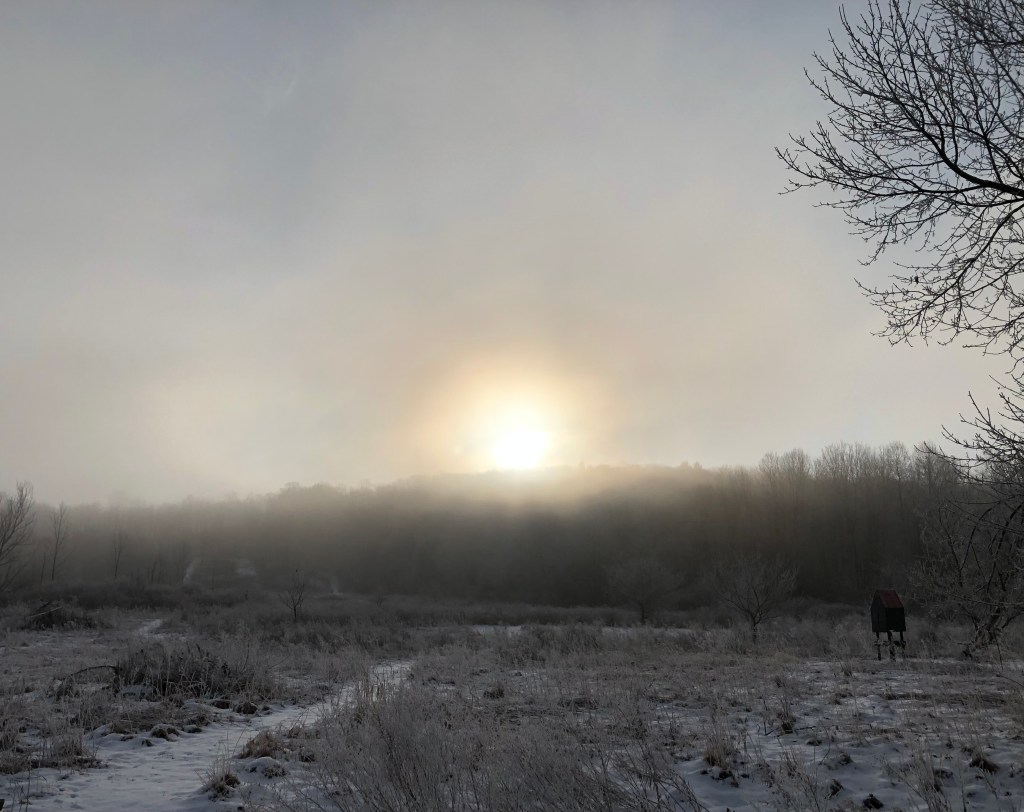
The rolling fog is said to be the smoke from Frau Holle’s hearth. When she bakes, the whole sky turns red. On stormy evenings, bolts of lightening are known as Hollenzopf, “Holle’s braids,” revealing her long white hair.
In winter, she shakes her bedcovers and down pillows, filling the air with feathers which causes it to snow.
-Ansuz Society
 Ansuz Society