Sowilo ᛊ / ᛋ

Sowilo is the rune of the Sun. In nearly all Indo-European languages, you will find this word in some form, all originating from the Proto-Indo-European root sóhwl̥, meaning “Sun.” This cosmic body represents one of humanities oldest “gods” or divinities, being associated with power, glory, triumph, health, and life. In most Germanic cultures, the Sun was viewed as a goddess, while the Moon represented a god. In the North, this goddess went by the name of Sunna (Sun) and was drawn across the sky by a chariot, chased by the great wolf Sköll (treachery). In other cultures, such as Greek, the Sun was viewed as masculine, residing under the name Hlios, which means “Sun, east, day, and sunshine.”

In Latin and in Old Norse, the word for the Sun deified is sól/sōl. The difference is in gender association, as the Roman Sun-god was masculine and the Norse Sun-god(dess) was female in nature. In ancient Vedic, Persian, and Celtic culture, the Sun-god was revered as a masculine force under the various names of (Sanskrit) Surya, (Persian) Mithra, or (Celtic) Lugh. In the Baltic region, we find the Sun revered as goddess under the name Saule, representing the Sun, life and fertility.

When looking at the rune poems, we get a glimpse into common cross-cultural themes surrounding this rune. We see words like “hope, steer, light, holy, shield, and glory” arise, bestowing upon this rune many positive and powerful connotations. The “Old English Rune Poem”

“Sun for seamen is ever a source of hope,

When they ferry over the fish’s bath,

Until they steer their surf-steed to land.”

This poem alludes to sailors and the act of faring across the sea. Sun is “hope” on these voyages, guiding us across the seas as the ancient golden compass. In the gloomy North, they used mysterious “sun-stones” for guidance under the Icelandic name sólarsteinn. These were used for navigation and direction, as they were able to detect sunlight even through the clouds. This was their only means of navigation across the dark northern sea or landscape, pointing them in the right direction whether they could see the Sun or not. Until the voyage was complete, one relied on the sign of the Sun.

In reference to the word “sign,” we can look to another name for this rune in Old English, that being siġel, meaning “Sun.” This word would later evolve into our modern English word sigil, meaning “occult sign, seal, signature, pattern, symbol or design.” This, I believe, references the purely metaphysical and symbolic aspect of this rune, as the Sun is one of humanities oldest symbols, found cross culturally in the form of the wheel or swastika.

In the “Old Norwegian Rune Rhyme,” it is said:

“Sun is the lands’ light;

I bow to holy judgement.”

We see this poem take a more “terrestrial” tone, referring to the Sun more objectively as “land’s light.” The light-side of Sowilo is on the forefront here, echoed further in the second line, as one can clearly see the connotations held in the poem. The Sun is viewed as holy; a divine being able to bestow judgement upon man. This “bowing” to the Sun can be found in Armanen rune yoga and in varying names for the Sowilo rune in later Icelandic sources. One name is kné sýn, translating to “knee-sun,” referring to bowing or praying to the Sun.

The “Old Icelandic Rune Poem” states:

“Sun is the shield of the clouds, and gleaming glory,

And ice’s age-old anguish.”

This poem touches on many elements and aspects of life, the first being Sun as a “shield” to the clouds. This rings strangely, as the Sun resides over the clouds, giving insight into what the Pagan Icelanders thought they needed to be shielded from; perhaps enemies from above? Line two holds similar meaning to the other poems, linking the powers of glory to the Sun. The last line describes the destructive powers of the Sun, referencing it as the “age-old” anguish of ice, a nod to the myth of creation, where fire and ice collided to create the known universe.

In relation to Odin, this rune can be viewed as his “lighter” side, being attributed to his retained eye; the “solar” awareness. Evidence for this can be found in his epithet Báleygr, meaning “flaming eyed.” This type of philosophy can be found further in the Old Irish word súil, which means “eye, hope, expectation,” but also, is a reference to the Sun as well, as the Old Irish believed the Sun to be the “eye of the sky.” One last word-connection to Odin and the Sun is the word solitary, stemming from this sol- root, meaning “one who lives alone in solitude.” This can absolutely be attributed to the Sun, which is a solitary being, but also to Odin, as he is the solitary wanderer, ever-moving like the wind. Sowilo falls under the rule of “Odin’s 9” as well, having the same form whether upside down or right side up. I leave the reader to decide the importance of that connection.

This holy power of the Sun is one of healing, but also, as one can learn from the Thursatru tradition, is a power of cataclysmic destruction. In their tradition, Sowilo represents the fire-sword of Surt, guardian of Muspelheim: the primordial realm of fire. This force of fire is distinct in power when compared to the other fire rune, Kenaz. Sowilo is the ultimate force of cosmic fire and not the metaphysical, inner fires of creation. Sowilo is rather the inward and outward powers of destruction. This destructive energy does not necessarily carry negative connotations, but holy ones; the purifying and purging force of fire. At the end of Ragnarök, Surt will cover the earth in flames and all will be destroyed. However, the offspring of the gods return, Baldr at their helm, as a symbol of the reborn son/Sun. This cycle is mirrored in many traditions, as a constant flux and flow between creation and destruction.

To conclude, the Sowilo rune applies not only to the Sun, but also, conceptions of glory, guidance, sanctity, hope, and light. On a deeper level, it can be used to vanquish impurities and clean slates, representing a purifying, holy, cosmic fire or shield. The Sun and Moon have been viewed as gods for as long as mankind has been able to name them, representing core functions of not only the physical structure of the world, but the structure of sentient beings as well, being linked intrinsically to one another; the holy light of Heaven above and the holy light within man.

-Wandering the Runic Path: Esoteric Analysis of the Germanic Runes
Völuspá/Voluspo

One of our weekend practices is a full recitation of the Bellows translation of the Völuspá/Voluspo.

The Völuspá is one of the most well-known poems that emerged from the Pagan North during the Middle Ages. The title translates to “Prophecy of the Seeress” or “The Wise-Woman’s Prophecy,” consisting of various tales regarding the creation, destruction, and rebirth of the world. This is told from the perspective of a dead Volva (Witch/Seeress) to the god Odin who has temporarily brought her back to life in order to gain wisdom of the past, present, and future.

Although heavily criticized by some Pagans for containing seemingly Christian influences, we can see through the comparative study of other Indo-European religions that most of the primary subject matter inherent in the poem is authentic and does in fact give us insight into pre-Christian Pagan thought. A few themes of the poem that are echoed in other Indo-European myths are the being Ymir, the primordial bovine Auðumbla, and the battle between the serpent (Jörmungandr) and the thunder god (Thor).  If anything, any added “Christian” elements are fairly subtle.

We hope this will be useful to your practice.

Hailaz

Hagalaz : ᚺ

The second group of 8 runes, falling under the domain of Hagal, begins with the rune Hagalaz. This rune, on its outer surface, means “hail” and represents the violent, intense transition of forms from liquid to solid. This, of course, has entirely metaphysical applications as well, representing changes in our lives that are brought upon us suddenly and ferociously. Hagalaz, in this way, is mostly associated with harsh or cruel magic, curses, and bad luck. The “Early Modern Swedish Rune Poem” perhaps gives us the best look at this rune through the eyes of the common folk, as it simply says:

“Hail is best from in the house.”

From the viewpoint and practice of the skilled rune sorcerer, however, Hagalaz embodies a much “brighter” and more crystalline element of the Futhark, where the harshness of change can be focused, utilized, and directed where we wish to develop further. Through the hailstone, we can (with haste) change the parts of ourselves that we must in order to gain a new form. One that strikes with more potency than before. This destruction, like that which is brought about by hail, also brings forth new life, watering the earth under the bent and broken stalks it leaves behind. Hail is still water and will nourish, but not before it destroys that which lies in its path.

Something else that must be noted is the relationship or shared energy between Hagalaz and the next rune in the Futhark, Nauthiz, which represents need. Hagalaz, as experienced by those who have dealt with it firsthand internally, also carries within it a certain “needed” shift, representing a catalyst for significant change to occur. This is something that separates the developing rune sorcerer from the average rune worker. The developed runic initiate can use Hagalaz directly, transforming it into a positive practice while remaining aware of its seemingly destructive presence and power. Subconsciously, the sorcerer searches and strives for encounters with Hagalaz, as each one gives another glimpse into what changes must be made immediately to achieve a more refined version of Self.

The “Old Icelandic Rune Poem” says:

“Hail is cold grain,

And shower of sleet,

And sickness of serpents.”

Here we see just how much of an ominous, cold “darkness” this rune carried in the minds of our Icelandic ancestors. We can see the 3 main outer concepts in full light here, as the “cold grain” (hail), “shower of sleet” (ice), and the “sickness of serpents” (destroys crops). Among most Indo-European cultures, serpents were traditionally associated with earthly and chthonic powers opposite to that of the celestial powers of the sky, usually represented by the eagle. Many occult orders aim to yoke these together, as we see in the ancient symbol of the dragon or “Winged Serpent.”

In the “Old English Rune Poem” we read:

“Hail is the whitest of grain,

It is whirled from the vault of heaven,

And is tossed about in gusts of wind;

And then it melts into water.”

Again, we have the outer concepts coming to light in the first line, alluding to the “grain” of ice. The next line introduces the celestial or “heavenly” aspect we approached in the eagle/serpent motif, although, this line is referring to the sky itself as Heaven. There is much evidence that the Anglo-Saxon (and greater Indo-European) conception of Heaven was linked with the sky, referring to “meadows” and “fields” in the sky. The Old English word heofon, from which our modern English heaven derives, has a dual meaning of “Heaven” and “sky.”

Another piece of evidence can be found in the Proto-Germanic hagô which refers to “yards, enclosures, and pastures.” Strangely enough, although contested, Heaven and Hagalaz have a similar origin in the Proto-Indo-European word hémō, which means “stone.” This is where the modern English word hammer also stems from. This could imply the concept of the “hail-stone/crystal from Heaven” that has recurred throughout the work of many prominent runologists of the past, most notably in the “Uthark” system of Sigurd Agrell. We see the addition of the “fertility” element within the last line of the poem, as although the hail destroys, it turns to water and makes the ground fertile. Hagalaz, in many ways reflected here, is a rune of very tough love and nourishment.

One more possible origin for Hagalaz lies in the Proto-Indo-European word kagʰlos, meaning “pebble.” It seems the Dutch (and some other Germanic languages) took this word and applied it further into modern times, as the Dutch hagel also represents small balls of metal ammunition. I also find it amusing to see this connect to the modern Icelandic haglabyssa, meaning “shotgun.”

Even after Christianity had taken hold in the north and the old gods were largely demoted, we see much emphasis in esoteric circles to associate the Hagal rune with Christ and Heaven, something we’ve explored in the prior paragraph. The Swedish Christian-occultist and Gothic revivalist Johannes Bureus claimed that the Hagal rune is “that which encloses everything,” something we remember from ancient conceptions of Heaven being an enclosure in the sky. In the rune poems, this association with Christ in particular is found in the “Old Norwegian Rune Rhyme” where it says:

“Hail is the coldest of kernels;

Christ created the old world.”

I believe the converted Pagans still retained the esoteric function of this rune through the metaphor of Christ, still carrying with it celestial importance. The Hagal-stone personifies crystal memories and thoughts from Heaven itself; gifts to man from God. In Heathen thought, this can be attributed to the head of Mimir, whom Odin addresses for advice and counsel; as Mimir (memory) holds knowledge of all things. There’s further connection here in the Old Norse heill, Proto-Germanic hailaz, and Gothic hails, all meaning “whole, unbroken, pure, healthy, well, entire, complete” etc. This reinforces the crystalline “completeness” of Hagalaz. Another word showing connection between Hagalaz and Heaven is the Proto-Germanic hailagaz meaning “holy, sacred.” This is further developed in hailagōną meaning “to sanctify, make holy, hallow.”

Now that we’ve peeled away some layers of Hagalaz, we must look at this rune in its darker and more “sinister” aspects. As stated earlier, this rune has long been used in curses and black magic by some practitioners. We have the Proto-Germanic word hagaz meaning “skilled, crafty, able” and hagatusjō meaning “witch.” Of course, this later forms our English word hag, generally meaning “ugly old woman” or “witch.” The ancient “witches” of the Pagan north were associated with a practice called seiðr, which is a widely discussed and extremely broad spectrum of practices related to prophecy, divination, spirit walking, and weather manipulation. In the context of Hagalaz, seiðr can be connected in the fact that these witches were able to manipulate the weather if necessary; having the ability to send storms if they so desired.

As with the Gebo rune, Hagalaz falls into the group of runes known as “Odin’s 9.” This is because Hagalaz, whether upside down or right-side up, retains its shape and form, meaning its’ implication is concrete, single focused, and based on the ironic phenomenon of the “permanence of impermanence,” or rather, the ever-present force of change. When looking for a “Hagal” in the myths, we are left with just one vague reference to a foster father of the legendary Helgi in the “Lay of Helgi Hundingsbane II.” Perhaps the significance of this character has been lost, leaving us to only theorize why the second row is named after this rune, aside from the obvious observation of it being at the beginning.

To conclude, Hagalaz is a rune of unique beauty; one that destroys but also mirrors the glory of Heaven. We see this rune associated with celestial enclosures and paradise within the sky. Whether interpreted through the eyes of the Heathen or the Christian, this rune applies to a holiness present in the crystal, a certain wholeness represented by the “whitest grain.” Although hail is a destructive force, our ancestors viewed this in a sacred light; a fitting start to the second 8 runes of the Futhark, bringing “ice” to the fertile, earthly runes of Freyr; radically shifting perspective but concealing new life under its sudden ambush upon the Earth. Hagalaz is the wrath of the heavens, holding enormous power to transform and also to destroy.

Galdr (Odin, Norns, Wild Hunt)

This galdr track was created for prayer, meditation, and ritual purposes.

Through the rhythm and words, one is encouraged to dissolve into space and time, traveling with the spirits of the Wild Hunt surrounded by a myriad of runes. Short prayers to Odin and the Norns are recited to gain favor, prosperity, and divine inspiration.

This poem was composed around the Winter Solstice of 2024.

May it be of use to practitioners.

Hailaz and good Yule to all!

Mugwort: Stepping Towards the Divine Feminine

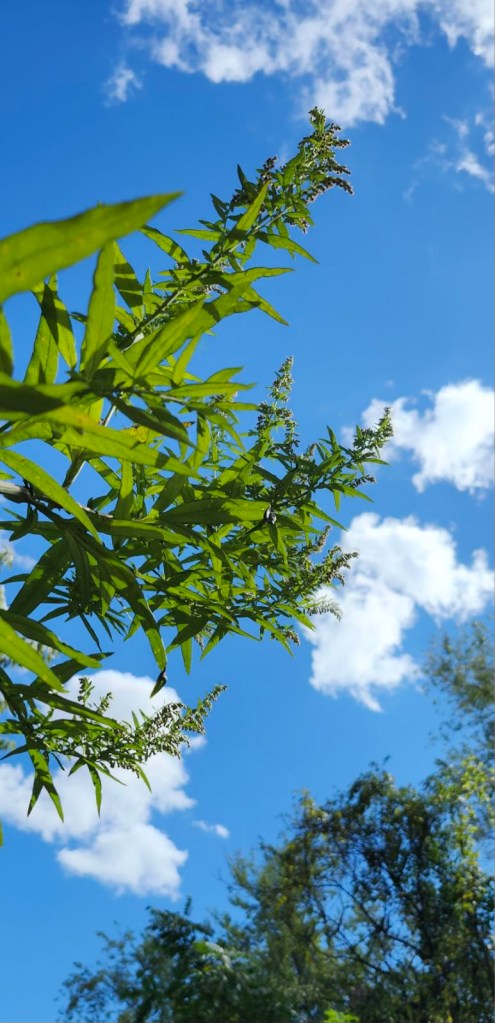
An herb as powerful as Mugwort is an invaluable way to connect and learn more about Goddesses of not only Greek, but Norse and Celtic mythology. Mugwort and its association with women, those who protect and champion women, as well as those seeking to expand their metaphysical world through dream and deity work, is as important today as it was thousands of years ago. 

Artemis, the namesake of Mugwort, is the logical starting point. Artemis is a goddess of the hunt, the moon, and especially of female initiation and protection. She is associated with girls and women, but is also a goddess to boys and men in rites of initiation and the hunt. All who wish to learn more and work with her are welcome, as she is a goddess for everyone. Mugwort, having derived its name from her, is the mother herb mirroring her mothering prowess. 

However, in the Greek mythos, she was not a goddess to suffer fools gladly. She vehemently defended her virginity and reputation as the greatest of hunters. Some sources suggest she was the patron goddess of the fearsome women warrior tribe, the Amazonians. A passionate and ferocious fighter for what she believes is right, a beacon for those who need strength.

Of everything that Artemis is known for, Mugwort is most closely related to her powers as midwife, a deity for both comforting women in labor and the newborn. Mugwort is also an important herb for dream and trance work, lending itself nicely to moon rituals, as Artemis was also a goddess of the moon. Using Mugwort in its tincture form, or burning as a smudge stick, will help to expand consciousness and enter a trance state for magical work. Adding Mugwort into your meditation on Artemis during the moon, especially the full moon, will greatly enhance communication.

In Norse mythology, Frigg, the most powerful volva, was believed to be the first practitioner of seidr magic. Frigg is the wife of Odin and a fiercely protective mother of Baldur. She is the goddess of family, motherhood, fertility and the balance of love and wisdom. Mugwort works perfectly with Frigg as it is an herb whose main use has been for assistance in prophetic dreaming and the overall health of women. 

Runes that can be used when invoking Frigg are Fehu, Pertho and Berkano. Fehu, when related to Frigg, is a female rune for fertility concerned with livestock, and especially newly born cattle in spring. Fehu is always a rune of productivity. It can also be used for spiritual or artistic creativity, carrying a fiery power within. Fehu can also represent certain aspects of the life force.

Freya Aswin correlates Pertho with birth. Pertho can also be used to help find hidden aspects within yourself. The joining of these attributes with Frigg, who governs birth and is involved with weaving fate (through work as a volva and through seidr magic), very nicely encapsulates the magic of Mugwort. 

The Berkano rune indicates birth, being rooted, and the feminine, has been called a rune of ‘bringing into being’, the first protection given to children at birth. Both Artemis and Frigg were known as unrelenting defenders of children and women. Incorporating Mugwort when working with Frigg can be very beneficial.

The goddess of Celtic mythology most closely associated with Mugwort is Brigid. Brigid is known as a goddess of fire, poetry, and healing; a maternal goddess who embodies the divine feminine. She is like spring, representing new beginnings.

As a goddess of fire and hearth, she was said to watch over all the fires in the homes of Ireland. She was closely associated with the sun and the warmth of spring, the time of renewal and rebirth. Mugwort is also an herb closely associated with fertility, the goddess, and of womanhood. Brigid, as a goddess that protected the flame (which was so important for ancient people’s survival), is like a mother radiating maternal compassion. 

Poetry (and creativity) have always had close ties with the metaphysical and dream world, a world that Mugwort works so well in. Brigid was called upon to help with creativity and inspiration, especially with bards, who held a very high position in Celtic society. Bards were the keepers of history and culture, and Brigid was often invoked to help inspire creativity. 

Brigid was also a goddess of healing. She was often called upon to help cure sickness and injury, as her touch was said to have healing powers. In addition to being a healer of sickness and injury, she was a goddess of childbirth, watching over women in labor. Her presence helped ease pain and ensured a safe delivery. She was also a protector of children and was asked by parents to watch over children’s safety and health. Brigid and her divine energies align well with Mugwort and its properties. 

Kenaz

ᚲ / C / K

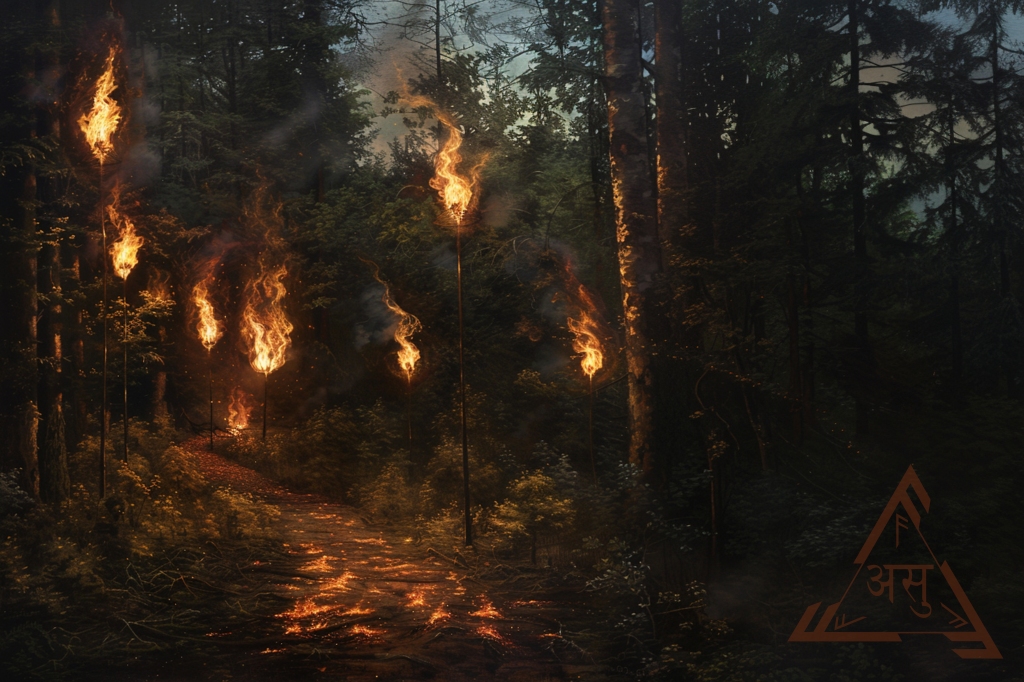
Kenaz is a particular rune, changing dramatically in context from Elder to Younger runes. The continental Germans seemed to hold this rune in a more positive light than their Scandinavian neighbors in the North. Kenaz is a reconstructed word from Proto-Germanic meaning “torch,” associated with creative fire, skills, knowledge, and teaching. The torch is that which illuminates the darkness, showing us the way in places unknown. This has been equated with an internal creative “spark” as well, which I think is reflected in the hard “k” sound represented by this rune. If we look to the Gothic language, we find evidence for this theory in the kindred word kōnja which refers to pine sap. This must be directly related to the torch, as pine/spruce has long been a favored wood for this use. 

The Gothic name for this rune is kosma/kusma, stemming from kunnan meaning “to be able, to know how,” referring to one’s inner abilities and skills. This word travels through time and tribe almost unchanged in sound and meaning, showing up in modern English in the words know and keen. In my opinion, the best example of this concept is crystallized in the Swedish word konst, meaning “art, knowledge, science, magic, secret,” and in the cognate German word kunst meaning “skill, craft, ability, magic.” This internal power of knowledge, associated with a craft or specific artistic focus, is the secret “light” side of the Kenaz rune, symbolizing our ability to make things known, to teach them, and to exhibit mastery in arts, crafts, intellectual or occult matters. 

 When looking for clues in the rune poems, the only evidence we find in relation to a “torch” is from the ‘Old English Rune Poem,’ where it states: 

“Torch is known by each of the living through its fire

-bright and blazing- it burns oftest

Where the athelings are at ease indoors.”

 Here it is clear that the word “torch” is denoting skill as a display of one’s “inner fire.” This is something (as a torch in the dark) that all can witness. “Bright and blazing” is the external effect of mastery and true skill in craft, as creation is a bright and blazing power. The last line denotes a sense of peace inherent in the “athelings,” which means “nobles, lords, heroes.” This clearly reminds an English reader of the word athlete, which signifies “those competing to win a prize.” I believe this relates to the calm felt within an extremely wise, skilled, or focused group; where everyone’s flame is burning bright and clear, all can feel a sense of ease and comfort. We get another look at this concept with the Old English word kennan which means “to make known, declare” but also “to bring forth, produce.” This is essential to the function of a craftsmen, artist, musician, or anyone who actively works with creative energies and systems. 

 In Old Norse, this rune is represented in the word kaun, meaning “sore, ulcer, boil,” and carries a much more sinister and harmful aspect associated with it. In most old poetry and analysis, it seems this rune was more of a curse or fetter than something used for anything “positive.” Although, in some Freemason rites, it has been shown that the Younger rune (ᚴ) is still in effect as a “torch,” as it mimics the man holding his sword (torch) at this angle during initiation rituals. As one walks through this “tunnel of torches,” he is “illuminated/initiated” into a new reality. 

 In the ‘Old Norwegian Rune Rhyme” it is said: 

“A sore is a curse for children;

Bale makes a man pale.” 

 Likewise, in the “Old Icelandic Rune Poem” it is said: 

“A boil is bale for bairns, and a scourgeful spot,

 And a home for flesh-rot.” 

 Here we see how our Scandinavian ancestors viewed this rune, as a much darker and fearful tone is taken with it. They viewed this rune in the context of evil and pain, without any allusions to a “lighter” aspect within the poetry. However, all these physical ailments have in common the sensation of “burning” within those experiencing it. This gives us insight into the deeper layers of the rune, where “fire” is still present, albeit in a new form. This rune was probably used strictly as a curse unless by the most skilled of sorcerers, who may have been able to turn this internal strife and struggle into acts of creation or transcendence. If looking at the Younger Futhorc as a whole, we see Kaun landing next to another very sorcerous and powerful rune, Hagal, the hail stone of transformation. Seeing these very destructive and feared runes side by side, as fire and ice respectively, shows a sort of miniature Ragnarök within the cycle of the Futhorc, enhancing the importance of viewing them in their respective “aetts” or groups, as here we end the first and begin the second. This is something I plan to venture into with more thought later… 

 To conclude, Kenaz is a rune steeped in much power and is tied together throughout all linguistic changes in the concept of an internal “fire” or a “burning” sensation. We have the older associations with torches, knowledge, creation and skill; being associated with teachers, students, craftsmen, and artistic masters. We also have the concept of “keenness” tied in, being exceptionally skilled and knowledgeable, “sharp” of mind and highly productive. In the North, this rune carried a more malicious nature, representing sickness, pain, and struggle. When approaching this rune from all the previous angles, we see a very wide range of meanings one can attribute to this rune, depending mostly on which system of runes one is working with. If using the Elder or Anglo-Saxon runes, this rune is viewed in relation to the torch. If using the Younger runes, it is likely you will associate this rune with pain or sickness.

Taken from the book “Wandering the Runic Path: Esoteric Analysis of the Germanic Runes” by Hrukjan.

ALU and the Transmission of Knowledge

ALU represents orally transmitted knowledge that is passed down or transferred between individuals. This is akin to one “vessel” pouring liquid (ALU) into another vessel, representing the passing of tradition and secret wisdom from teacher/guru to student/disciple. This can be visualized like a great fountain, where water cascades down from one source point, representing the head of the spiritual lineage, falling down into further basins which overflow into more and more, representing each member who retains the teachings.

One could also speculate that the magical phrase ALU, while being associated with an “intoxicating” beverage, could be a reference to the “madness” that Odin is said to bring forth in his devotees. Other Proto-Germanic words like aluh (amulet) and alh (protect) can bring us to see ALU as being “protected by the intoxication of Odin.” It is quite possible, as with the Vedic and Egyptian ancient temples, that this ALU was a mix of substances, kept within the temple for sacred use. Other ingredients were likely various herbs and psychedelic mushrooms.

ALU can also be associated with inspiration and the “Mead of Poetry.” This magical liquid is said to cause consumers to become skalds (poets) and scholars; created by the dwarves Fjalar and Galar by mixing honey with the blood of the wise god Kvasir. Odin steals this magical mead disguised as an eagle and brings it back to Asgard. He then (through his mouth) delivers it to the gods and those skilled in poetry, emphasizing the concept of orally transmitted wisdom. This story can be found in Skáldskaparmál.

May ALU flow within all sentient beings and may divine intoxication drive your spirit forward.

Hailaz / Namaste

-Ansuz Society