
Subscribe to continue reading
Subscribe to get access to the rest of this post and other subscriber-only content.

Subscribe to get access to the rest of this post and other subscriber-only content.
One of our weekend practices is a full recitation of the Bellows translation of the Völuspá/Voluspo.
The Völuspá is one of the most well-known poems that emerged from the Pagan North during the Middle Ages. The title translates to “Prophecy of the Seeress” or “The Wise-Woman’s Prophecy,” consisting of various tales regarding the creation, destruction, and rebirth of the world. This is told from the perspective of a dead Volva (Witch/Seeress) to the god Odin who has temporarily brought her back to life in order to gain wisdom of the past, present, and future.
Although heavily criticized by some Pagans for containing seemingly Christian influences, we can see through the comparative study of other Indo-European religions that most of the primary subject matter inherent in the poem is authentic and does in fact give us insight into pre-Christian Pagan thought. A few themes of the poem that are echoed in other Indo-European myths are the being Ymir, the primordial bovine Auðumbla, and the battle between the serpent (Jörmungandr) and the thunder god (Thor). If anything, any added “Christian” elements are fairly subtle.
We hope this will be useful to your practice.
Hailaz
Imbolc, an Old Irish word meaning “in the belly”, is the time of year when we eagerly await the changing weather in order to judge the remaining duration of Winter. On this day, if it snows or is very harsh outside, we rejoice, because according to ancient Irish Celtic tradition, it means that the Winter Goddess, Cailleach (Veiled One), is asleep and Winter will likely end soon. However, if the weather is fair and fine, we can expect Cailleach to be out collecting more firewood and supplies, ensuring a longer and more treacherous Winter ahead. So, during this time, we hope for harsh weather and make offerings to various deities, generally Cailleach (Hel), Odin, and the local spirits in order to gain their favor. It is wise to be cautious of one’s noise production on this day so as to not wake the sleeping Crone.
Jones and Pennick give us a glimpse into these ancient Celtic customs:
“…the goddess known as Brighde in Ireland, Bride in Scotland and possibly Brigantia in the north of Britain. She had to do with warmth, fire, summer and possibly the Sun, since an Irish legend tells that in winter she was imprisoned in an icy mountain by a one-eyed hag.’ In some places she presided over thermal springs, presumably as the underground Sun, and in Scotland until the mid-twentieth century she was welcomed in at Imbolc (1 February) by the symbolic rekindling of the hearth fire after the house had been springcleaned from top to bottom.”
Reverence for fire and the Sun are important during this day, as soon the warmth of Spring will be arriving, bringing in longer days. Some European tribes marked Imbolc as their official beginning of Spring, but most considered it a celebration (and observation) of the ending Winter and the new beginning that lay ahead. Cleaning of the house and hearth would be essential during this time, preparing the living area for the next year of activities. Animal pens and beds would be changed and laundry would be washed. For those further North or in higher elevations, this day would have likely been celebrated differently, as we will see in the later quoted material.
In “Celtic Mythology and Religion,” Macbain writes:
“Candlemas day is known as La Fheill-Brighde, St Brigit’s day, who is really the canonised fire-goddess, the Vesta of the heathen Gaels. Some customs in regard to her worship were mentioned already, and Martin relates an interesting custom in the Western Isles on Candlemas, showing St Brigit clearly on the aspect of Vesta, the hearth and home goddess. The mistress and servants of each family take a sheaf of oats and dress it up in women’s apparel, put it in a large basket and lay a wooden club by it, and this they call Briid’s-bed, and then they cry thrice, “Briid is come, Briid is welcome.” Next morning they look in the ashes to see the impression of Briid’s club there, and if they do they reckon it a true presage of a good crop and prosperous year, and the contrary they regard an ill omen.”
As with the divination of ashes described above, various other means of prophecy would be undertaken to gather as much insight into the current (and future) situation as possible. Divination is a window into the workings of fate, a way to receive information directly from the wide Web of Wyrd. These cryptic bits of insight would be deciphered by a seer or seeress, sometimes a traveling witch, priestess, or the man of the household (priest). This would be their compass for how to focus their attention and energy as the year unfolded.
In “Sorcery and Religion in Ancient Scandinavia,” Vikernes writes:
“The 7th Sunday before Easter, usually the 1st of Þrúðheimr, was known as Washing, known from Gaelic as Imbolc or Imbolg (“washing”), and was regarded as the first day of spring. Washing lasted for a full week. The Sunday of Washing was called Pork Sunday, and this was the day Hel’s horse arrived with the news that Baldr would return. Everyone therefore gave thanks to Hel on this day. Pork Sunday was the day they transferred the fertility of spring to the women, by whipping their behinds with fresh birch branches. This custom survived well into the age of gods, and a form of this is in fact still practised in parts of Scandinavia.”
Common themes regarding this time of year include fire reverence, goddess worship, special recognition of the Sun, and special veneration to the Winter Crone Cailleach (Hel). Exceptional attention was paid to washing and cleaning, as well as creating a new fire in the hearth of the home. Offerings were made to various deities in order to be blessed with a prosperous year and good health. With Imbolc came the glimmer of Spring and the glorious days of plenty that lie ahead. In many ways, this celebration started the people off on a clean slate.

The second group of 8 runes, falling under the domain of Hagal, begins with the rune Hagalaz. This rune, on its outer surface, means “hail” and represents the violent, intense transition of forms from liquid to solid. This, of course, has entirely metaphysical applications as well, representing changes in our lives that are brought upon us suddenly and ferociously. Hagalaz, in this way, is mostly associated with harsh or cruel magic, curses, and bad luck. The “Early Modern Swedish Rune Poem” perhaps gives us the best look at this rune through the eyes of the common folk, as it simply says:
“Hail is best from in the house.”
From the viewpoint and practice of the skilled rune sorcerer, however, Hagalaz embodies a much “brighter” and more crystalline element of the Futhark, where the harshness of change can be focused, utilized, and directed where we wish to develop further. Through the hailstone, we can (with haste) change the parts of ourselves that we must in order to gain a new form. One that strikes with more potency than before. This destruction, like that which is brought about by hail, also brings forth new life, watering the earth under the bent and broken stalks it leaves behind. Hail is still water and will nourish, but not before it destroys that which lies in its path.
Something else that must be noted is the relationship or shared energy between Hagalaz and the next rune in the Futhark, Nauthiz, which represents need. Hagalaz, as experienced by those who have dealt with it firsthand internally, also carries within it a certain “needed” shift, representing a catalyst for significant change to occur. This is something that separates the developing rune sorcerer from the average rune worker. The developed runic initiate can use Hagalaz directly, transforming it into a positive practice while remaining aware of its seemingly destructive presence and power. Subconsciously, the sorcerer searches and strives for encounters with Hagalaz, as each one gives another glimpse into what changes must be made immediately to achieve a more refined version of Self.
The “Old Icelandic Rune Poem” says:
“Hail is cold grain,
And shower of sleet,
And sickness of serpents.”
Here we see just how much of an ominous, cold “darkness” this rune carried in the minds of our Icelandic ancestors. We can see the 3 main outer concepts in full light here, as the “cold grain” (hail), “shower of sleet” (ice), and the “sickness of serpents” (destroys crops). Among most Indo-European cultures, serpents were traditionally associated with earthly and chthonic powers opposite to that of the celestial powers of the sky, usually represented by the eagle. Many occult orders aim to yoke these together, as we see in the ancient symbol of the dragon or “Winged Serpent.”
In the “Old English Rune Poem” we read:
“Hail is the whitest of grain,
It is whirled from the vault of heaven,
And is tossed about in gusts of wind;
And then it melts into water.”
Again, we have the outer concepts coming to light in the first line, alluding to the “grain” of ice. The next line introduces the celestial or “heavenly” aspect we approached in the eagle/serpent motif, although, this line is referring to the sky itself as Heaven. There is much evidence that the Anglo-Saxon (and greater Indo-European) conception of Heaven was linked with the sky, referring to “meadows” and “fields” in the sky. The Old English word heofon, from which our modern English heaven derives, has a dual meaning of “Heaven” and “sky.”
Another piece of evidence can be found in the Proto-Germanic hagô which refers to “yards, enclosures, and pastures.” Strangely enough, although contested, Heaven and Hagalaz have a similar origin in the Proto-Indo-European word h₂éḱmō, which means “stone.” This is where the modern English word hammer also stems from. This could imply the concept of the “hail-stone/crystal from Heaven” that has recurred throughout the work of many prominent runologists of the past, most notably in the “Uthark” system of Sigurd Agrell. We see the addition of the “fertility” element within the last line of the poem, as although the hail destroys, it turns to water and makes the ground fertile. Hagalaz, in many ways reflected here, is a rune of very tough love and nourishment.
One more possible origin for Hagalaz lies in the Proto-Indo-European word kagʰlos, meaning “pebble.” It seems the Dutch (and some other Germanic languages) took this word and applied it further into modern times, as the Dutch hagel also represents small balls of metal ammunition. I also find it amusing to see this connect to the modern Icelandic haglabyssa, meaning “shotgun.”
Even after Christianity had taken hold in the north and the old gods were largely demoted, we see much emphasis in esoteric circles to associate the Hagal rune with Christ and Heaven, something we’ve explored in the prior paragraph. The Swedish Christian-occultist and Gothic revivalist Johannes Bureus claimed that the Hagal rune is “that which encloses everything,” something we remember from ancient conceptions of Heaven being an enclosure in the sky. In the rune poems, this association with Christ in particular is found in the “Old Norwegian Rune Rhyme” where it says:
“Hail is the coldest of kernels;
Christ created the old world.”
I believe the converted Pagans still retained the esoteric function of this rune through the metaphor of Christ, still carrying with it celestial importance. The Hagal-stone personifies crystal memories and thoughts from Heaven itself; gifts to man from God. In Heathen thought, this can be attributed to the head of Mimir, whom Odin addresses for advice and counsel; as Mimir (memory) holds knowledge of all things. There’s further connection here in the Old Norse heill, Proto-Germanic hailaz, and Gothic hails, all meaning “whole, unbroken, pure, healthy, well, entire, complete” etc. This reinforces the crystalline “completeness” of Hagalaz. Another word showing connection between Hagalaz and Heaven is the Proto-Germanic hailagaz meaning “holy, sacred.” This is further developed in hailagōną meaning “to sanctify, make holy, hallow.”
Now that we’ve peeled away some layers of Hagalaz, we must look at this rune in its darker and more “sinister” aspects. As stated earlier, this rune has long been used in curses and black magic by some practitioners. We have the Proto-Germanic word hagaz meaning “skilled, crafty, able” and hagatusjō meaning “witch.” Of course, this later forms our English word hag, generally meaning “ugly old woman” or “witch.” The ancient “witches” of the Pagan north were associated with a practice called seiðr, which is a widely discussed and extremely broad spectrum of practices related to prophecy, divination, spirit walking, and weather manipulation. In the context of Hagalaz, seiðr can be connected in the fact that these witches were able to manipulate the weather if necessary; having the ability to send storms if they so desired.
As with the Gebo rune, Hagalaz falls into the group of runes known as “Odin’s 9.” This is because Hagalaz, whether upside down or right-side up, retains its shape and form, meaning its’ implication is concrete, single focused, and based on the ironic phenomenon of the “permanence of impermanence,” or rather, the ever-present force of change. When looking for a “Hagal” in the myths, we are left with just one vague reference to a foster father of the legendary Helgi in the “Lay of Helgi Hundingsbane II.” Perhaps the significance of this character has been lost, leaving us to only theorize why the second row is named after this rune, aside from the obvious observation of it being at the beginning.
To conclude, Hagalaz is a rune of unique beauty; one that destroys but also mirrors the glory of Heaven. We see this rune associated with celestial enclosures and paradise within the sky. Whether interpreted through the eyes of the Heathen or the Christian, this rune applies to a holiness present in the crystal, a certain wholeness represented by the “whitest grain.” Although hail is a destructive force, our ancestors viewed this in a sacred light; a fitting start to the second 8 runes of the Futhark, bringing “ice” to the fertile, earthly runes of Freyr; radically shifting perspective but concealing new life under its sudden ambush upon the Earth. Hagalaz is the wrath of the heavens, holding enormous power to transform and also to destroy.
This galdr track was created for prayer, meditation, and ritual purposes.
Through the rhythm and words, one is encouraged to dissolve into space and time, traveling with the spirits of the Wild Hunt surrounded by a myriad of runes. Short prayers to Odin and the Norns are recited to gain favor, prosperity, and divine inspiration.
This poem was composed around the Winter Solstice of 2024.
May it be of use to practitioners.
Hailaz and good Yule to all!
Subscribe to get access to the rest of this post and other subscriber-only content.
Samhain is a time when the spirits of nature, the dead, and the gods are most likely to emerge to walk amongst the living. During these days, when daylight becomes shorter and shorter, nature around us seems to die and shed its vitality, leaving trunks and branches barren, resembling bones protruding from the forest soil. This is a time when we are meant to shift our focus from outdoors to indoors and shed our dead weight from the previous year. By doing this, we are mirroring the process of nature and turning our energy inward. During this time of year come the final harvests, meaning that the workload is drastically cut down and many daily activities change. These hours were to now be replaced with indoor tasks such as tending to animals, repairing tools, spiritual practice, and performing various crafts such as woodworking, writing, or blacksmithing.
It is customary to make offerings to the deities, ancestors, and wandering spirits during this time in order to receive their favors, blessings, and good luck. We please the spirits to avoid their wrath. We offer to the ancestors to uphold family honor. We give our veneration to the gods to gain their power and visage. By performing rituals during this particular time of year, one enables themselves to access various forces and gain insight into the past, future, and matters regarding cause and effect within the present which will aid one’s progress moving forward.
In “A History of Pagan Europe” by Jones & Pennick, they write:
“Samhain (1 November). This was the most important festival of the year, showing the pastoralist, rather than agricultural, origin of the calendar. Samhain was the end of the grazing season, when flocks and herds were collected together, and only the breeding stock set aside from slaughter. It was a time of gathering-together of the tribe at their ritual centre for rituals of death and renewal, dedicated to the union of the tribal god (in Ireland, the Daghda) with a goddess of sovereignty, the Morrigan, or, more localised, Boann, deity of the River Boyne.”
As the last of the great harvests, Samhain brings reward and celebration, the end of one year and the transition into the next. According to many European tribes, Samhain marked the turning point between the years and represented the New Year celebration of their cultures. With Samhain we descend into “night,” resembling the womb of the goddess or the abode in which she resides. The goddess reigning over this time of year was almost always in the form of a grim, fate-controlling hag or crone, such as Hel or the Morrigan.
In “Celtic Mythology and Religion,” Macbain writes:
“Equal to Beltane in importance was the solemnity of Hallowe’en, known in Gaelic as Samhuinn or ‘summerend.’ Like Beltan it was sacred to the gods of light and of earth; Ceres, Apollo, and Dis also, must have been the deities whose worship was honoured. The earth goddess was celebrated for the ingathering of the fruits; Apollo or Belinus and Proserpine were bewailed for their disappearing from earth, and Dis, who was god of death and winter’s cold, and who was especially worshipped by the Celts, as Caesar says, was implored for mercy, and his subjects, the manes of the dead, had special worship directed to them. It was, indeed, a great festival—the festival of fire, fruits, and death.”
In reference to Norse and Germanic paganism, we see the worship of elves and land spirits was also common during this time. In modern Germanic paganism, many people celebrate Samhain under the name Álfablót (Elf Sacrifice), which is a time when harvests are reaped and sacrifices are made to the elves and gods. Elves and the dead are strongly connected to the ancient mounds of the Pagans, therefore, much of the activity surrounding this festival would have likely involved distributing offerings to the gods and conducting sacrifices directly upon the mound (or grave) of the dead. This is where the elves were thought to reside.
In “Sorcery and Religion in Ancient Scandinavia,” Vikernes gives us further examples pertaining to the Nordic new year and pre-Christian Halloween customs. He writes:
“The first holiday of the year was New Year’s Day, better known in English as Halloween (“initiation evening”), and in Gaelic as Samhain (“summer’s end”). The sorcerers and later the gods (i, e. religious kings) and their challengers dressed up as different creatures with access to the realm of the dead. They fasted and hung their clothes in a tree or the gallows, to make it look as if they had hanged themselves. They wounded themselves with a spear, to bleed, smeared ash or white mud all over their bodies to look like the dead, they put on masks and sacrificed a cow or an ox on the grave mound, so that the blood poured down and into the grave underneath; into the realm of the dead. They then blew a horn, in the Bronze Age a lure, to open up the entrance to the realm of the dead. They then traveled into hollow trees, caves in the mountain, holes in the ground, or more commonly into the burial mounds. These were all seen as entrances to the realm of the dead. Inside, in the darkness of the grave, a woman was waiting for them, sprinkled in the sacrificed animal’s blood and dressed like the queen of death. They then took at least some of the objects their dead forebears had been buried with and brought them back out.”
As we can see, Samhain (or Álfablót) type celebrations were not only distinct to Celtic and Germanic culture, but rather appear as a pan-European tradition representing a celebration of the dead, the ancestors, and the final harvests of the year. It is clear that no matter which form of paganism(s) one practices, the celebration and event known to us now as Halloween is of very ancient and sacred importance. Not only as a transitional period between the seasons, but as a time when it was believed to be easiest to pierce the veil between states and interact with beings outside of our normal cognition. It is because of the superstitions and pagan worldviews of the past that we have many (if not all) of our current yearly celebrations.

Subscribe to get access to the rest of this post and other subscriber-only content.
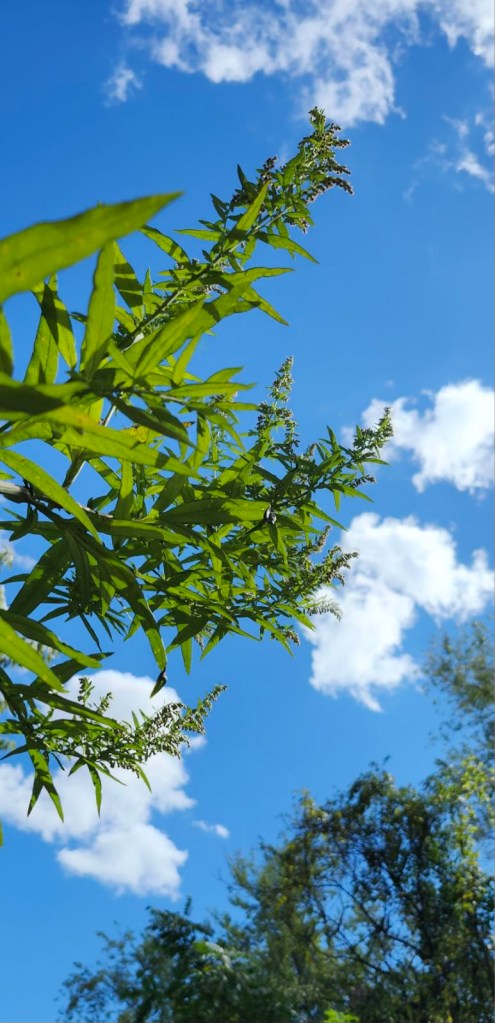
An herb as powerful as Mugwort is an invaluable way to connect and learn more about Goddesses of not only Greek, but Norse and Celtic mythology. Mugwort and its association with women, those who protect and champion women, as well as those seeking to expand their metaphysical world through dream and deity work, is as important today as it was thousands of years ago.
Artemis, the namesake of Mugwort, is the logical starting point. Artemis is a goddess of the hunt, the moon, and especially of female initiation and protection. She is associated with girls and women, but is also a goddess to boys and men in rites of initiation and the hunt. All who wish to learn more and work with her are welcome, as she is a goddess for everyone. Mugwort, having derived its name from her, is the mother herb mirroring her mothering prowess.
However, in the Greek mythos, she was not a goddess to suffer fools gladly. She vehemently defended her virginity and reputation as the greatest of hunters. Some sources suggest she was the patron goddess of the fearsome women warrior tribe, the Amazonians. A passionate and ferocious fighter for what she believes is right, a beacon for those who need strength.
Of everything that Artemis is known for, Mugwort is most closely related to her powers as midwife, a deity for both comforting women in labor and the newborn. Mugwort is also an important herb for dream and trance work, lending itself nicely to moon rituals, as Artemis was also a goddess of the moon. Using Mugwort in its tincture form, or burning as a smudge stick, will help to expand consciousness and enter a trance state for magical work. Adding Mugwort into your meditation on Artemis during the moon, especially the full moon, will greatly enhance communication.
In Norse mythology, Frigg, the most powerful volva, was believed to be the first practitioner of seidr magic. Frigg is the wife of Odin and a fiercely protective mother of Baldur. She is the goddess of family, motherhood, fertility and the balance of love and wisdom. Mugwort works perfectly with Frigg as it is an herb whose main use has been for assistance in prophetic dreaming and the overall health of women.
Runes that can be used when invoking Frigg are Fehu, Pertho and Berkano. Fehu, when related to Frigg, is a female rune for fertility concerned with livestock, and especially newly born cattle in spring. Fehu is always a rune of productivity. It can also be used for spiritual or artistic creativity, carrying a fiery power within. Fehu can also represent certain aspects of the life force.
Freya Aswin correlates Pertho with birth. Pertho can also be used to help find hidden aspects within yourself. The joining of these attributes with Frigg, who governs birth and is involved with weaving fate (through work as a volva and through seidr magic), very nicely encapsulates the magic of Mugwort.
The Berkano rune indicates birth, being rooted, and the feminine, has been called a rune of ‘bringing into being’, the first protection given to children at birth. Both Artemis and Frigg were known as unrelenting defenders of children and women. Incorporating Mugwort when working with Frigg can be very beneficial.
The goddess of Celtic mythology most closely associated with Mugwort is Brigid. Brigid is known as a goddess of fire, poetry, and healing; a maternal goddess who embodies the divine feminine. She is like spring, representing new beginnings.
As a goddess of fire and hearth, she was said to watch over all the fires in the homes of Ireland. She was closely associated with the sun and the warmth of spring, the time of renewal and rebirth. Mugwort is also an herb closely associated with fertility, the goddess, and of womanhood. Brigid, as a goddess that protected the flame (which was so important for ancient people’s survival), is like a mother radiating maternal compassion.
Poetry (and creativity) have always had close ties with the metaphysical and dream world, a world that Mugwort works so well in. Brigid was called upon to help with creativity and inspiration, especially with bards, who held a very high position in Celtic society. Bards were the keepers of history and culture, and Brigid was often invoked to help inspire creativity.
Brigid was also a goddess of healing. She was often called upon to help cure sickness and injury, as her touch was said to have healing powers. In addition to being a healer of sickness and injury, she was a goddess of childbirth, watching over women in labor. Her presence helped ease pain and ensured a safe delivery. She was also a protector of children and was asked by parents to watch over children’s safety and health. Brigid and her divine energies align well with Mugwort and its properties.
The Autumn Equinox is the turning point in the year when daylight and darkness are equal once again, tipping the scales towards the darkest period of the year when the nights grow longer and the weather gets colder. Traditionally, harvests would be reaped during this time and various rituals were conducted for the gods and spirits residing over abundance. Attention was given to the wights and ancestors, as it was believed that this time was liminal and that other realms were accessible. At the cusp of Equinox, the dark half of the year begins to slowly gain dominance.
Bonfires are especially common as well as sacrifices, whether physical or symbolic. People give thanks and ask for future harvests, ensuring a healthy stock of goods for the upcoming Winter months. Much depended on this pivotal time of year and many rites were undertaken to guarantee success. Feasts would be widespread as well as games, echoing other Summer and Fall festivals in atmosphere. For us here in the Northeastern United States, many crops are ripening during this time such as squash, corn, and apples. With this comes canning and drying goods to stock pantries for the Winter.
In “Teutonic Mythology” by Grimm, it says:
“In some parts of northern England, in Yorkshire, especially Hallamshire, popular customs show remnants of the worship of Frieg. In the neighborhood of Dent, at certain seasons of the year, especially autumn, the country folk hold a procession and perform old dances, one called the giant’s dance: the leading giant they name Woden, and his wife Frigga, the principal action of the play consisting in two swords being swung and clashed together about the neck of a boy without hurting him.”
As seen above, many early English (and Germanic) peoples would honor the god/goddess Frieg (Frigga) and Woden (Odin) during this time. Woden/Wotan in early Germanic belief was sometimes associated with wheat fields, where offerings were left for his horse Sleipnir during pivotal moments of the year. Certain epithets of Odin give reason to believe that he has been worshipped as a benevolent god to some extent, reigning over wealth, fate, and general prosperity. Names like this include Farmatýr (Lord of Cargoes) and Óski (God of Wishes).
Regarding Odin and continental Pagan belief, Grimm also states:
“As these names [Woden/Mercury/Hermes], denoting the wagon and the mountain of the old god, have survived chiefly in Lower Germany, where heathenism maintained itself longest; a remarkable custom of the people in Lower Saxony at harvest-time points the same way. It is usual to leave a clump of standing corn in afield to Woden for his horse.”
Of all the ancient celebrations, the Autumn Equinox was the most difficult one to find any references for. My belief is that it was a lesser celebratory event and more centralized in each community, where the harvest would be brought in and the local spirits offered to. People were likely working hard and didn’t have time to prepare for anything extravagant like they would during the last harvest of the year (Samhain), which certainly would have taken the forefront in terms of importance, at least to the Pagan Celts.
In “The One-Eyed God” by Kershaw, it says:
“These times of transition are strange times, whether the transition is from month to month, or season to season, or year to year; they are times which are not quite one thing or the other. They are like boundary lines, which are not quite my property or yours, or doorways, which are not quite inside or outside. As Eitrem said, it is at these dividing lines of time and space that the dead and Hermes are particularly active.”
It was common to not only focus on the harvest at this time, but to also give special attention to the dead and gods (or spirits) associated with death. The year was about to start its descent into darkness and the deified Sun/Light was to begin the darkest part of its journey through the underworld. Because of this, symbolic bonfires are lit to emulate the Sun and prolong the light.
In “Sorcery and Religion in Ancient Scandinavia” by Vikernes, it says:
“Odinn placed his eye in the grave, in the well of the past, every year, in order to learn from the past. This might sound strange, but his eye was the Sun, Baldr, that lost its power every autumn and therefore had to spend the winter in the world of the dead. In other words, Odinn had one eye in the world of the living and one eye in the world of the dead.”
Aside from the various gods, goddesses, and spirits of prosperity, it is clear that Odin and Frigga took a central role in (Germanic) Equinox observances in some areas of Pagan Europe. Odin (Woden) was recognized as a god of wishes, death, darkness, gifts, and clairvoyance, mirroring the exoteric liminality of the period between light and dark invoked by the Equinox. This external event is to also be reflected internally, as darkness begins to gain supremacy after this transition. We begin to look inward and conduct deeper spiritual work, creating light within to combat the impending darkness of Winter.

 Ansuz Society