Samhain/Álfablót

Samhain is a time when the spirits of nature, the dead, and the gods are most likely to emerge to interact with the living. During these days, when daylight becomes shorter and shorter, nature around us seems to die and shed its vitality, leaving stalks, trunks and branches barren, resembling bones protruding from the soil. This is a time when we are meant to shift our focus from outdoors to indoors and shed our dead weight from the previous year, like the trees shed their leaves. By doing this, we are mirroring the process of nature and turning our energy inward. With Samhain come the final harvests, meaning that soon the workload will be drastically cut down and many daily activities will change. This time is to now be replaced with indoor tasks such as tending to animal pens, preserving food, repairing tools, spiritual practice, and performing various crafts such as woodworking, writing, or blacksmithing.

It is customary to make offerings to the deities, ancestors, and wandering spirits during this time in order to receive their favors, blessings, and good luck. We please the spirits to avoid their wrath. We offer to the ancestors to uphold family honor. We give our veneration to the gods to gain their power and visage. By performing rituals during this particular time of year, one enables themselves to better access various forces and gain insight into the past, future, and matters regarding cause and effect within the present which will aid one’s progress moving forward.

In “A History of Pagan Europe” by Jones & Pennick, they write:

“Samhain (1 November). This was the most important festival of the year, showing the pastoralist, rather than agricultural, origin of the calendar. Samhain was the end of the grazing season, when flocks and herds were collected together, and only the breeding stock set aside from slaughter. It was a time of gathering-together of the tribe at their ritual centre for rituals of death and renewal, dedicated to the union of the tribal god (in Ireland, the Daghda) with a goddess of sovereignty, the Morrigan, or, more localised, Boann, deity of the River Boyne.”

As the last of the great harvests, Samhain brings reward and celebration, the end of one year and the transition into the next. According to many European tribes, Samhain marked the turning point between the years and represented the New Year celebration of their cultures. With Samhain we descend into “night,” resembling the womb of the goddess or the abode in which she resides. The goddess reigning over this time of year was almost always in the form of a grim, fate-controlling hag or crone, such as Hel, Frau Holle, or the Morrigan.

In “Celtic Mythology and Religion,” Macbain writes:

“Equal to Beltane in importance was the solemnity of Hallowe’en, known in Gaelic as Samhuinn or ‘summerend.’ Like Beltane it was sacred to the gods of light and of earth; Ceres, Apollo, and Dis also, must have been the deities whose worship was honoured. The earth goddess was celebrated for the ingathering of the fruits; Apollo or Belinus and Proserpine were bewailed for their disappearing from earth, and Dis, who was god of death and winter’s cold, and who was especially worshipped by the Celts, as Caesar says, was implored for mercy, and his subjects, the manes of the dead, had special worship directed to them. It was, indeed, a great festival—the festival of fire, fruits, and death.”

In reference to Norse and Germanic paganism, we see the worship of elves and land spirits was also common during this time. In modern Germanic paganism, many people celebrate Samhain under the name Álfablót (Elf Sacrifice), which is when harvests are reaped and sacrifices are made to the elves and gods. Elves and the dead are strongly connected to the ancient burial mounds of the Pagans, therefore, much of the activity surrounding this festival would have likely involved distributing offerings to the gods and conducting sacrifices directly upon the mound (or grave) of the dead. This is where the elves were thought to reside.

In our own Samhain/Álfablót practice, the fair-weather god Freyr, king of the elves, is given one last celebration of reverence, being the center focus of the rites and rituals of the two-day celebration. He is invoked and offered substantial food and drink, as well as prayers and songs, showing devotion and thanks to the spirits and deities of abundance and prosperity. The event begins on the last day of October (Halloween) and ends the night of November 1st, when Freyr is returned to his resting place until the first of May. This cycle is reflected in “Myths and Symbols in Pagan Europe,” where Davidson writes:

“He [Freyr] is said to have brought good seasons and prosperity to the land, and so when he died the Swedes brought great offerings to his mound, and believed that he remained alive and potent in the earth. The connection which seems to exist between Freyr and the elves and land-spirits thus provides an additional reason to associate them with the dead in their graves.”

Because of these associations, we place the death and rebirth of Freyr (the power of good weather and abundance) within this span of time (Nov 1-May 1). However, this is not the only way to do things nor is it recommended to everyone, as how one celebrates these sacred events revolves much around one’s lifestyle, geography, deity devotion, and overall means. For us in Western New York, this timeline coincides seamlessly with the natural cycle of the weather, and therefore is easy to follow. For those in a different climate or location, this may not make as much sense, and it is recommended to follow the patterns around you regarding these things.

In “Sorcery and Religion in Ancient Scandinavia,” Vikernes gives us further examples pertaining to the Nordic new year and pre-Christian Halloween customs. He writes:

“The first holiday of the year was New Year’s Day, better known in English as Halloween (“initiation evening”), and in Gaelic as Samhain (“summer’s end”). The sorcerers and later the gods (i, e. religious kings) and their challengers dressed up as different creatures with access to the realm of the dead. They fasted and hung their clothes in a tree or the gallows, to make it look as if they had hanged themselves. They wounded themselves with a spear, to bleed, smeared ash or white mud all over their bodies to look like the dead, they put on masks and sacrificed a cow or an ox on the grave mound, so that the blood poured down and into the grave underneath; into the realm of the dead. They then blew a horn, in the Bronze Age a lure, to open up the entrance to the realm of the dead. They then travelled into hollow trees, caves in the mountain, holes in the ground, or more commonly into the burial mounds. These were all seen as entrances to the realm of the dead. Inside, in the darkness of the grave, a woman was waiting for them, sprinkled in the sacrificed animal’s blood and dressed like the queen of death. They then took at least some of the objects their dead forebears had been buried with and brought them back out.”

As we can see, Samhain (or Álfablót) type celebrations were not only distinct to Celtic and Germanic culture, but rather appear as a pan-European tradition representing a celebration of the dead, the ancestors, and the final harvests of the year. It is clear that no matter which form of paganism(s) one practices, the celebration and event known to us now as Halloween is of very ancient and sacred importance. Not only as a transitional period between the seasons, but as a time when it was believed to be easiest to pierce the veil between dimensions and interact with beings outside of our normal cognition. It is because of the superstitions and Pagan worldviews of the past that we have many (if not all) of our current yearly celebrations in the West.

Odin Prayer in Gothic and English

Subscribe to continue reading

Subscribe to get access to the rest of this post and other subscriber-only content.

Eihwaz : ᛇ

Eihwaz is a rune of life, death, rebirth, endurance, strength, and the eternal cycle of change. This rune represents the Axis Mundi, the metaphysical center of the world. In the Germanic tongues, this would have gone by the name Irminsul, Donar’s Oak, or Yggdrasil, and represented the great World Tree of Pagan cosmology. This tree was believed to connect all the realms of existence, resembling the “shamanistic” cultures of Eurasia, associating it with Odin’s magical abilities and techniques. These practices allow him to travel as he pleases around the 9 different worlds of the cosmos, linked together by the great World Tree. The word Yggdrasil gives us this clue, as ygg(r) means “terrible one” and drasil means “steed,” reading something like “The Steed of the Terrible One.” This alludes to Odin’s ability to use this tree (or pillar) to travel outside of himself.

When looking at the rune poems, we only have one which speaks of Eihwaz directly, as the other two poems invoke the rune Ýr instead, connecting it more so to the previously mentioned Yggdrasil. The “Old English Rune Poem” states:

“Yew is on the outside an unsmooth tree,

Hardy and earth-fast, fire’s keeper,

Under-rung by its roots, best on the estate.”

This poem has a mysterious tone to it, although objective in its observation. The ancient Yew trees of the UK are highly impressive giants to behold, reaching back in time over 2000 years in some cases. These trees, like the first line says, are quite “lumpy” and gnarled, having many twists and turns. It isn’t hard to imagine why our ancestors used this tree to represent so much in their lives, as its immense canopy and knotted sprawl resembles the growth of family “trees” and essentially all concepts that seem to “branch” or “stem” from one another. The second line alludes to the endurance that Yew trees exhibit, boasting long life spans. The last line pertains to these trees having wild and intense root systems. This would make them “best on the estate,” as the Yew has a fairly slim chance of being knocked down by wind or storm.

It must be noted that while the Anglo-Saxon runes do include Eihwaz under the name ēoh, which means “Yew,” they also include another rune in their Futhorc; the rune Ýr (ᚣ), which distinctly means “Yew bow.” It is strange that the Anglo-Saxon Futhorc retains the original Eihwaz rune while also incorporating the Younger Ýr rune as well. This, to me, does indicate a significant difference in the two runes, and perhaps any attribution to bows and arrows may be strictly given to the Ýr rune, while the Eihwaz rune retains a predominant symbol of the World Tree: life, death, and rebirth.

My theory is that the Anglo-Saxons had, by this time, new geographical associations with the runes. Once they got to England, they must have been in total awe of the Yew trees. Either this, or they noticed how their Celtic adversaries/neighbors held this tree in high regard. We can see evidence for this connection in the Proto-Celtic word iwos, meaning “yew.” Perhaps these mighty Yew trees were not as common or prominent as was the Oak or other sacred trees on the continent. I believe evidence for this can be found in the absence of any word for “Yew” in the Gothic language, enforcing the Celtic influence on this word and rune. In its original form, Eihwaz would have likely been associated with the Oak, as in Gothic, the work aik means “Oak.” Not only this, but the root word eih, in Old High German, also means “Oak.” We can assume this rune came from the East, and not the West, therefor, the word Eihwaz would have most likely been a formal name for the Oak. When looking for past reference to Indo-European World Trees, the Oak is by far the most frequently described, with other minor references to Birch, Beech, Apple, Olive, and certain types of Evergreens; in this case, most notably the Yew.

The Younger runes of the North would later evolve in connection with these older runes, invoking again the infamous Yew tree. Although, their Futhorc would no longer contain the Eihwaz (ᛇ) rune. Instead, they carry over only the Ýr rune in the form of (ᛣ), associating it more directly with the Yew tree. The “Old Norwegian Rune Rhyme” states:

“Yew is the winter-greenest of trees,

It is wont for what burns to singe.”

This poem invokes the “evergreen” concept, which in the Pagan north was a symbol of eternal life. This is one reason for the incorporation of the “Yule Tree” in the winter customs, as it was a sacred reminder of beauty, life, and strength. The second line, I believe, is referring to its excellent quality as firewood, as Yew wood has been said to burn the brightest. We have no mention of bows here, so it must have been more-so acquainted with hearth-fire, life, and hope.

Lastly, the “Old Icelandic Rune Poem” gives us another angle to view this rune, in connection to the death of Baldr. It is said:

“Yew is a bended bow,

and iron eager to break,

and an etin’s arrow.”

Here, we first see mention of the bow. As stated before, the Yew was among the top choices, if not the best choice for bow making in the Heathen north. Therefore, Eihwaz / Ýr can be associated with bows, arrows, and archery. It has been theorized that this can also relate to “tension,” as the pulled bow string is very tense and holds a lot of energy within it. This, some say, can be associated with death when life’s energy is finally released. The last line can without doubt be associated with the events surrounding the death of Baldr. Baldr is killed (technically) by the etin (giant) Loki’s arrow/dart made of mistletoe, something that grows on various trees and was of a highly medicinal and magical use in the north. Of course, it is the blind god Höðr who throws the dart, but it was Loki who planned the act. This story can be found in Gylfaginning in Snorri’s “Prose Edda.”

In conclusion, we can see that Eihwaz is connected to the primordial World Tree of the European peoples, whether in the form of the Oak, the Yew, or any other tree that our ancestors venerated as a sacred center. Its association to eternal life, death, rebirth, and endurance can be seen in the symbolism of the evergreen; the ancient symbol of everlasting existence. We’ve also uncovered direct evidence concerning the possibility that this rune was originally a symbol of the Oak tree, as this was the most sacred tree cross-culturally amongst ancient Europeans, being idolized extensively from Ireland to Finland, Portugal to Greece. The Oak was the main representation of the World Tree cosmology. Therefore, this rune can not only take the meaning of “Yew,” but also of “Oak.” This, to me, would all depend on the geography surrounding the one using the runes.

-Wandering the Runic Path: Esoteric Analysis of the Germanic Runes

Isa

Isa is among the most powerful of runes, although, easily overlooked due to its simple form. On the outside, this rune represents ice and the powers inherent within “frozen” states of being; nearly removed from the degradation of time. When looking for etymological clues during the research of this rune, I was unable to break free from the “ice,” so to speak. No matter where I searched, there wasn’t much material stretching this rune out. So, most of what we can say about Isa is largely subjective, although, some basic core concepts have been generally accepted as interpretations, such as focus, patience, and stillness. These ideas we will explore more as we dive further into this mysterious rune.

Isa is a word that hasn’t changed much since its’ theoretical use in Iron Age Germania. We still see it quite clearly in the English word ice and German eis, even loaning itself to Japanese in the form of aisu. At the root of Isa is the Proto-Indo-European heyH- meaning “ice, hoarfrost, rime,” most likely referring to the icy residue left upon sprawling steppe landscape in cold months. Later, this would evolve into the Old Norse íss, which also means “ice.” This word, likewise, is used as a kenning or poetic reference to a sword, which clearly resembles the long, sharp icicles that hang from roofs and rafters in the winter.

The “Old English Rune Poem” gives us a beautiful description of this rune, stating:

“Ice is extra cold and immensely slick,

It glistens clear as glass, most gemlike,

A frost-wrought floor, fair to behold.”

The first line seems to have a precautionary feeling to it, expressing the obvious physical qualities of the rune. The second line starts to unfold the more metaphysical associations that the Anglo-Saxons attached to it, as ice can have a “mesmerizing” effect on the observer; clear like glass and mimicking the beauty of a fine gemstone. The final line shows that the ice was held in reverence by our ancestors, as the force held in Isa is one of beauty, radiance, and power. It is in this sense that we can attribute qualities like focus, stillness, and even a sense of “peace” to Isa.

Isa represents meditation, concentration, and patience. Isa is still and quiet, as one who is meditating. Isa is concentrated matter; power focused inward. Isa is a force of patience, taking long periods of “human time” to affect its surroundings. We can attribute a great energy and power to Isa, the same force inherent in continents of ice and gargantuan glaciers that carve the face of the Earth. This is an unseen and long-lasting power, extremely “dense” and focused; opposite to the quick and clearly observable power of fire which consumes all. It is with this evidence that we can grant this rune half of the powers fundamental in the Norse creation myth.

With Isa, we can invoke the now familiar concept of “Odin’s 9,” being a rune that is unchanged whether right side up or inverted. In relation to Odin, it is said that he is the offspring of the ice giant Bestla and the primordial being Borr, connecting him and the giants/jötunns directly to this rune. This evidence enforces theories about Isa regarding the past and its’ association with memory. Ice freezes and “locks” matter within it, encasing things and moments in a space beyond time. Essentially, ice holds the memories of the past within it. This has been further reinforced in modern science, as it has been proven that water can actually carry information within it. Isa slows and halts the forces of change.

This brings up the god/giant Mímir. Mímir translates to “memory” and further connects to Proto-Indo-European (s)mer- which means “to fall into thinking, remember, care for,” or essentially, meditation. This applies connection to Isa and to Odin, as meditation and the unlocking of “memories” is one of Odin’s most sought-after goals, consulting often the head of Mimir for advice and counsel. It is with this evidence that, I would argue, Isa is synonymous with the traditional symbol of the “crystal ball” that magicians, wizards, and various occultists have been said to consult throughout history. Mimir’s head could very well be associated with a large, clear gemstone or crystal, one which Odin uses for prophecy, wisdom, and focus.

Within Isa we also have a key to creation, as this rune represents a building block of design; the ancient and primordial ice that met with the all-encompassing “heat” or furious fire in the middle expanse of Ginnungagap (yawning abyss). With Isa we can see the ancient concept of Germanic “duality.” Not as one dealing necessarily with good and evil, but with “fire and ice”; chaos and order, change and stillness.

The ”Old Norwegian Rune Rhyme” gives us two rather obscure lines regarding Isa, stating :

“Ice we call a broad bridge;

A blind man needs to be led.”

Surely the Norwegians experienced a difference in form and force of ice than their ancestors from the steppe, as the first line alludes to massive and expansive “bridges” of ice. The second line seems to me to indicate that if one is “blind” or inexperienced that he will need to be led safely over these “bridges of ice.” Here we can see this rune is able to be applied to many circumstances in life where one is potentially “blind,” making this rune a more practically applicable concept.

Lastly, we will refer to the “Old Icelandic Rune Poem,” where it is said:

“Ice is the rind on a river, and a wave’s roof,

And a danger for doomed men.”

Here we have a more objective picture of this rune. We see its form as the “rind” or crust/peel of the river, referring to the layer of ice upon the top of bodies of water. We also have a reference to oceanic ice as the “wave’s roof,” something the Icelanders would have had an intimate relationship with. Lastly, the obvious is stated as a warning, that this rune is danger for men who are “doomed.” On land or sea, if you are unprepared for ice, indeed you will likely be doomed.

To conclude, it is without a doubt evident that Isa holds immeasurable power within it. Although it is arguably the “quietest” of all the runes, I think as with people, this is a sign of a different type of power; one that is slow, focused, precise, calm, and internalized. Cunningness as opposed to a purely aggressive, outward force. Isa is mastery over the forces within, a “silence” that is akin to serenity. With Isa we can associate deep and focused acts of meditation, a Shiva-like “stillness” that deeply reverberates within, radiating a crystal brilliance internally. This is the clear awareness of Odin; clear, bright, and entirely concentrated.

-Wandering the Runic Path: Esoteric Analysis of the Germanic Runes

May Day/Beltane

May Day marks the true climax of Spring and transition into Summer in the Northern regions. During this month, lots of plants and herbs begin to emerge after the long winter, bringing a plethora of flora and fauna to the land. On May Day, many Pagans resurrect (uncover) their idols of fertility and parade them through the towns and fields, blessing them for the upcoming agricultural year. In the past, this idol would have been housed in a cart or wagon and was presided over by specific individuals. Sometimes, these exclusive ritual participants were killed after laying eyes on the goddess in the wagon.

Jones & Pennick refer to this in “A History of Pagan Europe,” stating:

“The tribes around the mouth of the Elbe and in the south of modern Denmark are the ones who, as is now well known, worshiped Nerthus, Mother Earth. They saw her as intervening in human affairs and riding among her people in a wagon drawn by cows. The priest of Nerthus would sense when she was ready to leave her island shrine, and then with deep reverence would follow the wagon on its tour through the lands of her people, which would be the occasion for a general holiday, the only time when these warlike people put down their arms. At the end of the perambulation, the wagon and its contents would be washed in a lake by slaves who were then drowned. Noone was allowed to see the goddess on pain of death.”

In many cases, this idol was a goddess, and in others, a god would have taken its place, most notably Freyr. The idol that represented the god/goddess/spirit would be housed in the wagon, other times, a living person was chosen to embody the specific deity. Everyone would treat the person as if he/she was the actual deity themselves, dressing them in flowers and other pleasant things, parading them around in reverence.

Bonfires are customary during this time. Many people perform purification rituals using smoke and various other substances to cleanse themselves for the new year. Birch wood was most commonly used for these purposes and the smoke created would thus be walked through or “bathed” in. This was done to cleanse oneself and family of evil, sickness, and bad luck. Not only people, but livestock were said to be paraded through a pair of fires, ensuring a prosperous year, good health, and good harvests.

In “Celtic Mythology and Religion”, Macbain refers to the writings of Cormac:

“Most authorities hold, with Cormac, that there were two fires, between which and through which they passed their cattle and even their children. Criminals were made to stand between the two fires, and hence the proverb, in regard to a person in extreme danger, as the Rev. D Macqueen gives it, “He is betwixt two Beltein fires.”

Beltane bonfires are also referenced in “A History of Pagan Europe” by Jones & Pennick, where it says:

“The second great festival of the year was Beltane or Cétshamhain (1 May, May Day). This was the beginning of the summer half of the year, also a pastoralist festival. As at Samhain, the lighting of bonfires was an important rite. Cattle were driven through the smoke to protect them in the coming season. Beltane may be connected with the Austrian deity Belenos, who was particularly associated with pastoralism, or it may simply take its name from the bright (bel) fires which were part of its celebration. Beltane is the only festival recorded in the ninth-century Welsh tales, a time when the Otherworld communicates with the world of humans, either through portents such as the dragon fight in the tale of Lludd and Llevelys, or through apparitions such as the hero Pwyll’s sighting of the goddess Rhiannon.”

Later, around the 12th century, “May Baskets” became common practice in Germanic culture, which involved hanging flowers on strangers’ doorknobs or delivering flowers to friends, family, and the local community. This is still done today in many parts of the world, where people will anonymously leave flowers on people’s doorsteps in honor of the season. Essentially, May Day revolves around life, youth, and the beauty of the natural world around us. Through the blessing and beauty of the May Queen, we are propelled into the new farming season with inspiration and vigor.

As we can see from these various historical accounts, this particular event was of significant importance to not only Germanic and Celtic Pagans, but a pan-European celebration centered around a specific goddess, ritual cleansing, and Sun worship. Plenty of other cultures outside of Europe celebrate this occasion as well, such as some Native Americans, Persians, and Hindus. This renewal of life has been central to human experience for most of its history, promising us the glory of Summer and the proliferation of life.

In “Sorcery and Religion in Ancient Scandinavia,” Vikernes writes:

“On White Queen Monday they travelled the land to collect bacon, flour, eggs and other white food items for the large bride’s race. Dressed in white and wearing ribbons and wreaths of flowers they danced and sang all the way, from farm to farm, women and men, girls and boys, led by the king (alias the May King) and the queen (alias the May Queen), whether they were sorcerers or deities. The king and queen sat in a carriage, drawn by horses or the others in the procession. The queen did all the talking and the ladies and girls sang “Bride, bride, most beautiful bride”, to invite to the race all the women who believed they stood a chance at winning the bride’s race. The females in the procession wore men’s clothes on their upper bodies, and the men wore dresses, because they represented the hermaphroditic spirits. This custom remained even after the belief in spirits was supplemented with a belief in deities.”

On our homestead, May Day generally consists of uncovering our Freyr idol and walking him through the gardens and fields, either in a small mock-wagon or by hand. Once we have visited all the necessary areas, we return the idol to his altar and leave generous offerings for his blessings and fortune. Two fires are built in front of the altar and each ritual participant walks between them, purifying themselves of yearly baggage and giving personal thanks to the great Yngvi-Freyr. By doing this, each person can shed negative, dark, detrimental energies; inspiring wellbeing, clarity, and positive development.

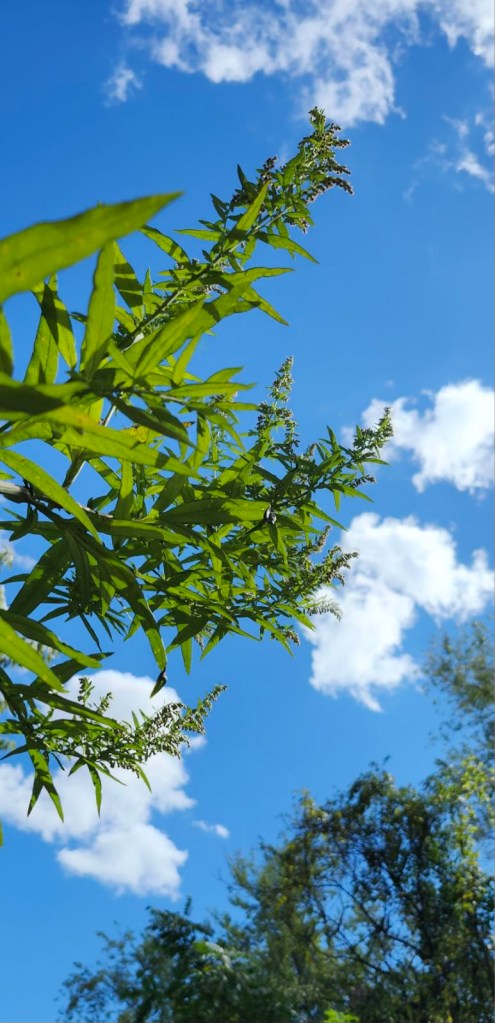
Mugwort: Stepping Towards the Divine Feminine

An herb as powerful as Mugwort is an invaluable way to connect and learn more about Goddesses of not only Greek, but Norse and Celtic mythology. Mugwort and its association with women, those who protect and champion women, as well as those seeking to expand their metaphysical world through dream and deity work, is as important today as it was thousands of years ago. 

Artemis, the namesake of Mugwort, is the logical starting point. Artemis is a goddess of the hunt, the moon, and especially of female initiation and protection. She is associated with girls and women, but is also a goddess to boys and men in rites of initiation and the hunt. All who wish to learn more and work with her are welcome, as she is a goddess for everyone. Mugwort, having derived its name from her, is the mother herb mirroring her mothering prowess. 

However, in the Greek mythos, she was not a goddess to suffer fools gladly. She vehemently defended her virginity and reputation as the greatest of hunters. Some sources suggest she was the patron goddess of the fearsome women warrior tribe, the Amazonians. A passionate and ferocious fighter for what she believes is right, a beacon for those who need strength.

Of everything that Artemis is known for, Mugwort is most closely related to her powers as midwife, a deity for both comforting women in labor and the newborn. Mugwort is also an important herb for dream and trance work, lending itself nicely to moon rituals, as Artemis was also a goddess of the moon. Using Mugwort in its tincture form, or burning as a smudge stick, will help to expand consciousness and enter a trance state for magical work. Adding Mugwort into your meditation on Artemis during the moon, especially the full moon, will greatly enhance communication.

In Norse mythology, Frigg, the most powerful volva, was believed to be the first practitioner of seidr magic. Frigg is the wife of Odin and a fiercely protective mother of Baldur. She is the goddess of family, motherhood, fertility and the balance of love and wisdom. Mugwort works perfectly with Frigg as it is an herb whose main use has been for assistance in prophetic dreaming and the overall health of women. 

Runes that can be used when invoking Frigg are Fehu, Pertho and Berkano. Fehu, when related to Frigg, is a female rune for fertility concerned with livestock, and especially newly born cattle in spring. Fehu is always a rune of productivity. It can also be used for spiritual or artistic creativity, carrying a fiery power within. Fehu can also represent certain aspects of the life force.

Freya Aswin correlates Pertho with birth. Pertho can also be used to help find hidden aspects within yourself. The joining of these attributes with Frigg, who governs birth and is involved with weaving fate (through work as a volva and through seidr magic), very nicely encapsulates the magic of Mugwort. 

The Berkano rune indicates birth, being rooted, and the feminine, has been called a rune of ‘bringing into being’, the first protection given to children at birth. Both Artemis and Frigg were known as unrelenting defenders of children and women. Incorporating Mugwort when working with Frigg can be very beneficial.

The goddess of Celtic mythology most closely associated with Mugwort is Brigid. Brigid is known as a goddess of fire, poetry, and healing; a maternal goddess who embodies the divine feminine. She is like spring, representing new beginnings.

As a goddess of fire and hearth, she was said to watch over all the fires in the homes of Ireland. She was closely associated with the sun and the warmth of spring, the time of renewal and rebirth. Mugwort is also an herb closely associated with fertility, the goddess, and of womanhood. Brigid, as a goddess that protected the flame (which was so important for ancient people’s survival), is like a mother radiating maternal compassion. 

Poetry (and creativity) have always had close ties with the metaphysical and dream world, a world that Mugwort works so well in. Brigid was called upon to help with creativity and inspiration, especially with bards, who held a very high position in Celtic society. Bards were the keepers of history and culture, and Brigid was often invoked to help inspire creativity. 

Brigid was also a goddess of healing. She was often called upon to help cure sickness and injury, as her touch was said to have healing powers. In addition to being a healer of sickness and injury, she was a goddess of childbirth, watching over women in labor. Her presence helped ease pain and ensured a safe delivery. She was also a protector of children and was asked by parents to watch over children’s safety and health. Brigid and her divine energies align well with Mugwort and its properties. 

Fehu Rune Analysis

Fehu is a rune denoting possessions, wealth, and material resources. In the ancient German tongue, this word would have represented one’s livestock, particularly cattle or other large production animals. Fehu stems from the Proto-Indo-European word u, which translates to “livestock.” Before the common man was able to call land his own, the only things he could really claim ownership of were his animals, assets, and family. This would evolve later into the English word fee, meaning “a right to the use of a superior’s land, inherited estate held of a lord, general property ownership, money paid or owned, payment for service, a prize or reward.” We see this same idea in the Old French word fief, meaning “an estate held by a person on condition of providing military service to a superior, something over which one has rights or exercises control, or an area of dominion.” 

Another connection we find relating to the concept of land ownership is in the word feudalism, meaning “a social system based on personal ownership of resources and personal fealty between a lord and subject.” This word can be broken down into 3 parts as “fe-odal-ism,” which would imply the connection between the noble (odal) and the fee (fe) one pays to essentially sub-lease land from the noble. This fee would be in the form of food, money, or military service. We also can find further evidence in the word fealty, meaning “allegiance to an oath to one’s lord.” 

This rune applies to all things monetary and material, whether in the form of the living flesh of animals or in the cold medium of actual money. Fehu, in this regard, can also be assigned powers of security, abundance, domestication, opportunity, and peace. Esoterically speaking, one could view Fehu as a fire rune, as one’s resources are a type of fuel/fire source, helping to propel us forward with more confidence, and ultimately, more focus towards our goals. Now that we’ve peeled away the outer layers of the Fehu rune, we can look deeper inside for further information. 

Connections can be made to the twin Vanir gods Freyr and Freyja, as this stave belongs to their respective “aett” of runes. Frey(r) has long been known to reside over the homestead, fertility, and success of the farm. His powers are attributed to fair weather, peace, prosperity, and general safety within the “sacred” or enclosed space of the homestead/village. Freyja, on the other hand, represents fertility, lust, beauty, death, and the Earth. In the “Old English Rune Poem” it is said: 

“Wealth is an ease to every man,  

Though each should deal it out greatly 

If he wishes to gain, before his Lord, an honored lot.” 

At this point in history, the author would have been referring to the Christian God. Nonetheless, this could easily refer to Freyr as well, and in fact clearly alludes to him, as the very title of Freyr means “Lord.” This poem, and others, also indicate a certain antagonism of greed, saying one must “deal out” wealth as much as he can do so. 

We see another connection to Fehu and Freyr in the word fairy, which is generally believed to be a being connected with the dead, magical powers, and the natural world. This word is cognate with the Latin Fata, who is the goddess of fate. We also have the English word fey, meaning “dying, dead, spellbound, doomed, or otherworldly.” Here, we can see remnants of powers inherent in the fairy, but also in Freyja, as she is a goddess residing over the dead alongside Odin. This could be insight into the overall order of the Futhark, as one could assume it resembles a Ragnarök-esque circle of events, symbolizing birth, death, and rebirth. Some refer to this as “the doom of the gods,” which could be a possible piece of evidence alluding to the Fehu rune representing doom or death, perhaps hinting at the resurrection of ones “Self” by means of retrieving material possessions from the burial mound; in turn beginning a new cycle, starting with one’s possessions. 

Suggestion for this can be found in “Óláfs Saga Helga,” where King Olaf facilitates his resurrection through the prophetic dreams of Hrani, who takes the possessions of his (Olaf’s) mound to the wife of Herald the Greenlander. After this, she then gives birth to a son who is bestowed the name Olaf, ensuring another life according to their tradition. The new Olaf would later denounce this claim, as Christian ideals had become the norm by then and the concept of reincarnation was abolished in their religion aside from select, “underground” sects. Similarities can be seen in the way Tibetans choose the Dalai Lama; who is shown past possessions to pick from at a young age. If the child chooses the correct objects, he will be recognized as the reincarnated Holy Man. 

Freyr has also been associated with the burial mound, the dead, and the cult of the ancestors. In “Ynglinga Saga” it is said that after Freyr had died, he was buried in a great mound with 3 holes bore into it. Each hole was offered a precious metal of either gold, silver, or copper to ensure good seasons and peace continued throughout the land. In connection with the dead, it is said that King Yngvi also used to perform “utisetta,” or Norse meditation, upon his dead queen’s burial mound. 

One more piece of evidence I will add, in this regard, is the Irish word figh, meaning “to weave together, compose.” Here we see the idea of a new beginning, the “weaving” of a new story, connecting with the ideas we explored in relation to the goddess(es) of fate, who have long been associated with the “spinning” or weaving of the destinies of man and the cosmos. This further ties the rune to the goddess Freyja, who is known for teaching seiðr to Odin; a sorcery generally associated with a metaphysical “weaving, tying, or binding” of a specific target, the weather, or the forces of fate altogether. 

Through this very material and resourceful rune we can form a more broad picture of how it may have been used as it moved through the ages. From a purely terrestrial concept revolving around possessions and livestock to the more metaphysical aspect of fire, energy, and prosperity within the Self and tribe. We are also given objective history into the idea of land ownership and how that system is constructed based on the notion of leasing out lands to those below you in caste. The king leases his land to nobles and the nobles, in turn, lease their land to the farmers/peasants. 

In conclusion, we can be assured that the Fehu rune is a rune of one’s material possessions and that it is a rune of moveable wealth. Further, it can be attributed to gifts of abundance, prosperity, and fertility of the Earth. As this rune moves through the times, it reflects not only money, but the fuel-source it represents in respect to our desires and opportunities. We see esoteric connections to the dead, the burial mound, and the Heathen process of reincarnation associated with the retrieval of “past possessions,” similar to that of the Tibetan practice. These rather obscure connections, upon additional reflection, seem to hold more and more weight within them.