
Subscribe to continue reading
Subscribe to get access to the rest of this post and other subscriber-only content.

Subscribe to get access to the rest of this post and other subscriber-only content.
Subscribe to get access to the rest of this post and other subscriber-only content.
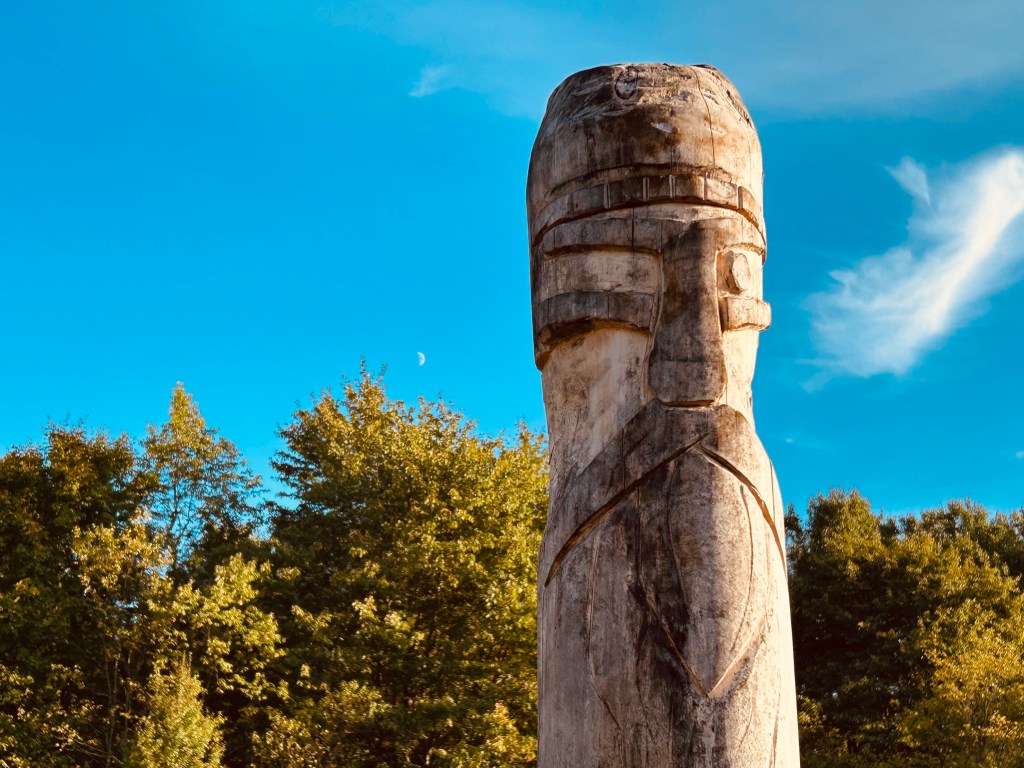
Eihwaz is a rune of life, death, rebirth, endurance, strength, and the eternal cycle of change. This rune represents the Axis Mundi, the metaphysical center of the world. In the Germanic tongues, this would have gone by the name Irminsul, Donar’s Oak, or Yggdrasil, and represented the great World Tree of Pagan cosmology. This tree was believed to connect all the realms of existence, resembling the “shamanistic” cultures of Eurasia, associating it with Odin’s magical abilities and techniques. These practices allow him to travel as he pleases around the 9 different worlds of the cosmos, linked together by the great World Tree. The word Yggdrasil gives us this clue, as ygg(r) means “terrible one” and drasil means “steed,” reading something like “The Steed of the Terrible One.” This alludes to Odin’s ability to use this tree (or pillar) to travel outside of himself.
When looking at the rune poems, we only have one which speaks of Eihwaz directly, as the other two poems invoke the rune Ýr instead, connecting it more so to the previously mentioned Yggdrasil. The “Old English Rune Poem” states:
“Yew is on the outside an unsmooth tree,
Hardy and earth-fast, fire’s keeper,
Under-rung by its roots, best on the estate.”
This poem has a mysterious tone to it, although objective in its observation. The ancient Yew trees of the UK are highly impressive giants to behold, reaching back in time over 2000 years in some cases. These trees, like the first line says, are quite “lumpy” and gnarled, having many twists and turns. It isn’t hard to imagine why our ancestors used this tree to represent so much in their lives, as its immense canopy and knotted sprawl resembles the growth of family “trees” and essentially all concepts that seem to “branch” or “stem” from one another. The second line alludes to the endurance that Yew trees exhibit, boasting long life spans. The last line pertains to these trees having wild and intense root systems. This would make them “best on the estate,” as the Yew has a fairly slim chance of being knocked down by wind or storm.
It must be noted that while the Anglo-Saxon runes do include Eihwaz under the name ēoh, which means “Yew,” they also include another rune in their Futhorc; the rune Ýr (ᚣ), which distinctly means “Yew bow.” It is strange that the Anglo-Saxon Futhorc retains the original Eihwaz rune while also incorporating the Younger Ýr rune as well. This, to me, does indicate a significant difference in the two runes, and perhaps any attribution to bows and arrows may be strictly given to the Ýr rune, while the Eihwaz rune retains a predominant symbol of the World Tree: life, death, and rebirth.
My theory is that the Anglo-Saxons had, by this time, new geographical associations with the runes. Once they got to England, they must have been in total awe of the Yew trees. Either this, or they noticed how their Celtic adversaries/neighbors held this tree in high regard. We can see evidence for this connection in the Proto-Celtic word iwos, meaning “yew.” Perhaps these mighty Yew trees were not as common or prominent as was the Oak or other sacred trees on the continent. I believe evidence for this can be found in the absence of any word for “Yew” in the Gothic language, enforcing the Celtic influence on this word and rune. In its original form, Eihwaz would have likely been associated with the Oak, as in Gothic, the work aik means “Oak.” Not only this, but the root word eih, in Old High German, also means “Oak.” We can assume this rune came from the East, and not the West, therefor, the word Eihwaz would have most likely been a formal name for the Oak. When looking for past reference to Indo-European World Trees, the Oak is by far the most frequently described, with other minor references to Birch, Beech, Apple, Olive, and certain types of Evergreens; in this case, most notably the Yew.
The Younger runes of the North would later evolve in connection with these older runes, invoking again the infamous Yew tree. Although, their Futhorc would no longer contain the Eihwaz (ᛇ) rune. Instead, they carry over only the Ýr rune in the form of (ᛣ), associating it more directly with the Yew tree. The “Old Norwegian Rune Rhyme” states:
“Yew is the winter-greenest of trees,
It is wont for what burns to singe.”
This poem invokes the “evergreen” concept, which in the Pagan north was a symbol of eternal life. This is one reason for the incorporation of the “Yule Tree” in the winter customs, as it was a sacred reminder of beauty, life, and strength. The second line, I believe, is referring to its excellent quality as firewood, as Yew wood has been said to burn the brightest. We have no mention of bows here, so it must have been more-so acquainted with hearth-fire, life, and hope.
Lastly, the “Old Icelandic Rune Poem” gives us another angle to view this rune, in connection to the death of Baldr. It is said:
“Yew is a bended bow,
and iron eager to break,
and an etin’s arrow.”
Here, we first see mention of the bow. As stated before, the Yew was among the top choices, if not the best choice for bow making in the Heathen north. Therefore, Eihwaz / Ýr can be associated with bows, arrows, and archery. It has been theorized that this can also relate to “tension,” as the pulled bow string is very tense and holds a lot of energy within it. This, some say, can be associated with death when life’s energy is finally released. The last line can without doubt be associated with the events surrounding the death of Baldr. Baldr is killed (technically) by the etin (giant) Loki’s arrow/dart made of mistletoe, something that grows on various trees and was of a highly medicinal and magical use in the north. Of course, it is the blind god Höðr who throws the dart, but it was Loki who planned the act. This story can be found in Gylfaginning in Snorri’s “Prose Edda.”
In conclusion, we can see that Eihwaz is connected to the primordial World Tree of the European peoples, whether in the form of the Oak, the Yew, or any other tree that our ancestors venerated as a sacred center. Its association to eternal life, death, rebirth, and endurance can be seen in the symbolism of the evergreen; the ancient symbol of everlasting existence. We’ve also uncovered direct evidence concerning the possibility that this rune was originally a symbol of the Oak tree, as this was the most sacred tree cross-culturally amongst ancient Europeans, being idolized extensively from Ireland to Finland, Portugal to Greece. The Oak was the main representation of the World Tree cosmology. Therefore, this rune can not only take the meaning of “Yew,” but also of “Oak.” This, to me, would all depend on the geography surrounding the one using the runes.
-Wandering the Runic Path: Esoteric Analysis of the Germanic Runes
Amitabha (Boundless/Infinite Light) is an important figure found in the Mahayana and Vajrayana schools of Buddhism, with his function varying differently between the two.
In the Mahayana schools, especially the Pure Land school, Amitabha is venerated as a fully enlightened Buddha and his realm Sukhavati (a place ideal to practice the Dharma) is aspired after death. This isn’t a permanent heaven, but rather a flawless realm for one to continue practice and achieve enlightenment in.
In Vajrayana, Amitabha is a Dhyani (meditation/wisdom) Buddha and is the head of the Lotus (Padma) family, associated with the direction of the West, the same direction of his heavenly realm Sukhavati. He is responsible for the transformation of desire and attachment into discerning wisdom. He is also invoked in the practice of Phowa meaning “transfer of consciousness.” However, when practiced in accordance with long-life rituals, he appears as Amitayus (Buddha of Infinite Life), a sambhogakaya (enjoyment body) form of Amitabha.
Amitabha usually appears as a red Buddha in meditation posture, adorned with Dharma robes and holding a begging bowl with both hands. The meditator is to visualize oneself as a bodhisattva, white in color, with Amitabha, the Bhagavat, in front. Through his sadhana, one eventually dissolves the barrier between Amitabha and oneself, becoming the very essence of “lucidity and emptiness.”
Om Ami Dewa Hri
Front Image Link: https://www.himalayanart.org/items/24733/images/primary#-617,-1000,1381,0
Back Image Link: https://www.himalayanart.org/items/77019/images/primary#-1434,-2204,2971,0
We have finally received our approval to operate as a 501c3. With this comes many new opportunities for people to get involved and for us to expand on our event and activity planning.
We will be looking for more individuals who are interested in hosting lectures, retreats, classes, rituals, hikes and projects of various kinds. If you have skills to share or knowledge to teach, please feel free to get in touch.
Rune classes will resume this fall, sign up will begin in September. Weekly galdr sessions held Wednesday and Saturdays.
Groups who want to collaborate on ritual or music, please get in touch.
Hailaz
The Sanskrit Triratna (Triple Gem/Three Gems) mantra is a universal refuge prayer for all Buddhists, sung in all schools of Buddhism from the Theravada to the Mahayana and Vajrayana. The mantra proclaims the following:
“I go for refuge to the Buddha,
I go for refuge to the Dharma,
I go for refuge to the Sangha.”
Refuge in the Buddha means to acknowledge the omniscient and unshakable nature that the Buddha represents, and to aspire to acquire that state. Refuge in the Dharma means to accept the authority of the teachings and to follow them diligently as a road map to enlightenment. Refuge in the Sangha means to find solace and inspiration in spiritual friends, teachers, and community.
This is a basic interpretation of the mantra as generally understood by most practicing Buddhists. However, as one gains deeper meditative insight, one’s guru will reveal further interpretation, depending on the school one involves themselves in.
Sanskrit:
Buddhaṃ śaraṇaṃ gacchāmi.
Dharmaṃ śaraṇaṃ gacchāmi.
Saṃghaṃ śaraṇaṃ gacchāmi
Pali:
Buddham saraṇaṁ gacchāmi
Dhammaṁ saraṇaṁ gacchāmi
Saṅghaṁ saraṇaṁ gacchāmi
Image link: https://www.himalayanart.org/items/61240
#buddhism #triratna #refuge #dharma
Subscribe to get access to the rest of this post and other subscriber-only content.
Jera marks the midway point of the Elder Futhark, meaning “year” or “season” in Proto-Germanic. This word is the ancestor of our own English word year, representing the time it takes the Earth to make a full rotation around the Sun. Jera is associated with rewards, harvests, and seasonal cycles; representing the time when we get to reap what we have sown. Many attribute this rune to the fall when our ancestors would celebrate the fruitful year and bountiful harvests. We can also attribute sacrifice and the blood of slain livestock to this rune, as this is the time animals were killed in preparation for winter.
In Old Norse, this rune/word is called ár (ᛅ), meaning “year, abundance, plenty.” This rune, according to the “Old Norwegian Rune Rhyme,” is associated directly with the god Fróði, another epithet of Freyr, stating:
“Harvest tide is a blessing to men;
I know that Fróði was openhanded.”
Fróði was a mythical king of the Danes who was associated with prosperity and a golden age of peace. Many have theorized this is just another name for Freyr, who we can feel comfortable associating this rune with. The poem directly invokes harvests and blessings, enforcing our connection of Jera with autumn and the gods of plenty.
In Old English this rune is called ġēr, which also means “year.” In the “Old English Rune Poem,” it is stated:
“Harvest is the hope of men, when God allows,
Heaven’s holy king, the earth to bring forth
Bright fruits for both nobleman and needy.”
Here it shows that these early Anglo-Saxon Christians associated the harvest with God’s blessing, even stating that he “allows” the earth to bear fruit. This poem shows how much the world view was different by this point, as the “Earth Mother” concept had already been diminished in favor of monotheism. All powers over fate were now in God’s hands.
The “Old Icelandic Rune Poem” has a light tone to it, stating:
“Bounty is a boon for men,
and a splendid summer,
and a full-green field.”
This poem invokes relaxing and rewarding images; those of green fields and grand summers. Again, we see hints of harvests and fall, the time after summer when we reap our benefits. Lastly, we have the “Early Modern Swedish Rune Poem,” where one simple line clarifies yet again that this rune is associated with the harvest.
“Harvest is when leaf is longest.”
When approaching this specific piece, I was already convinced and aware of its previously mentioned associations. However, when digging deeper into the word and its origins, I was given yet another angle to view this rune from. The Proto-Indo-European root word yóh₁r̥ means “year” but also “spring,” opening another doorway into the Jera rune. This has further evidence in the Proto-Slavic jaro which means “spring.” One last word I found relevant was the Ancient Greek hṓrā, meaning “any defined period of time, season, year, hour,” but also, meaning “youth” or “the springtime of life.” Of course, we can see now this is where we get the English word and concept of the hour. With this evidence, we can attribute the very notion and phenomenon of “time” to Jera.
When I began to think about Jera as being also a “spring” rune, I first looked at its form. When looking at Jera, one could argue they were seeing two Kenaz (ᚲ) runes facing each other, or in other words, two fires. This brought forth images of the Celtic Beltane festival of May, where cattle and other livestock were driven between two fires to ward off bad luck, disease, and any other ill omens that may affect their year. This perhaps links this rune in someway to this Celtic festival, who their Germanic neighbors would have certainly been familiar with. However, when looking for etymological links to any Celtic language and the word jera, there was nothing to connect them together, that is, until exploring further the Ancient Greek hṓrā.
In Middle Irish we have the related word úar which means “hour, time, occasion,” but in Old Irish meant simply, “cold.” This can be applied to many times of year, however, and may not allude to spring or fall in particular. Another reference I thought was interesting was via the Latin word hornus, meaning “grown this year, this year.” This, to me, reflects the Proto-Germanic word hurnaz, which means “horn.” This horn is symbolized by the antler, which first begins to grow between late winter and spring. Thus, we can see how this rune can be applied to this pivotal time of year. This can also connect Jera to the mythical “Horn of Plenty” from the myths of the Mediterranean, representing the blessings of profusion.
Jera is a rune that reminds us of the cycle we are a part of, as spring and fall are transitional periods. These are times when temperatures, lifestyles, and priorities are changing; Jera as the “year” rune embodies these recurring and sentimental times of year that humans have grown so familiar with. Jera reminds us that we are locked in a cycle, one that exists inside as much as outside. In fact, the “outside” (cosmos, matter, nature) was often viewed as the mirror of our “inside” (spirit, consciousness, awareness) for most ancient peoples. This is best summarized by the old phrase “as above, so below.”
With Jera we are given another of the so-called “Odin’s 9” runes, meaning a rune that does not have alternative energies. Jera is existing in a constant state, endless and infinite. This can be attributed to Odin, as he is the current within all that breathes. He is the god of breath, the force of life. Jera can also be associated with the Sun and Moon, which have been said to be the eyes of Odin.
To conclude, when we approach the Jera rune, we are given images of the Sun, healthy fields, harvests, livestock, and an awareness of the seasonal cycle. We can feel confident in using this rune as a representation of not only fall, but spring as well. Jera represents rewards and growth; the reaping of wealth from the Earth. Jera can be associated with the wheel and with the cosmos, as well as with time and seasonal bonfires. The Jera rune marks the halfway point in our journey through the Elder Futhark runes, a perfect metaphor for this pivotal moment.
-Wandering the Runic Path: Esoteric Analysis of the Germanic Runes
Subscribe to get access to the rest of this post and other subscriber-only content.
Kali is a wrathful emanation of the great Mother Durga and the consort of Lord Shiva.
Kali is destruction and time. She is representative of the cycles of samsara, specifically birth, death, and rebirth. Despite this association, she is also a symbol of moksha (liberation), as she encourages effort (shakti) and action in one’s life to overcome obstacles and suffering.
Kali is nature and matter, everything that changes in existence. She is that which primordial, unchanging consciousness (Shiva) is thrust into. This duality is the core of what we see in the famous image of Kali dancing on Shiva, as she is the play (dance) of nature and he rests motionless beneath her as the foundation of reality (consciousness/space).
Although Kali seems fearsome, this aspect of the goddess has immense motherly love for her devotees. She gladly removes tribulations and gives boons to her followers as long as they remain strong and diligent. Negative thoughts and emotions are offered to Kali who purifies them instantly. The mantra “Om Krim Kalikaye Namah” is an invocation and homage of the glorious goddess Kali Ma, who chooses carefully her disciples according to their endurance and diligence.
May all negativity and misery be abolished!
Jai Maa Kali!
Image link: https://www.clevelandart.org/art/1968.44
“The powerful black Hindu goddess Kali effortlessly slays an eight-armed spotted green demon with an impossibly long trident. His chariot horses and two minions lie incapacitated below. Kali’s tongue lolls out, indicating her ability to catch blood before it touches the ground: one of her demonic enemies has blood that generates another demon every time one drop comes in contact with the earth. The demon is a metaphor for wicked thoughts that give rise to more evil thoughts; Kali aids her followers in eradicating them all.”
 Ansuz Society