We have finally received our approval to operate as a 501c3. With this comes many new opportunities for people to get involved and for us to expand on our event and activity planning.
We will be looking for more individuals who are interested in hosting lectures, retreats, classes, rituals, hikes and projects of various kinds. If you have skills to share or knowledge to teach, please feel free to get in touch.
Rune classes will resume this fall, sign up will begin in September. Weekly galdr sessions held Wednesday and Saturdays.
Groups who want to collaborate on ritual or music, please get in touch.
The Sanskrit Triratna (Triple Gem/Three Gems) mantra is a universal refuge prayer for all Buddhists, sung in all schools of Buddhism from the Theravada to the Mahayana and Vajrayana. The mantra proclaims the following:
“I go for refuge to the Buddha,
I go for refuge to the Dharma,
I go for refuge to the Sangha.”
Refuge in the Buddha means to acknowledge the omniscient and unshakable nature that the Buddha represents, and to aspire to acquire that state. Refuge in the Dharma means to accept the authority of the teachings and to follow them diligently as a road map to enlightenment. Refuge in the Sangha means to find solace and inspiration in spiritual friends, teachers, and community.
This is a basic interpretation of the mantra as generally understood by most practicing Buddhists. However, as one gains deeper meditative insight, one’s guru will reveal further interpretation, depending on the school one involves themselves in.
Jera marks the midway point of the Elder Futhark, meaning “year” or “season” in Proto-Germanic. This word is the ancestor of our own English word year, representing the time it takes the Earth to make a full rotation around the Sun. Jera is associated with rewards, harvests, and seasonal cycles; representing the time when we get to reap what we have sown. Many attribute this rune to the fall when our ancestors would celebrate the fruitful year and bountiful harvests. We can also attribute sacrifice and the blood of slain livestock to this rune, as this is the time animals were killed in preparation for winter.
In Old Norse, this rune/word is called ár (ᛅ), meaning “year, abundance, plenty.” This rune, according to the “Old Norwegian Rune Rhyme,” is associated directly with the god Fróði, another epithet of Freyr, stating:
“Harvest tide is a blessing to men;
I know that Fróði was openhanded.”
Fróði was a mythical king of the Danes who was associated with prosperity and a golden age of peace. Many have theorized this is just another name for Freyr, who we can feel comfortable associating this rune with. The poem directly invokes harvests and blessings, enforcing our connection of Jera with autumn and the gods of plenty.
In Old English this rune is called ġēr, which also means “year.” In the “Old English Rune Poem,” it is stated:
“Harvest is the hope of men, when God allows,
Heaven’s holy king, the earth to bring forth
Bright fruits for both nobleman and needy.”
Here it shows that these early Anglo-Saxon Christians associated the harvest with God’s blessing, even stating that he “allows” the earth to bear fruit. This poem shows how much the world view was different by this point, as the “Earth Mother” concept had already been diminished in favor of monotheism. All powers over fate were now in God’s hands.
The “Old Icelandic Rune Poem” has a light tone to it, stating:
“Bounty is a boon for men,
and a splendid summer,
and a full-green field.”
This poem invokes relaxing and rewarding images; those of green fields and grand summers. Again, we see hints of harvests and fall, the time after summer when we reap our benefits. Lastly, we have the “Early Modern Swedish Rune Poem,” where one simple line clarifies yet again that this rune is associated with the harvest.
“Harvest is when leaf is longest.”
When approaching this specific piece, I was already convinced and aware of its previously mentioned associations. However, when digging deeper into the word and its origins, I was given yet another angle to view this rune from. The Proto-Indo-European root word yóh₁r̥ means “year” but also “spring,” opening another doorway into the Jera rune. This has further evidence in the Proto-Slavic jaro which means “spring.” One last word I found relevant was the Ancient Greek hṓrā, meaning “any defined period of time, season, year, hour,” but also, meaning “youth” or “the springtime of life.” Of course, we can see now this is where we get the English word and concept of the hour. With this evidence, we can attribute the very notion and phenomenon of “time” to Jera.
When I began to think about Jera as being also a “spring” rune, I first looked at its form. When looking at Jera, one could argue they were seeing two Kenaz (ᚲ) runes facing each other, or in other words, two fires. This brought forth images of the Celtic Beltane festival of May, where cattle and other livestock were driven between two fires to ward off bad luck, disease, and any other ill omens that may affect their year. This perhaps links this rune in someway to this Celtic festival, who their Germanic neighbors would have certainly been familiar with. However, when looking for etymological links to any Celtic language and the word jera, there was nothing to connect them together, that is, until exploring further the Ancient Greek hṓrā.
In Middle Irish we have the related word úar which means “hour, time, occasion,” but in Old Irish meant simply, “cold.” This can be applied to many times of year, however, and may not allude to spring or fall in particular. Another reference I thought was interesting was via the Latin word hornus, meaning “grown this year, this year.” This, to me, reflects the Proto-Germanic word hurnaz, which means “horn.” This horn is symbolized by the antler, which first begins to grow between late winter and spring. Thus, we can see how this rune can be applied to this pivotal time of year. This can also connect Jera to the mythical “Horn of Plenty” from the myths of the Mediterranean, representing the blessings of profusion.
Jera is a rune that reminds us of the cycle we are a part of, as spring and fall are transitional periods. These are times when temperatures, lifestyles, and priorities are changing; Jera as the “year” rune embodies these recurring and sentimental times of year that humans have grown so familiar with. Jera reminds us that we are locked in a cycle, one that exists inside as much as outside. In fact, the “outside” (cosmos, matter, nature) was often viewed as the mirror of our “inside” (spirit, consciousness, awareness) for most ancient peoples. This is best summarized by the old phrase “as above, so below.”
With Jera we are given another of the so-called “Odin’s 9” runes, meaning a rune that does not have alternative energies. Jera is existing in a constant state, endless and infinite. This can be attributed to Odin, as he is the current within all that breathes. He is the god of breath, the force of life. Jera can also be associated with the Sun and Moon, which have been said to be the eyes of Odin.
To conclude, when we approach the Jera rune, we are given images of the Sun, healthy fields, harvests, livestock, and an awareness of the seasonal cycle. We can feel confident in using this rune as a representation of not only fall, but spring as well. Jera represents rewards and growth; the reaping of wealth from the Earth. Jera can be associated with the wheel and with the cosmos, as well as with time and seasonal bonfires. The Jera rune marks the halfway point in our journey through the Elder Futhark runes, a perfect metaphor for this pivotal moment.
-Wandering the Runic Path: Esoteric Analysis of the Germanic Runes
Sowilo is the rune of the Sun. In nearly all Indo-European languages, you will find this word in some form, all originating from the Proto-Indo-European root sóh₂wl̥, meaning “Sun.” This cosmic body represents one of humanities oldest “gods” or divinities, being associated with power, glory, triumph, health, and life. In most Germanic cultures, the Sun was viewed as a goddess, while the Moon represented a god. In the North, this goddess went by the name of Sunna (Sun) and was drawn across the sky by a chariot, chased by the great wolf Sköll (treachery). In other cultures, such as Greek, the Sun was viewed as masculine, residing under the name Hḗlios, which means “Sun, east, day, and sunshine.”
In Latin and in Old Norse, the word for the Sun deified is sól/sōl. The difference is in gender association, as the Roman Sun-god was masculine and the Norse Sun-god(dess) was female in nature. In ancient Vedic, Persian, and Celtic culture, the Sun-god was revered as a masculine force under the various names of (Sanskrit) Surya, (Persian) Mithra, or (Celtic) Lugh. In the Baltic region, we find the Sun revered as goddess under the name Saule, representing the Sun, life and fertility.
When looking at the rune poems, we get a glimpse into common cross-cultural themes surrounding this rune. We see words like “hope, steer, light, holy, shield, and glory” arise, bestowing upon this rune many positive and powerful connotations. The “Old English Rune Poem”
“Sun for seamen is ever a source of hope,
When they ferry over the fish’s bath,
Until they steer their surf-steed to land.”
This poem alludes to sailors and the act of faring across the sea. Sun is “hope” on these voyages, guiding us across the seas as the ancient golden compass. In the gloomy North, they used mysterious “sun-stones” for guidance under the Icelandic name sólarsteinn. These were used for navigation and direction, as they were able to detect sunlight even through the clouds. This was their only means of navigation across the dark northern sea or landscape, pointing them in the right direction whether they could see the Sun or not. Until the voyage was complete, one relied on the sign of the Sun.
In reference to the word “sign,” we can look to another name for this rune in Old English, that being siġel, meaning “Sun.” This word would later evolve into our modern English word sigil, meaning “occult sign, seal, signature, pattern, symbol or design.” This, I believe, references the purely metaphysical and symbolic aspect of this rune, as the Sun is one of humanities oldest symbols, found cross culturally in the form of the wheel or swastika.
In the “Old Norwegian Rune Rhyme,” it is said:
“Sun is the lands’ light;
I bow to holy judgement.”
We see this poem take a more “terrestrial” tone, referring to the Sun more objectively as “land’s light.” The light-side of Sowilo is on the forefront here, echoed further in the second line, as one can clearly see the connotations held in the poem. The Sun is viewed as holy; a divine being able to bestow judgement upon man. This “bowing” to the Sun can be found in Armanen rune yoga and in varying names for the Sowilo rune in later Icelandic sources. One name is kné sýn, translating to “knee-sun,” referring to bowing or praying to the Sun.
The “Old Icelandic Rune Poem” states:
“Sun is the shield of the clouds, and gleaming glory,
And ice’s age-old anguish.”
This poem touches on many elements and aspects of life, the first being Sun as a “shield” to the clouds. This rings strangely, as the Sun resides over the clouds, giving insight into what the Pagan Icelanders thought they needed to be shielded from; perhaps enemies from above? Line two holds similar meaning to the other poems, linking the powers of glory to the Sun. The last line describes the destructive powers of the Sun, referencing it as the “age-old” anguish of ice, a nod to the myth of creation, where fire and ice collided to create the known universe.
In relation to Odin, this rune can be viewed as his “lighter” side, being attributed to his retained eye; the “solar” awareness. Evidence for this can be found in his epithet Báleygr, meaning “flaming eyed.” This type of philosophy can be found further in the Old Irish word súil, which means “eye, hope, expectation,” but also, is a reference to the Sun as well, as the Old Irish believed the Sun to be the “eye of the sky.” One last word-connection to Odin and the Sun is the word solitary, stemming from this sol- root, meaning “one who lives alone in solitude.” This can absolutely be attributed to the Sun, which is a solitary being, but also to Odin, as he is the solitary wanderer, ever-moving like the wind. Sowilo falls under the rule of “Odin’s 9” as well, having the same form whether upside down or right side up. I leave the reader to decide the importance of that connection.
This holy power of the Sun is one of healing, but also, as one can learn from the Thursatru tradition, is a power of cataclysmic destruction. In their tradition, Sowilo represents the fire-sword of Surt, guardian of Muspelheim: the primordial realm of fire. This force of fire is distinct in power when compared to the other fire rune, Kenaz. Sowilo is the ultimate force of cosmic fire and not the metaphysical, inner fires of creation. Sowilo is rather the inward and outward powers of destruction. This destructive energy does not necessarily carry negative connotations, but holy ones; the purifying and purging force of fire. At the end of Ragnarök, Surt will cover the earth in flames and all will be destroyed. However, the offspring of the gods return, Baldr at their helm, as a symbol of the reborn son/Sun. This cycle is mirrored in many traditions, as a constant flux and flow between creation and destruction.
To conclude, the Sowilo rune applies not only to the Sun, but also, conceptions of glory, guidance, sanctity, hope, and light. On a deeper level, it can be used to vanquish impurities and clean slates, representing a purifying, holy, cosmic fire or shield. The Sun and Moon have been viewed as gods for as long as mankind has been able to name them, representing core functions of not only the physical structure of the world, but the structure of sentient beings as well, being linked intrinsically to one another; the holy light of Heaven above and the holy light within man.
-Wandering the Runic Path: Esoteric Analysis of the Germanic Runes
Kali is a wrathful emanation of the great Mother Durga and the consort of Lord Shiva.
Kali is destruction and time. She is representative of the cycles of samsara, specifically birth, death, and rebirth. Despite this association, she is also a symbol of moksha (liberation), as she encourages effort (shakti) and action in one’s life to overcome obstacles and suffering.
Kali is nature and matter, everything that changes in existence. She is that which primordial, unchanging consciousness (Shiva) is thrust into. This duality is the core of what we see in the famous image of Kali dancing on Shiva, as she is the play (dance) of nature and he rests motionless beneath her as the foundation of reality (consciousness/space).
Although Kali seems fearsome, this aspect of the goddess has immense motherly love for her devotees. She gladly removes tribulations and gives boons to her followers as long as they remain strong and diligent. Negative thoughts and emotions are offered to Kali who purifies them instantly. The mantra “Om Krim Kalikaye Namah” is an invocation and homage of the glorious goddess Kali Ma, who chooses carefully her disciples according to their endurance and diligence.
“The powerful black Hindu goddess Kali effortlessly slays an eight-armed spotted green demon with an impossibly long trident. His chariot horses and two minions lie incapacitated below. Kali’s tongue lolls out, indicating her ability to catch blood before it touches the ground: one of her demonic enemies has blood that generates another demon every time one drop comes in contact with the earth. The demon is a metaphor for wicked thoughts that give rise to more evil thoughts; Kali aids her followers in eradicating them all.”
The cult of Thor generally revolves around the community, fertility, farming, and the daily routine that most humans experience. Because of this, Thor was the most widely worshiped of the ancient gods and was the chief deity observed by the common folk. Thor protects man and the world from chaos, endowing power into our material forms. This force keeps man strong, driven, and determined, acting in accordance with honor, loyalty, and vitality. Thor represents the physical and temporal qualities of human life, things we can build, destroy, and manipulate in accordance with our will. Thor establishes order out of chaos, rhythm out of randomness. He represents the “tempo” of the seasons, symbolized by the wheel (or fylfot), and like the wheel, carries us forward safely through time and space.
May all revere the Thunder god.
“Reid is reins, Reid is spokes, Thor’s wagon, Behind the goats.”
Isa is among the most powerful of runes, although, easily overlooked due to its simple form. On the outside, this rune represents ice and the powers inherent within “frozen” states of being; nearly removed from the degradation of time. When looking for etymological clues during the research of this rune, I was unable to break free from the “ice,” so to speak. No matter where I searched, there wasn’t much material stretching this rune out. So, most of what we can say about Isa is largely subjective, although, some basic core concepts have been generally accepted as interpretations, such as focus, patience, and stillness. These ideas we will explore more as we dive further into this mysterious rune.
Isa is a word that hasn’t changed much since its’ theoretical use in Iron Age Germania. We still see it quite clearly in the English word ice and German eis, even loaning itself to Japanese in the form of aisu. At the root of Isa is the Proto-Indo-European h₁eyH- meaning “ice, hoarfrost, rime,” most likely referring to the icy residue left upon sprawling steppe landscape in cold months. Later, this would evolve into the Old Norse íss, which also means “ice.” This word, likewise, is used as a kenning or poetic reference to a sword, which clearly resembles the long, sharp icicles that hang from roofs and rafters in the winter.
The “Old English Rune Poem” gives us a beautiful description of this rune, stating:
“Ice is extra cold and immensely slick,
It glistens clear as glass, most gemlike,
A frost-wrought floor, fair to behold.”
The first line seems to have a precautionary feeling to it, expressing the obvious physical qualities of the rune. The second line starts to unfold the more metaphysical associations that the Anglo-Saxons attached to it, as ice can have a “mesmerizing” effect on the observer; clear like glass and mimicking the beauty of a fine gemstone. The final line shows that the ice was held in reverence by our ancestors, as the force held in Isa is one of beauty, radiance, and power. It is in this sense that we can attribute qualities like focus, stillness, and even a sense of “peace” to Isa.
Isa represents meditation, concentration, and patience. Isa is still and quiet, as one who is meditating. Isa is concentrated matter; power focused inward. Isa is a force of patience, taking long periods of “human time” to affect its surroundings. We can attribute a great energy and power to Isa, the same force inherent in continents of ice and gargantuan glaciers that carve the face of the Earth. This is an unseen and long-lasting power, extremely “dense” and focused; opposite to the quick and clearly observable power of fire which consumes all. It is with this evidence that we can grant this rune half of the powers fundamental in the Norse creation myth.
With Isa, we can invoke the now familiar concept of “Odin’s 9,” being a rune that is unchanged whether right side up or inverted. In relation to Odin, it is said that he is the offspring of the ice giant Bestla and the primordial being Borr, connecting him and the giants/jötunns directly to this rune. This evidence enforces theories about Isa regarding the past and its’ association with memory. Ice freezes and “locks” matter within it, encasing things and moments in a space beyond time. Essentially, ice holds the memories of the past within it. This has been further reinforced in modern science, as it has been proven that water can actually carry information within it. Isa slows and halts the forces of change.
This brings up the god/giant Mímir. Mímir translates to “memory” and further connects to Proto-Indo-European (s)mer- which means “to fall into thinking, remember, care for,” or essentially, meditation. This applies connection to Isa and to Odin, as meditation and the unlocking of “memories” is one of Odin’s most sought-after goals, consulting often the head of Mimir for advice and counsel. It is with this evidence that, I would argue, Isa is synonymous with the traditional symbol of the “crystal ball” that magicians, wizards, and various occultists have been said to consult throughout history. Mimir’s head could very well be associated with a large, clear gemstone or crystal, one which Odin uses for prophecy, wisdom, and focus.
Within Isa we also have a key to creation, as this rune represents a building block of design; the ancient and primordial ice that met with the all-encompassing “heat” or furious fire in the middle expanse of Ginnungagap (yawning abyss). With Isa we can see the ancient concept of Germanic “duality.” Not as one dealing necessarily with good and evil, but with “fire and ice”; chaos and order, change and stillness.
The ”Old Norwegian Rune Rhyme” gives us two rather obscure lines regarding Isa, stating :
“Ice we call a broad bridge;
A blind man needs to be led.”
Surely the Norwegians experienced a difference in form and force of ice than their ancestors from the steppe, as the first line alludes to massive and expansive “bridges” of ice. The second line seems to me to indicate that if one is “blind” or inexperienced that he will need to be led safely over these “bridges of ice.” Here we can see this rune is able to be applied to many circumstances in life where one is potentially “blind,” making this rune a more practically applicable concept.
Lastly, we will refer to the “Old Icelandic Rune Poem,” where it is said:
“Ice is the rind on a river, and a wave’s roof,
And a danger for doomed men.”
Here we have a more objective picture of this rune. We see its form as the “rind” or crust/peel of the river, referring to the layer of ice upon the top of bodies of water. We also have a reference to oceanic ice as the “wave’s roof,” something the Icelanders would have had an intimate relationship with. Lastly, the obvious is stated as a warning, that this rune is danger for men who are “doomed.” On land or sea, if you are unprepared for ice, indeed you will likely be doomed.
To conclude, it is without a doubt evident that Isa holds immeasurable power within it. Although it is arguably the “quietest” of all the runes, I think as with people, this is a sign of a different type of power; one that is slow, focused, precise, calm, and internalized. Cunningness as opposed to a purely aggressive, outward force. Isa is mastery over the forces within, a “silence” that is akin to serenity. With Isa we can associate deep and focused acts of meditation, a Shiva-like “stillness” that deeply reverberates within, radiating a crystal brilliance internally. This is the clear awareness of Odin; clear, bright, and entirely concentrated.
-Wandering the Runic Path: Esoteric Analysis of the Germanic Runes
May Day marks the true climax of Spring and transition into Summer in the Northern regions. During this month, lots of plants and herbs begin to emerge after the long winter, bringing a plethora of flora and fauna to the land. On May Day, many Pagans resurrect (uncover) their idols of fertility and parade them through the towns and fields, blessing them for the upcoming agricultural year. In the past, this idol would have been housed in a cart or wagon and was presided over by specific individuals. Sometimes, these exclusive ritual participants were killed after laying eyes on the goddess in the wagon.
Jones & Pennick refer to this in “A History of Pagan Europe,” stating:
“The tribes around the mouth of the Elbe and in the south of modern Denmark are the ones who, as is now well known, worshiped Nerthus, Mother Earth. They saw her as intervening in human affairs and riding among her people in a wagon drawn by cows. The priest of Nerthus would sense when she was ready to leave her island shrine, and then with deep reverence would follow the wagon on its tour through the lands of her people, which would be the occasion for a general holiday, the only time when these warlike people put down their arms. At the end of the perambulation, the wagon and its contents would be washed in a lake by slaves who were then drowned. Noone was allowed to see the goddess on pain of death.”
In many cases, this idol was a goddess, and in others, a god would have taken its place, most notably Freyr. The idol that represented the god/goddess/spirit would be housed in the wagon, other times, a living person was chosen to embody the specific deity. Everyone would treat the person as if he/she was the actual deity themselves, dressing them in flowers and other pleasant things, parading them around in reverence.
Bonfires are customary during this time. Many people perform purification rituals using smoke and various other substances to cleanse themselves for the new year. Birch wood was most commonly used for these purposes and the smoke created would thus be walked through or “bathed” in. This was done to cleanse oneself and family of evil, sickness, and bad luck. Not only people, but livestock were said to be paraded through a pair of fires, ensuring a prosperous year, good health, and good harvests.
In “Celtic Mythology and Religion”, Macbain refers to the writings of Cormac:
“Most authorities hold, with Cormac, that there were two fires, between which and through which they passed their cattle and even their children. Criminals were made to stand between the two fires, and hence the proverb, in regard to a person in extreme danger, as the Rev. D Macqueen gives it, “He is betwixt two Beltein fires.”
Beltane bonfires are also referenced in “A History of Pagan Europe” by Jones & Pennick, where it says:
“The second great festival of the year was Beltane or Cétshamhain (1 May, May Day). This was the beginning of the summer half of the year, also a pastoralist festival. As at Samhain, the lighting of bonfires was an important rite. Cattle were driven through the smoke to protect them in the coming season. Beltane may be connected with the Austrian deity Belenos, who was particularly associated with pastoralism, or it may simply take its name from the bright (bel) fires which were part of its celebration. Beltane is the only festival recorded in the ninth-century Welsh tales, a time when the Otherworld communicates with the world of humans, either through portents such as the dragon fight in the tale of Lludd and Llevelys, or through apparitions such as the hero Pwyll’s sighting of the goddess Rhiannon.”
Later, around the 12th century, “May Baskets” became common practice in Germanic culture, which involved hanging flowers on strangers’ doorknobs or delivering flowers to friends, family, and the local community. This is still done today in many parts of the world, where people will anonymously leave flowers on people’s doorsteps in honor of the season. Essentially, May Day revolves around life, youth, and the beauty of the natural world around us. Through the blessing and beauty of the May Queen, we are propelled into the new farming season with inspiration and vigor.
As we can see from these various historical accounts, this particular event was of significant importance to not only Germanic and Celtic Pagans, but a pan-European celebration centered around a specific goddess, ritual cleansing, and Sun worship. Plenty of other cultures outside of Europe celebrate this occasion as well, such as some Native Americans, Persians, and Hindus. This renewal of life has been central to human experience for most of its history, promising us the glory of Summer and the proliferation of life.
In “Sorcery and Religion in Ancient Scandinavia,” Vikernes writes:
“On White Queen Monday they travelled the land to collect bacon, flour, eggs and other white food items for the large bride’s race. Dressed in white and wearing ribbons and wreaths of flowers they danced and sang all the way, from farm to farm, women and men, girls and boys, led by the king (alias the May King) and the queen (alias the May Queen), whether they were sorcerers or deities. The king and queen sat in a carriage, drawn by horses or the others in the procession. The queen did all the talking and the ladies and girls sang “Bride, bride, most beautiful bride”, to invite to the race all the women who believed they stood a chance at winning the bride’s race. The females in the procession wore men’s clothes on their upper bodies, and the men wore dresses, because they represented the hermaphroditic spirits. This custom remained even after the belief in spirits was supplemented with a belief in deities.”
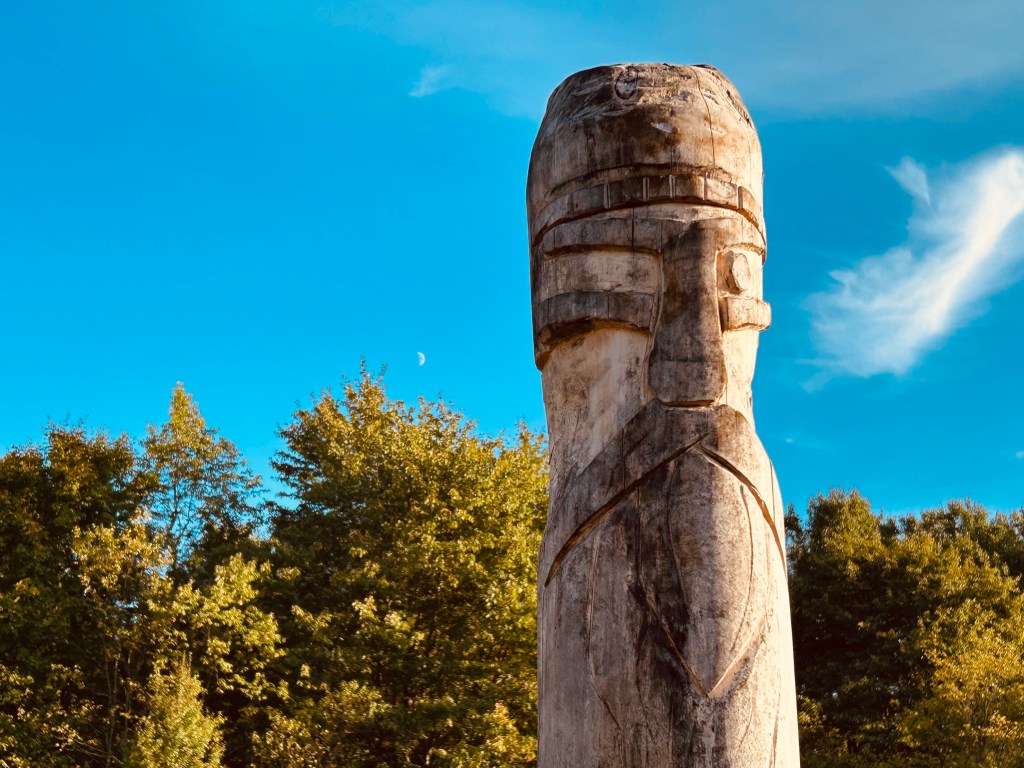
On our homestead, May Day generally consists of uncovering our Freyr idol and walking him through the gardens and fields, either in a small mock-wagon or by hand. Once we have visited all the necessary areas, we return the idol to his altar and leave generous offerings for his blessings and fortune. Two fires are built in front of the altar and each ritual participant walks between them, purifying themselves of yearly baggage and giving personal thanks to the great Yngvi-Freyr. By doing this, each person can shed negative, dark, detrimental energies; inspiring wellbeing, clarity, and positive development.


 Ansuz Society