
Subscribe to continue reading
Subscribe to get access to the rest of this post and other subscriber-only content.

Subscribe to get access to the rest of this post and other subscriber-only content.
The cult of Thor generally revolves around the community, fertility, farming, and the daily routine that most humans experience. Because of this, Thor was the most widely worshiped of the ancient gods and was the chief deity observed by the common folk. Thor protects man and the world from chaos, endowing power into our material forms. This force keeps man strong, driven, and determined, acting in accordance with honor, loyalty, and vitality. Thor represents the physical and temporal qualities of human life, things we can build, destroy, and manipulate in accordance with our will. Thor establishes order out of chaos, rhythm out of randomness. He represents the “tempo” of the seasons, symbolized by the wheel (or fylfot), and like the wheel, carries us forward safely through time and space.
May all revere the Thunder god.
“Reid is reins,
Reid is spokes,
Thor’s wagon,
Behind the goats.”
ᚱ : ᚱ : ᚱ : ᚱ
Hailaz
The Younger Futhark (Futhorc) emerged around the 8th century C.E. in Scandinavia and is comprised of 16 runes. These runes were developed from the older 24 rune system we now call the Elder Futhark. Because of this reduction in symbols, some runes inevitably absorbed others in the process, making the system more cryptic. This also made reading and writing more complicated, as now some runes could supply a wider array of sounds. We see this for instance in the Tyr (ᛏ) rune, which indicates the “t” sound, now symbolizing the “d” sound as well, or in the Bjarkan (ᛒ) rune, which represents the “b” sound, now including the “p” sound as well. However, the rune with the most sounds is the Ur (ᚢ) rune, which includes over 5 different phonetic values such as U/W/V/Y/O.
This galdr track includes 16 repetitions of the Younger Futhorc, intended to help with meditation, memorization, and focus.
May it be of use to practitioners and anyone wanting to learn the runes.
Hailaz
Frau Holle is a sprit of the woodland, lakes and ponds. A “spinster” and figure of reward and punishment.
She visits our dwellings during the winter months, often during the Twelve-Nights of Yule.
If the chores at home are not completed or if simple tasks are neglected, she appears as an ugly, old, disheveled witch with a fiery tongue and burning gaze. She will bestow chaos on the homestead.
If she finds that the home is orderly, that all tasks have been done, she appears as an ethereal figure dressed in flowing white. Frau Holle will then hand out gifts from her kitchen and garden – nuts and apples, fruits of the earth and baked goods.
Frau Holle has gone by many names in Germanic Mythology, including Mother Earth, Perchta, Odin’s Wife, Berchta, Frigg and several more.
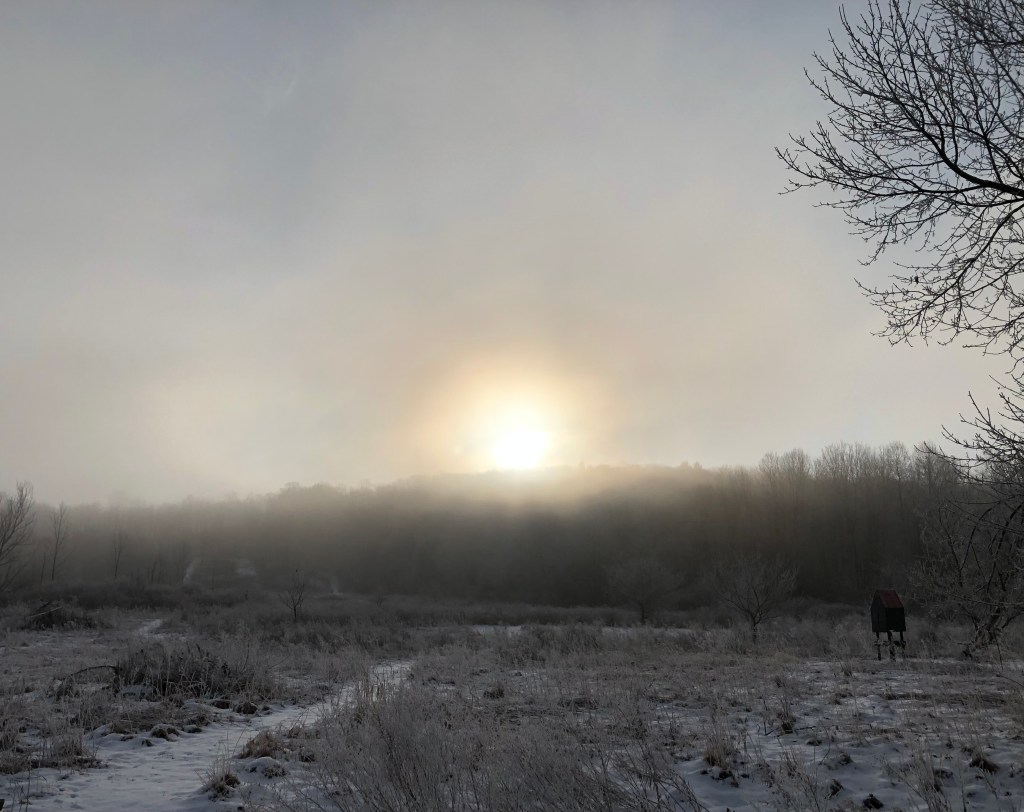
The rolling fog is said to be the smoke from Frau Holle’s hearth. When she bakes, the whole sky turns red. On stormy evenings, bolts of lightening are known as Hollenzopf, “Holle’s braids,” revealing her long white hair.
In winter, she shakes her bedcovers and down pillows, filling the air with feathers which causes it to snow.
-Ansuz Society
 Ansuz Society