This process is something that is done differently by almost everyone, as there has never existed a pan-Pagan dogma regarding this type of activity. However, most would agree that when constructing an altar in the Germanic fashion, there are 4 main pieces to consider. These 4 pieces we will cover here along with other ideas for what one can add to their setup. Having an altar dedicated to spiritual activity is important, as it gives one a place to conduct work that is vital to the human experience.
First, one must find a location that one is drawn to, perhaps isolated in the forest at the foot of a particularly powerful tree, a secret natural site, or inside one’s home in a secluded area. Second, it is recommended that an organic “table” be present in the location to conduct exchanges and make offerings, such as a stump or flat stone. If there is not, one should build something for this purpose. This can be a simple platform, or it can be an entire temple, this all depends on the person’s means and dedication. Third, the deity with which one wishes to communicate (in this case Odin) needs a home or place to inhabit on the altar. This can take the form of a special tree, stone, idol, statue, image, or in some cases, the skull of an animal or human. Generally, the deity is thought to reside in this location indefinitely, although, some will argue that they are only meant as temporary dwellings for the gods and spirits to reside in while the operant conducts their business. The fourth piece, especially important in the case of Odin (but also relevant to any Pagan altar), would be the drinking vessel in which we offer libations.
Once one has completed these 4 tasks, the altar is ready to be blessed and put into immediate use. Blessings include fumigation, galdr, and various invocations to protect the space. Some other things to consider placing on the altar are offering bowls, incense vessels, candles, a set of runes, and a place to leave meat or gifts intended for Odin’s ravens and wolves. Aside from these things, it is up to one’s discretion what they choose to exchange with the High One. When it comes to maintaining this space, one must keep things fairly organized and clean. This shows respect to the deity and helps one stay disciplined.
Strive to replace the rune set every year, if made of wood. If the runes are made of stone, they should be washed, cleansed and re-consecrated through galdr and one’s own blood. Last, libations should be made according to your means, but it is recommended to refresh the drinking vessel either every 3 days, 9 days, 45 days, and/or on full Moons. When throwing out the old libation, it should be offered to a tree or local spirit, never put into the drain or trash.
May this be of use to new and current practitioners.
Fehu is a rune denoting possessions, wealth, and material resources. In the ancient German tongue, this word would have represented one’s livestock, particularly cattle or other large production animals. Fehu stems from the Proto-Indo-European word péḱu, which translates to “livestock.” Before the common man was able to call land his own, the only things he could really claim ownership of were his animals, assets, and family. This would evolve later into the English word fee, meaning “a right to the use of a superior’s land, inherited estate held of a lord, general property ownership, money paid or owned, payment for service, a prize or reward.” We see this same idea in the Old French word fief, meaning “an estate held by a person on condition of providing military service to a superior, something over which one has rights or exercises control, or an area of dominion.”
Another connection we find relating to the concept of land ownership is in the word feudalism, meaning “a social system based on personal ownership of resources and personal fealty between a lord and subject.” This word can be broken down into 3 parts as “fe-odal-ism,” which would imply the connection between the noble (odal) and the fee (fe) one pays to essentially sub-lease land from the noble. This fee would be in the form of food, money, or military service. We also can find further evidence in the word fealty, meaning “allegiance to an oath to one’s lord.”
This rune applies to all things monetary and material, whether in the form of the living flesh of animals or in the cold medium of actual money. Fehu, in this regard, can also be assigned powers of security, abundance, domestication, opportunity, and peace. Esoterically speaking, one could view Fehu as a fire rune, as one’s resources are a type of fuel/fire source, helping to propel us forward with more confidence, and ultimately, more focus towards our goals. Now that we’ve peeled away the outer layers of the Fehu rune, we can look deeper inside for further information.
Connections can be made to the twin Vanir gods Freyr and Freyja, as this stave belongs to their respective “aett” of runes. Frey(r) has long been known to reside over the homestead, fertility, and success of the farm. His powers are attributed to fair weather, peace, prosperity, and general safety within the “sacred” or enclosed space of the homestead/village. Freyja, on the other hand, represents fertility, lust, beauty, death, and the Earth. In the “Old English Rune Poem” it is said:
“Wealth is an ease to every man,
Though each should deal it out greatly
If he wishes to gain, before his Lord, an honored lot.”
At this point in history, the author would have been referring to the Christian God. Nonetheless, this could easily refer to Freyr as well, and in fact clearly alludes to him, as the very title of Freyr means “Lord.” This poem, and others, also indicate a certain antagonism of greed, saying one must “deal out” wealth as much as he can do so.
We see another connection to Fehu and Freyr in the word fairy, which is generally believed to be a being connected with the dead, magical powers, and the natural world. This word is cognate with the Latin Fata, who is the goddess of fate. We also have the English word fey, meaning “dying, dead, spellbound, doomed, or otherworldly.” Here, we can see remnants of powers inherent in the fairy, but also in Freyja, as she is a goddess residing over the dead alongside Odin. This could be insight into the overall order of the Futhark, as one could assume it resembles a Ragnarök-esque circle of events, symbolizing birth, death, and rebirth. Some refer to this as “the doom of the gods,” which could be a possible piece of evidence alluding to the Fehu rune representing doom or death, perhaps hinting at the resurrection of ones “Self” by means of retrieving material possessions from the burial mound; in turn beginning a new cycle, starting with one’s possessions.
Suggestion for this can be found in “Óláfs Saga Helga,” where King Olaf facilitates his resurrection through the prophetic dreams of Hrani, who takes the possessions of his (Olaf’s) mound to the wife of Herald the Greenlander. After this, she then gives birth to a son who is bestowed the name Olaf, ensuring another life according to their tradition. The new Olaf would later denounce this claim, as Christian ideals had become the norm by then and the concept of reincarnation was abolished in their religion aside from select, “underground” sects. Similarities can be seen in the way Tibetans choose the Dalai Lama; who is shown past possessions to pick from at a young age. If the child chooses the correct objects, he will be recognized as the reincarnated Holy Man.
Freyr has also been associated with the burial mound, the dead, and the cult of the ancestors. In “Ynglinga Saga” it is said that after Freyr had died, he was buried in a great mound with 3 holes bore into it. Each hole was offered a precious metal of either gold, silver, or copper to ensure good seasons and peace continued throughout the land. In connection with the dead, it is said that King Yngvi also used to perform “utisetta,” or Norse meditation, upon his dead queen’s burial mound.
One more piece of evidence I will add, in this regard, is the Irish word figh, meaning “to weave together, compose.” Here we see the idea of a new beginning, the “weaving” of a new story, connecting with the ideas we explored in relation to the goddess(es) of fate, who have long been associated with the “spinning” or weaving of the destinies of man and the cosmos. This further ties the rune to the goddess Freyja, who is known for teaching seiðr to Odin; a sorcery generally associated with a metaphysical “weaving, tying, or binding” of a specific target, the weather, or the forces of fate altogether.
Through this very material and resourceful rune we can form a more broad picture of how it may have been used as it moved through the ages. From a purely terrestrial concept revolving around possessions and livestock to the more metaphysical aspect of fire, energy, and prosperity within the Self and tribe. We are also given objective history into the idea of land ownership and how that system is constructed based on the notion of leasing out lands to those below you in caste. The king leases his land to nobles and the nobles, in turn, lease their land to the farmers/peasants.
In conclusion, we can be assured that the Fehu rune is a rune of one’s material possessions and that it is a rune of moveable wealth. Further, it can be attributed to gifts of abundance, prosperity, and fertility of the Earth. As this rune moves through the times, it reflects not only money, but the fuel-source it represents in respect to our desires and opportunities. We see esoteric connections to the dead, the burial mound, and the Heathen process of reincarnation associated with the retrieval of “past possessions,” similar to that of the Tibetan practice. These rather obscure connections, upon additional reflection, seem to hold more and more weight within them.
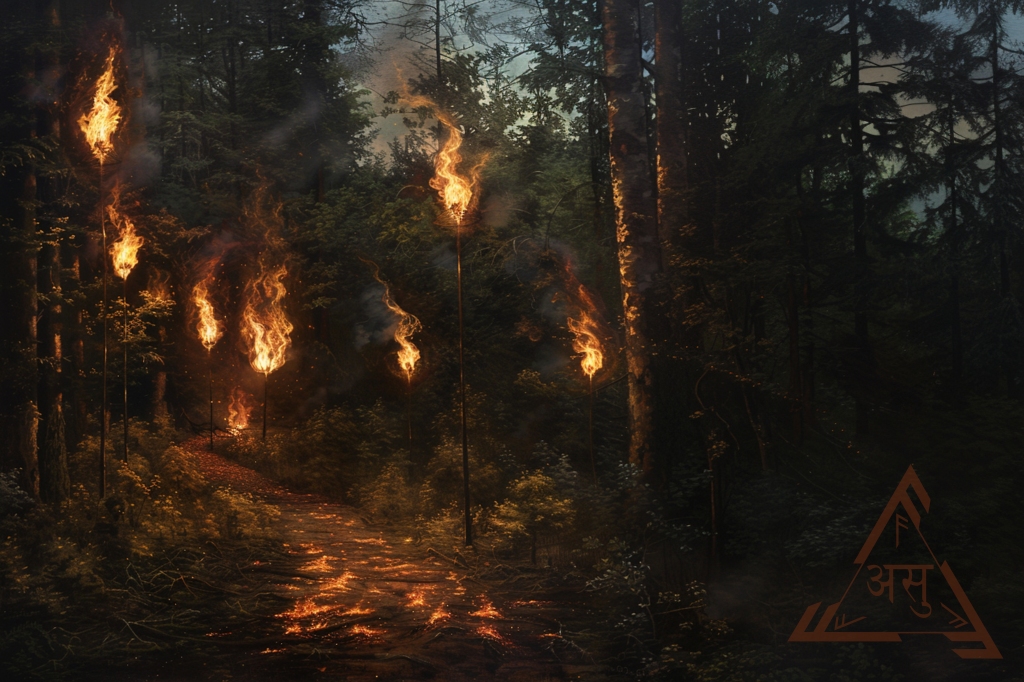
Kenaz is a particular rune, changing dramatically in context from Elder to Younger runes. The continental Germans seemed to hold this rune in a more positive light than their Scandinavian neighbors in the North. Kenaz is a reconstructed word from Proto-Germanic meaning “torch,” associated with creative fire, skills, knowledge, and teaching. The torch is that which illuminates the darkness, showing us the way in places unknown. This has been equated with an internal creative “spark” as well, which I think is reflected in the hard “k” sound represented by this rune. If we look to the Gothic language, we find evidence for this theory in the kindred word kōnja which refers to pine sap. This must be directly related to the torch, as pine/spruce has long been a favored wood for this use.
The Gothic name for this rune is kosma/kusma, stemming from kunnan meaning “to be able, to know how,” referring to one’s inner abilities and skills. This word travels through time and tribe almost unchanged in sound and meaning, showing up in modern English in the words know and keen. In my opinion, the best example of this concept is crystallized in the Swedish word konst, meaning “art, knowledge, science, magic, secret,” and in the cognate German word kunst meaning “skill, craft, ability, magic.” This internal power of knowledge, associated with a craft or specific artistic focus, is the secret “light” side of the Kenaz rune, symbolizing our ability to make things known, to teach them, and to exhibit mastery in arts, crafts, intellectual or occult matters.
When looking for clues in the rune poems, the only evidence we find in relation to a “torch” is from the ‘Old English Rune Poem,’ where it states:
“Torch is known by each of the living through its fire
-bright and blazing- it burns oftest
Where the athelings are at ease indoors.”
Here it is clear that the word “torch” is denoting skill as a display of one’s “inner fire.” This is something (as a torch in the dark) that all can witness. “Bright and blazing” is the external effect of mastery and true skill in craft, as creation is a bright and blazing power. The last line denotes a sense of peace inherent in the “athelings,” which means “nobles, lords, heroes.” This clearly reminds an English reader of the word athlete, which signifies “those competing to win a prize.” I believe this relates to the calm felt within an extremely wise, skilled, or focused group; where everyone’s flame is burning bright and clear, all can feel a sense of ease and comfort. We get another look at this concept with the Old English word kennan which means “to make known, declare” but also “to bring forth, produce.” This is essential to the function of a craftsmen, artist, musician, or anyone who actively works with creative energies and systems.
In Old Norse, this rune is represented in the word kaun, meaning “sore, ulcer, boil,” and carries a much more sinister and harmful aspect associated with it. In most old poetry and analysis, it seems this rune was more of a curse or fetter than something used for anything “positive.” Although, in some Freemason rites, it has been shown that the Younger rune (ᚴ) is still in effect as a “torch,” as it mimics the man holding his sword (torch) at this angle during initiation rituals. As one walks through this “tunnel of torches,” he is “illuminated/initiated” into a new reality.
In the ‘Old Norwegian Rune Rhyme” it is said:
“A sore is a curse for children;
Bale makes a man pale.”
Likewise, in the “Old Icelandic Rune Poem” it is said:
“A boil is bale for bairns, and a scourgeful spot,
And a home for flesh-rot.”
Here we see how our Scandinavian ancestors viewed this rune, as a much darker and fearful tone is taken with it. They viewed this rune in the context of evil and pain, without any allusions to a “lighter” aspect within the poetry. However, all these physical ailments have in common the sensation of “burning” within those experiencing it. This gives us insight into the deeper layers of the rune, where “fire” is still present, albeit in a new form. This rune was probably used strictly as a curse unless by the most skilled of sorcerers, who may have been able to turn this internal strife and struggle into acts of creation or transcendence. If looking at the Younger Futhorc as a whole, we see Kaun landing next to another very sorcerous and powerful rune, Hagal, the hail stone of transformation. Seeing these very destructive and feared runes side by side, as fire and ice respectively, shows a sort of miniature Ragnarök within the cycle of the Futhorc, enhancing the importance of viewing them in their respective “aetts” or groups, as here we end the first and begin the second. This is something I plan to venture into with more thought later…
To conclude, Kenaz is a rune steeped in much power and is tied together throughout all linguistic changes in the concept of an internal “fire” or a “burning” sensation. We have the older associations with torches, knowledge, creation and skill; being associated with teachers, students, craftsmen, and artistic masters. We also have the concept of “keenness” tied in, being exceptionally skilled and knowledgeable, “sharp” of mind and highly productive. In the North, this rune carried a more malicious nature, representing sickness, pain, and struggle. When approaching this rune from all the previous angles, we see a very wide range of meanings one can attribute to this rune, depending mostly on which system of runes one is working with. If using the Elder or Anglo-Saxon runes, this rune is viewed in relation to the torch. If using the Younger runes, it is likely you will associate this rune with pain or sickness.
Taken from the book “Wandering the Runic Path: Esoteric Analysis of the Germanic Runes” by Hrukjan.
A short section from the new book “Wandering the Runic Path: Esoteric Analysis of the Germanic Runes” regarding the Kenaz (ᚲ) rune.
“Kenaz is a particular rune, changing dramatically in context from Elder to Younger runes. The continental Germans seemed to hold this rune in a more positive light than their Scandinavian neighbors in the North. Kenaz is a reconstructed word from Proto-Germanic meaning “torch”, associated with creative fire, skills, knowledge, and teaching. The torch is that which illuminates the darkness, showing us the way in places unknown. This has been equated with an internal creative “spark” as well, which I think is reflected in the hard “k” sound represented by this rune. If we look to the Gothic language, we find evidence for this theory in the kindred word kōnja which refers to pine sap. This must be directly related to the torch, as pine/spruce has long been a favored wood for this use.
The Gothic name for this rune is kosma/kusma, stemming from kunnan meaning “to be able, to know how,” referring to one’s inner abilities and skills. This word travels through time and tribe almost unchanged in sound and meaning, showing up in modern English in the words know and keen. In my opinion, the best example of this concept is crystallized in the Swedish word konst, meaning “art, knowledge, science, magic, secret,” and in the cognate German word kunst meaning “skill, craft, ability, magic.” This internal power of knowledge, associated with a craft or specific artistic focus, is the secret “light” side of the Kenaz rune, symbolizing our ability to make things known, to teach them, and to exhibit mastery in arts, crafts, intellectual or occult matters.”
May all sentient beings realize this rune within themselves.
We are wrapping up the final edits for the second rune book by Hrukjan titled “Wandering the Runic Path: Esoteric Analysis of the Germanic Runes.”
These will be published early next month and copies will be available from us around Samhain.
For those interested in the book, we’d like to share some information from the introduction:
“This book is meant to help guide the runic adept through various untrodden paths regarding the runes and their use in esoteric Pagan practice. Through many avenues such as language, myth, religious comparison, and thorough analysis, one can expand the dimensions of each rune into the endless fathoms of space and time. Each rune of the Elder Futhark has been dissected and tirelessly studied so that no stone is left unturned in their usability and ultimate meaning. Along with in-depth study, each “aett” of runes has also been given a set of common themes that one can ponder in association to their roles within the entirety of the Futhark. Not only this, but it is speculated throughout the book that the order of the runes is not only important, but carefully tells a unique story regarding life, death, rebirth, and the ultimate truth of existence as expressed by the people who created and used them.
While much of this book is speculative in nature, offering a deeply subjective analysis of these symbols, there is also much concrete and objective information regarding their history, etymology, and journey through time. From their many connections to Sanskrit and other Indo-European languages, the reader can form a thorough understanding of these symbols based on thousands of years of transformation. The reader will see how these runes transcend culture and relate to the natural surroundings of the different tribes that used them as they migrated across much of Europe, Asia, and beyond. Through this approach, one will see that the use of the runes is not only universally applicable, but also, not restrained to a certain “folk” or people. By realizing the scope of their use, one can see them as a divine tool for Self-development and transformation, as each rune is a key to ultimate realization.
If you are looking for a book that is not just informative, but also applicable to religious and spiritual practice, then this book should offer you many avenues towards your own purified understanding of these ancient symbols as used by the greatest of sages and magicians of the past. My hope is that this book will act as a compass for the devoted reader as they traverse the dark and endless paths laid before them by these ancient symbols. By doing so, one does not get lost or steered in detrimental directions by those who would rather see you confused and reliant on outside influences. Runic knowledge and the wisdom inherent within them are present in every sentient being, especially those who have the memories of these signs within their very soul. These secret symbols mirror that which exists within us and each rune is a key to unlocking the mysteries that lie dormant within our experience of reality. May this book help you transcend the limitations of individual existence and soar into the ether as Odin once did upon the great World Tree.”
Frau Holle is a sprit of the woodland, lakes and ponds. A “spinster” and figure of reward and punishment.
She visits our dwellings during the winter months, often during the Twelve-Nights of Yule.
If the chores at home are not completed or if simple tasks are neglected, she appears as an ugly, old, disheveled witch with a fiery tongue and burning gaze. She will bestow chaos on the homestead.
If she finds that the home is orderly, that all tasks have been done, she appears as an ethereal figure dressed in flowing white. Frau Holle will then hand out gifts from her kitchen and garden – nuts and apples, fruits of the earth and baked goods.
Frau Holle has gone by many names in Germanic Mythology, including Mother Earth, Perchta, Odin’s Wife, Berchta, Frigg and several more.
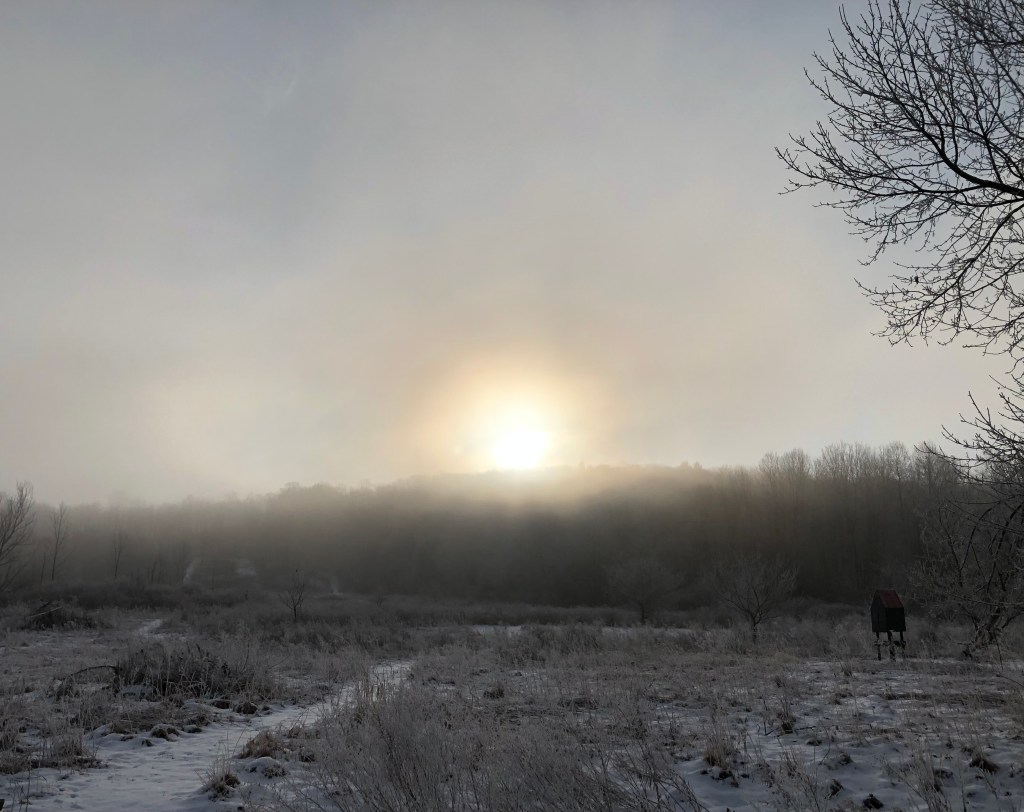
The rolling fog is said to be the smoke from Frau Holle’s hearth. When she bakes, the whole sky turns red. On stormy evenings, bolts of lightening are known as Hollenzopf, “Holle’s braids,” revealing her long white hair.
In winter, she shakes her bedcovers and down pillows, filling the air with feathers which causes it to snow.




 Ansuz Society