
Subscribe to continue reading
Subscribe to get access to the rest of this post and other subscriber-only content.

Subscribe to get access to the rest of this post and other subscriber-only content.
Subscribe to get access to the rest of this post and other subscriber-only content.
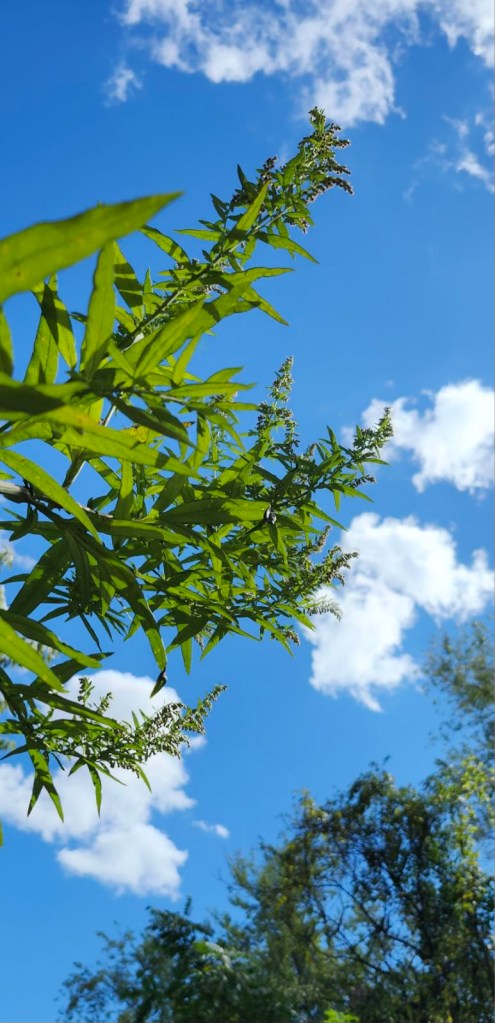
An herb as powerful as Mugwort is an invaluable way to connect and learn more about Goddesses of not only Greek, but Norse and Celtic mythology. Mugwort and its association with women, those who protect and champion women, as well as those seeking to expand their metaphysical world through dream and deity work, is as important today as it was thousands of years ago.
Artemis, the namesake of Mugwort, is the logical starting point. Artemis is a goddess of the hunt, the moon, and especially of female initiation and protection. She is associated with girls and women, but is also a goddess to boys and men in rites of initiation and the hunt. All who wish to learn more and work with her are welcome, as she is a goddess for everyone. Mugwort, having derived its name from her, is the mother herb mirroring her mothering prowess.
However, in the Greek mythos, she was not a goddess to suffer fools gladly. She vehemently defended her virginity and reputation as the greatest of hunters. Some sources suggest she was the patron goddess of the fearsome women warrior tribe, the Amazonians. A passionate and ferocious fighter for what she believes is right, a beacon for those who need strength.
Of everything that Artemis is known for, Mugwort is most closely related to her powers as midwife, a deity for both comforting women in labor and the newborn. Mugwort is also an important herb for dream and trance work, lending itself nicely to moon rituals, as Artemis was also a goddess of the moon. Using Mugwort in its tincture form, or burning as a smudge stick, will help to expand consciousness and enter a trance state for magical work. Adding Mugwort into your meditation on Artemis during the moon, especially the full moon, will greatly enhance communication.
In Norse mythology, Frigg, the most powerful volva, was believed to be the first practitioner of seidr magic. Frigg is the wife of Odin and a fiercely protective mother of Baldur. She is the goddess of family, motherhood, fertility and the balance of love and wisdom. Mugwort works perfectly with Frigg as it is an herb whose main use has been for assistance in prophetic dreaming and the overall health of women.
Runes that can be used when invoking Frigg are Fehu, Pertho and Berkano. Fehu, when related to Frigg, is a female rune for fertility concerned with livestock, and especially newly born cattle in spring. Fehu is always a rune of productivity. It can also be used for spiritual or artistic creativity, carrying a fiery power within. Fehu can also represent certain aspects of the life force.
Freya Aswin correlates Pertho with birth. Pertho can also be used to help find hidden aspects within yourself. The joining of these attributes with Frigg, who governs birth and is involved with weaving fate (through work as a volva and through seidr magic), very nicely encapsulates the magic of Mugwort.
The Berkano rune indicates birth, being rooted, and the feminine, has been called a rune of ‘bringing into being’, the first protection given to children at birth. Both Artemis and Frigg were known as unrelenting defenders of children and women. Incorporating Mugwort when working with Frigg can be very beneficial.
The goddess of Celtic mythology most closely associated with Mugwort is Brigid. Brigid is known as a goddess of fire, poetry, and healing; a maternal goddess who embodies the divine feminine. She is like spring, representing new beginnings.
As a goddess of fire and hearth, she was said to watch over all the fires in the homes of Ireland. She was closely associated with the sun and the warmth of spring, the time of renewal and rebirth. Mugwort is also an herb closely associated with fertility, the goddess, and of womanhood. Brigid, as a goddess that protected the flame (which was so important for ancient people’s survival), is like a mother radiating maternal compassion.
Poetry (and creativity) have always had close ties with the metaphysical and dream world, a world that Mugwort works so well in. Brigid was called upon to help with creativity and inspiration, especially with bards, who held a very high position in Celtic society. Bards were the keepers of history and culture, and Brigid was often invoked to help inspire creativity.
Brigid was also a goddess of healing. She was often called upon to help cure sickness and injury, as her touch was said to have healing powers. In addition to being a healer of sickness and injury, she was a goddess of childbirth, watching over women in labor. Her presence helped ease pain and ensured a safe delivery. She was also a protector of children and was asked by parents to watch over children’s safety and health. Brigid and her divine energies align well with Mugwort and its properties.
The Spring Equinox marks the traditional Easter celebration, the moment when the Sun crosses the equator from south to north. This is when animals like rabbits, deer, chipmunks, and other creatures of the forest begin to have their offspring. Various flora also emerge around this time, dotting the landscape with hints of color. During the Spring Equinox we pay special attention to the great Goddess in her youthful form of Ostara, Goddess of the Dawn. Ostara is associated with the rising Sun in the East, fertility, and light; a beacon of joy and good fortune. To many ancient Germanic Pagans, Ostara was credited with Springs deliverance. From her name we derive the modern word Easter, nodding to the Pagan origins of this holiday. To Ostara we make offerings and pray for a good year, thanking her for the return of the light. In one particular myth, Ostara transforms a bird into a rabbit who would then lay colorful eggs for her, showing us where the core symbolism of our modern holiday came from.
Hailaz Austra!
#ostara #spring #equinox #paganism

Odin as the primordial state of consciousness applies to women as well, as Odin is said to have given soul to both. This innate awareness is formless and is beyond any associations with body or sexual identity. Therefore, one does not have to look at primal awareness as something based on these limiting and mundane concepts. This doesn’t mean that Freyja is not involved in the equation, as Freyja is the energy and flux of the natural/material universe, identical to great Kali/Shakti/Tara Ma. Freyja represents matter, while Odin represents consciousness. Without Odin, there would be no Freyja, and without Freyja, Odin would have nothing to manifest into. These are the two pieces of the puzzle that create what we know of our existence and reality; the Father (consciousness) and the Mother (material world). Each sentient being and all physical matter encapsulates these qualities. They are inseparable. Through training and practice, one can destroy the surface duality represented in these two halves, reuniting them into one single point of experience. Either deity can be venerated as supreme, as they both express one final outcome of creation.
Hail the Mother, Hail the Father!

We’re very happy to bring you this new song dedicated to the goddess Frigga/Freyja.
Although debated, we hold the belief that Freyja and Frigga are two faces of the same goddess; Freyja being a later form of the goddess with various versions of Frigga preceding her throughout the Germanic speaking world.
Some of these names include the Proto-Germanic Frawjǭ, Gothic Fraujō, and Old English Frōwe.All of these are titles designating a noble woman and translate to “Lady”, as one would call their king “Lord.”
Gautis Fraujō, therefor, can be read as The Lady of Gaut, or, the Wife of Odin.
We hope this short Gothic language prayer will be of use to your practice and that it brings you closer to this divine essence.
May all beings be embraced and nourished by her great love and beauty.
Recorded, mixed, and mastered January 2023 at Ansuz Society, Western New York.
All music and sounds by Ansuz Society.
Frau Holle is a sprit of the woodland, lakes and ponds. A “spinster” and figure of reward and punishment.
She visits our dwellings during the winter months, often during the Twelve-Nights of Yule.
If the chores at home are not completed or if simple tasks are neglected, she appears as an ugly, old, disheveled witch with a fiery tongue and burning gaze. She will bestow chaos on the homestead.
If she finds that the home is orderly, that all tasks have been done, she appears as an ethereal figure dressed in flowing white. Frau Holle will then hand out gifts from her kitchen and garden – nuts and apples, fruits of the earth and baked goods.
Frau Holle has gone by many names in Germanic Mythology, including Mother Earth, Perchta, Odin’s Wife, Berchta, Frigg and several more.
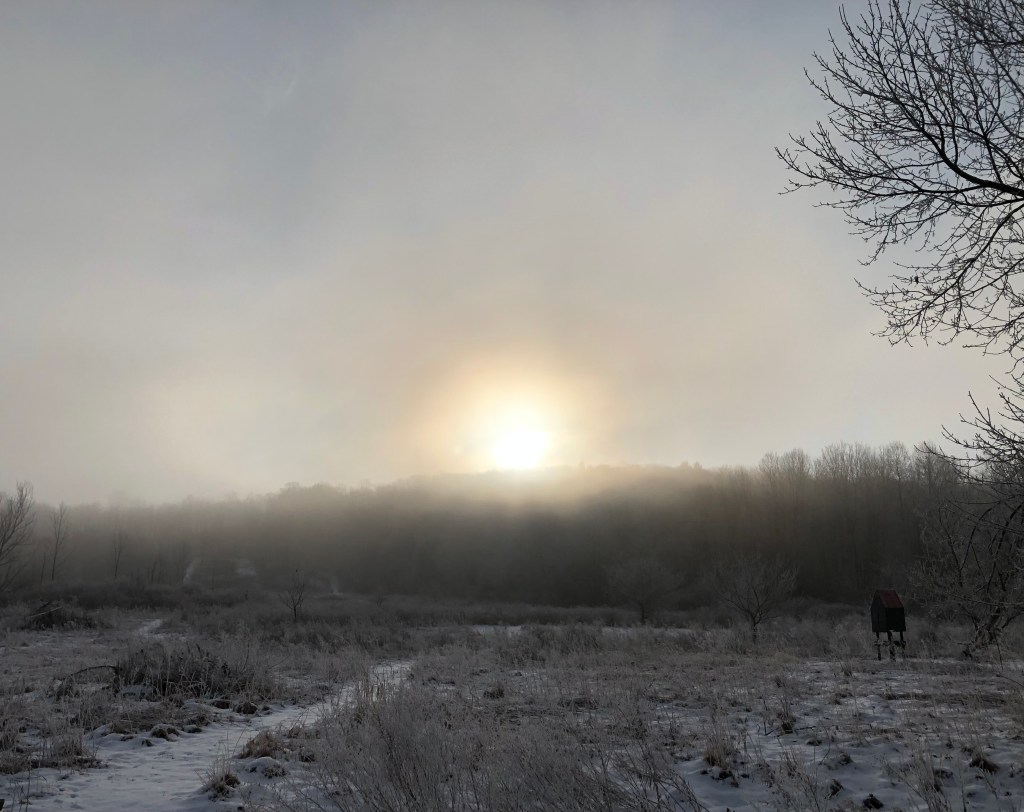
The rolling fog is said to be the smoke from Frau Holle’s hearth. When she bakes, the whole sky turns red. On stormy evenings, bolts of lightening are known as Hollenzopf, “Holle’s braids,” revealing her long white hair.
In winter, she shakes her bedcovers and down pillows, filling the air with feathers which causes it to snow.
-Ansuz Society
 Ansuz Society