Nauthiz

Subscribe to continue reading

Subscribe to get access to the rest of this post and other subscriber-only content.

Hagalaz : ᚺ

The second group of 8 runes, falling under the domain of Hagal, begins with the rune Hagalaz. This rune, on its outer surface, means “hail” and represents the violent, intense transition of forms from liquid to solid. This, of course, has entirely metaphysical applications as well, representing changes in our lives that are brought upon us suddenly and ferociously. Hagalaz, in this way, is mostly associated with harsh or cruel magic, curses, and bad luck. The “Early Modern Swedish Rune Poem” perhaps gives us the best look at this rune through the eyes of the common folk, as it simply says:

“Hail is best from in the house.”

From the viewpoint and practice of the skilled rune sorcerer, however, Hagalaz embodies a much “brighter” and more crystalline element of the Futhark, where the harshness of change can be focused, utilized, and directed where we wish to develop further. Through the hailstone, we can (with haste) change the parts of ourselves that we must in order to gain a new form. One that strikes with more potency than before. This destruction, like that which is brought about by hail, also brings forth new life, watering the earth under the bent and broken stalks it leaves behind. Hail is still water and will nourish, but not before it destroys that which lies in its path.

Something else that must be noted is the relationship or shared energy between Hagalaz and the next rune in the Futhark, Nauthiz, which represents need. Hagalaz, as experienced by those who have dealt with it firsthand internally, also carries within it a certain “needed” shift, representing a catalyst for significant change to occur. This is something that separates the developing rune sorcerer from the average rune worker. The developed runic initiate can use Hagalaz directly, transforming it into a positive practice while remaining aware of its seemingly destructive presence and power. Subconsciously, the sorcerer searches and strives for encounters with Hagalaz, as each one gives another glimpse into what changes must be made immediately to achieve a more refined version of Self.

The “Old Icelandic Rune Poem” says:

“Hail is cold grain,

And shower of sleet,

And sickness of serpents.”

Here we see just how much of an ominous, cold “darkness” this rune carried in the minds of our Icelandic ancestors. We can see the 3 main outer concepts in full light here, as the “cold grain” (hail), “shower of sleet” (ice), and the “sickness of serpents” (destroys crops). Among most Indo-European cultures, serpents were traditionally associated with earthly and chthonic powers opposite to that of the celestial powers of the sky, usually represented by the eagle. Many occult orders aim to yoke these together, as we see in the ancient symbol of the dragon or “Winged Serpent.”

In the “Old English Rune Poem” we read:

“Hail is the whitest of grain,

It is whirled from the vault of heaven,

And is tossed about in gusts of wind;

And then it melts into water.”

Again, we have the outer concepts coming to light in the first line, alluding to the “grain” of ice. The next line introduces the celestial or “heavenly” aspect we approached in the eagle/serpent motif, although, this line is referring to the sky itself as Heaven. There is much evidence that the Anglo-Saxon (and greater Indo-European) conception of Heaven was linked with the sky, referring to “meadows” and “fields” in the sky. The Old English word heofon, from which our modern English heaven derives, has a dual meaning of “Heaven” and “sky.”

Another piece of evidence can be found in the Proto-Germanic hagô which refers to “yards, enclosures, and pastures.” Strangely enough, although contested, Heaven and Hagalaz have a similar origin in the Proto-Indo-European word hémō, which means “stone.” This is where the modern English word hammer also stems from. This could imply the concept of the “hail-stone/crystal from Heaven” that has recurred throughout the work of many prominent runologists of the past, most notably in the “Uthark” system of Sigurd Agrell. We see the addition of the “fertility” element within the last line of the poem, as although the hail destroys, it turns to water and makes the ground fertile. Hagalaz, in many ways reflected here, is a rune of very tough love and nourishment.

One more possible origin for Hagalaz lies in the Proto-Indo-European word kagʰlos, meaning “pebble.” It seems the Dutch (and some other Germanic languages) took this word and applied it further into modern times, as the Dutch hagel also represents small balls of metal ammunition. I also find it amusing to see this connect to the modern Icelandic haglabyssa, meaning “shotgun.”

Even after Christianity had taken hold in the north and the old gods were largely demoted, we see much emphasis in esoteric circles to associate the Hagal rune with Christ and Heaven, something we’ve explored in the prior paragraph. The Swedish Christian-occultist and Gothic revivalist Johannes Bureus claimed that the Hagal rune is “that which encloses everything,” something we remember from ancient conceptions of Heaven being an enclosure in the sky. In the rune poems, this association with Christ in particular is found in the “Old Norwegian Rune Rhyme” where it says:

“Hail is the coldest of kernels;

Christ created the old world.”

I believe the converted Pagans still retained the esoteric function of this rune through the metaphor of Christ, still carrying with it celestial importance. The Hagal-stone personifies crystal memories and thoughts from Heaven itself; gifts to man from God. In Heathen thought, this can be attributed to the head of Mimir, whom Odin addresses for advice and counsel; as Mimir (memory) holds knowledge of all things. There’s further connection here in the Old Norse heill, Proto-Germanic hailaz, and Gothic hails, all meaning “whole, unbroken, pure, healthy, well, entire, complete” etc. This reinforces the crystalline “completeness” of Hagalaz. Another word showing connection between Hagalaz and Heaven is the Proto-Germanic hailagaz meaning “holy, sacred.” This is further developed in hailagōną meaning “to sanctify, make holy, hallow.”

Now that we’ve peeled away some layers of Hagalaz, we must look at this rune in its darker and more “sinister” aspects. As stated earlier, this rune has long been used in curses and black magic by some practitioners. We have the Proto-Germanic word hagaz meaning “skilled, crafty, able” and hagatusjō meaning “witch.” Of course, this later forms our English word hag, generally meaning “ugly old woman” or “witch.” The ancient “witches” of the Pagan north were associated with a practice called seiðr, which is a widely discussed and extremely broad spectrum of practices related to prophecy, divination, spirit walking, and weather manipulation. In the context of Hagalaz, seiðr can be connected in the fact that these witches were able to manipulate the weather if necessary; having the ability to send storms if they so desired.

As with the Gebo rune, Hagalaz falls into the group of runes known as “Odin’s 9.” This is because Hagalaz, whether upside down or right-side up, retains its shape and form, meaning its’ implication is concrete, single focused, and based on the ironic phenomenon of the “permanence of impermanence,” or rather, the ever-present force of change. When looking for a “Hagal” in the myths, we are left with just one vague reference to a foster father of the legendary Helgi in the “Lay of Helgi Hundingsbane II.” Perhaps the significance of this character has been lost, leaving us to only theorize why the second row is named after this rune, aside from the obvious observation of it being at the beginning.

To conclude, Hagalaz is a rune of unique beauty; one that destroys but also mirrors the glory of Heaven. We see this rune associated with celestial enclosures and paradise within the sky. Whether interpreted through the eyes of the Heathen or the Christian, this rune applies to a holiness present in the crystal, a certain wholeness represented by the “whitest grain.” Although hail is a destructive force, our ancestors viewed this in a sacred light; a fitting start to the second 8 runes of the Futhark, bringing “ice” to the fertile, earthly runes of Freyr; radically shifting perspective but concealing new life under its sudden ambush upon the Earth. Hagalaz is the wrath of the heavens, holding enormous power to transform and also to destroy.

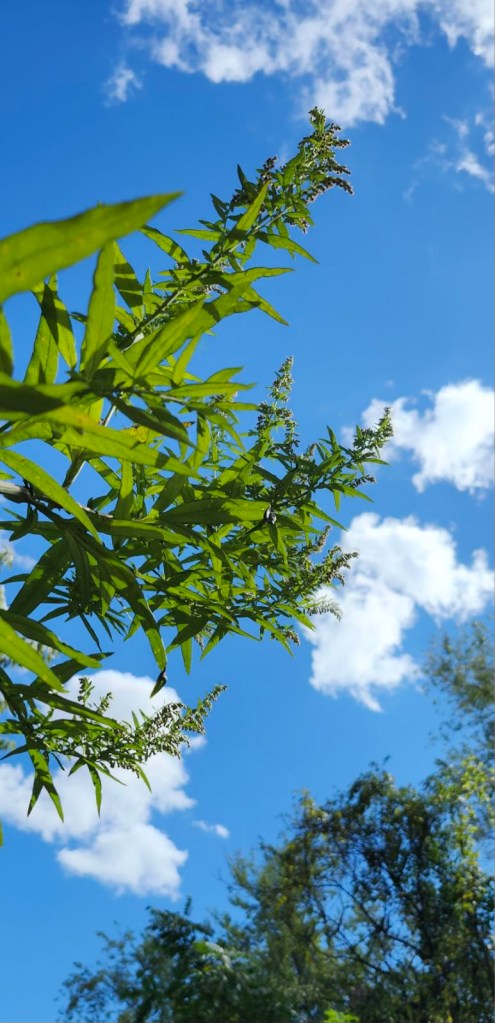
Mugwort: Stepping Towards the Divine Feminine

An herb as powerful as Mugwort is an invaluable way to connect and learn more about Goddesses of not only Greek, but Norse and Celtic mythology. Mugwort and its association with women, those who protect and champion women, as well as those seeking to expand their metaphysical world through dream and deity work, is as important today as it was thousands of years ago. 

Artemis, the namesake of Mugwort, is the logical starting point. Artemis is a goddess of the hunt, the moon, and especially of female initiation and protection. She is associated with girls and women, but is also a goddess to boys and men in rites of initiation and the hunt. All who wish to learn more and work with her are welcome, as she is a goddess for everyone. Mugwort, having derived its name from her, is the mother herb mirroring her mothering prowess. 

However, in the Greek mythos, she was not a goddess to suffer fools gladly. She vehemently defended her virginity and reputation as the greatest of hunters. Some sources suggest she was the patron goddess of the fearsome women warrior tribe, the Amazonians. A passionate and ferocious fighter for what she believes is right, a beacon for those who need strength.

Of everything that Artemis is known for, Mugwort is most closely related to her powers as midwife, a deity for both comforting women in labor and the newborn. Mugwort is also an important herb for dream and trance work, lending itself nicely to moon rituals, as Artemis was also a goddess of the moon. Using Mugwort in its tincture form, or burning as a smudge stick, will help to expand consciousness and enter a trance state for magical work. Adding Mugwort into your meditation on Artemis during the moon, especially the full moon, will greatly enhance communication.

In Norse mythology, Frigg, the most powerful volva, was believed to be the first practitioner of seidr magic. Frigg is the wife of Odin and a fiercely protective mother of Baldur. She is the goddess of family, motherhood, fertility and the balance of love and wisdom. Mugwort works perfectly with Frigg as it is an herb whose main use has been for assistance in prophetic dreaming and the overall health of women. 

Runes that can be used when invoking Frigg are Fehu, Pertho and Berkano. Fehu, when related to Frigg, is a female rune for fertility concerned with livestock, and especially newly born cattle in spring. Fehu is always a rune of productivity. It can also be used for spiritual or artistic creativity, carrying a fiery power within. Fehu can also represent certain aspects of the life force.

Freya Aswin correlates Pertho with birth. Pertho can also be used to help find hidden aspects within yourself. The joining of these attributes with Frigg, who governs birth and is involved with weaving fate (through work as a volva and through seidr magic), very nicely encapsulates the magic of Mugwort. 

The Berkano rune indicates birth, being rooted, and the feminine, has been called a rune of ‘bringing into being’, the first protection given to children at birth. Both Artemis and Frigg were known as unrelenting defenders of children and women. Incorporating Mugwort when working with Frigg can be very beneficial.

The goddess of Celtic mythology most closely associated with Mugwort is Brigid. Brigid is known as a goddess of fire, poetry, and healing; a maternal goddess who embodies the divine feminine. She is like spring, representing new beginnings.

As a goddess of fire and hearth, she was said to watch over all the fires in the homes of Ireland. She was closely associated with the sun and the warmth of spring, the time of renewal and rebirth. Mugwort is also an herb closely associated with fertility, the goddess, and of womanhood. Brigid, as a goddess that protected the flame (which was so important for ancient people’s survival), is like a mother radiating maternal compassion. 

Poetry (and creativity) have always had close ties with the metaphysical and dream world, a world that Mugwort works so well in. Brigid was called upon to help with creativity and inspiration, especially with bards, who held a very high position in Celtic society. Bards were the keepers of history and culture, and Brigid was often invoked to help inspire creativity. 

Brigid was also a goddess of healing. She was often called upon to help cure sickness and injury, as her touch was said to have healing powers. In addition to being a healer of sickness and injury, she was a goddess of childbirth, watching over women in labor. Her presence helped ease pain and ensured a safe delivery. She was also a protector of children and was asked by parents to watch over children’s safety and health. Brigid and her divine energies align well with Mugwort and its properties. 

Freyr’s Aett

Harvest Moon hails!

This compilation includes 8 galdr tracks covering the first 8 runes of the Elder Futhark.

May practitioners find them useful.

Hailaz

“…To conclude, we see in these runes’ terrestrial concepts and duties; from establishing morals and ethics within society, to making sure there are enough physical resources available for all members of the tribe to prosper and carry on. We see images of farms, wagons, fertility gods, elements of the Germanic creation myth, the Earth, Sun, fire, and deep underlying rhythm that is the unseen law of life. Driving these runes are Raido and Gebo, representing the wheels and wagon, while Fehu and Uruz pull us forward; the cow and ox. Ansuz, Kenaz, and Wunjo represent the higher functions of mans existence; the arts, crafts, trades, spiritual practices, bliss, ecstasy and wisdom. Once the foundation of the tribe is laid in the form of resource security, the tribe can then thrive and push forward in the arts and spirit.”

-Wandering the Runic Path: Esoteric Analysis of the Germanic Runes

Ansuzsociety.com

#freyr #runes #galdr #paganism #harvestmoon

Wunjo Rune Analysis

Wunjo is the liberating power of bliss; the levity associated with fulfillment and satisfaction in one’s life and with one’s deeds. This blissful ecstasy can otherwise be associated with our concept of joy, happiness, and pleasure. We get a glimpse of this rune in the “Old English Rune Poem,” where it is said: 

“Wynn is borne by him who knows little of woes,

 Of soreness and sorrow, and himself has- 

 Bounty and bliss, and plenty of strongholds too!” 

Throughout the poem, we see a clear picture of true contentedness; a metaphysical ease that embraces one whom has for themself created the circumstances for bliss; a momentary freeing of the soul from any bonds of anxiety, woe, or sorrow. One who has conquered their aspirations. 

Wunjo also has a connection to wishes, in the sense that fulfilled wishes lead to these feelings of delight, enjoyment, ecstasy etc. Combined with the lessons of other runes, we know that our wishes must be paired with correct action in order for them to be fulfilled; runes like Raido (for control), Thurisaz (for willpower), and Ehwaz (for movement) come to mind here, among plenty of others.  

Therefore, it is wise to not look at wishing as a mere fantasy or common prayer, but rather a goal or outcome we’d like to see accomplished; something we want to facilitate or create. Wunjo/Wunsch/Wish of the old Germanic peoples was a force (or deity/spirit) of inspiration; one knew their wishes would only be fulfilled by their actions in life, rather than in pure lip-service. This is how one honored the Wunsch/Wish deity, who bestowed blessings upon those who completed their goals. This god of the Wish has been equated to Odin, as Grimm states in Teutonic Mythology: 

(Wuotan/Wunsch) is himself the bestower of all bliss.”  

It is certain that this “face” of Odin was one of importance and great reverence, as we find reference to him in “Grímnismál” as Óski, meaning “God of Wishes, Wished For.” This wish granting, bliss bestowing deity is usually associated with a tool, weapon, or item that symbolizes and or directs the gifts towards those who have earned them. This is seen in the German wunschelris, meaning “wishing twig,” the predecessor to the English “magic wand.” We also have the “wishing hat” of Wuotan, the “Horn of Plenty” or “Wheel of Fortune” of Fortuna, which in Sanskrit translates to mano-ratha or “wheel of the mind.” This alludes to Wunjo as a needed force of momentum to keeping one’s “wheel” moving forward. Another Indo-European deity who functions in this way would be Kamaduh/Kamadhenu, the “wishing cow.” 

Another concept that we can include here is that of the Old Norse fylgja, meaning “one who follows man, companionship” and is associated with a type of “guardian angel” spirit who attaches itself to those it chooses, bestowing them with luck, blessings, and bliss. Fairies, elves, and dwarves are also known to grant wishes, associating these beings with the Wunjo rune.  

Wunjo is closely related to the feeling of love, whether intimate or familial. We see this is the Proto-Indo-European root word wenh-, which means “to love, win” and “to wish.” Many word offspring have come from this root and it seems this sound denotes a sort of happiness, kindness, and affection. We see another related word in the Latin venia meaning “kindness, mercy, grace” and in the modern English/Old French word venial meaning “able to be forgiven, worthy of forgiveness.” In both words we see connections associated with Wunjo, as during the process of forgiveness one shows great love. Some more words derived from these concepts are the Proto-Germanic word wanjaną which means “to make accustomed to,” indicating an act of extreme care and kindness to guests. Wunjo is this process, formula, and understanding; the living phenomenon of the Wish, of love, and kindness. Wunjo is the creation of bliss, joy, and satisfaction in life. 

One more concept that could be drawn from this rune is that of indulgence or intoxication. Rather than embodying a stupefied version of these words, however, one is meant to reach states of ecstasy and spiritual dominance through these particular indulgences, using pleasure as a tool to create Wunjo, or bliss, associated with the divine; a piercing into the veil of reality. This can be seen in the Proto-Italic word wenjā meaning “indulgence.” The earlier visited Latin word venia also has a co-meaning of indulgence. In this respect, we can see a clear connection with pleasure and the realms of love and bliss. 

It is acceptable to deduce that Wunjo is a symbolic representation of the sensation of love, satisfaction, and joy in life. This feeling has permeated man for thousands of years with a clear and definitive expression. We can see a direct development of sounds and words associated with Wunjo forming their own substratum of conceptual framework, all revolving around this original sound/word wenh-. To our linguistic forefathers, the Proto-Indo-Europeans, we can assert that the “W” sound carried a euphoric and ecstatic vibration for those who spoke it. 

-Wandering the Runic Path

Fehu Rune Analysis

Fehu is a rune denoting possessions, wealth, and material resources. In the ancient German tongue, this word would have represented one’s livestock, particularly cattle or other large production animals. Fehu stems from the Proto-Indo-European word u, which translates to “livestock.” Before the common man was able to call land his own, the only things he could really claim ownership of were his animals, assets, and family. This would evolve later into the English word fee, meaning “a right to the use of a superior’s land, inherited estate held of a lord, general property ownership, money paid or owned, payment for service, a prize or reward.” We see this same idea in the Old French word fief, meaning “an estate held by a person on condition of providing military service to a superior, something over which one has rights or exercises control, or an area of dominion.” 

Another connection we find relating to the concept of land ownership is in the word feudalism, meaning “a social system based on personal ownership of resources and personal fealty between a lord and subject.” This word can be broken down into 3 parts as “fe-odal-ism,” which would imply the connection between the noble (odal) and the fee (fe) one pays to essentially sub-lease land from the noble. This fee would be in the form of food, money, or military service. We also can find further evidence in the word fealty, meaning “allegiance to an oath to one’s lord.” 

This rune applies to all things monetary and material, whether in the form of the living flesh of animals or in the cold medium of actual money. Fehu, in this regard, can also be assigned powers of security, abundance, domestication, opportunity, and peace. Esoterically speaking, one could view Fehu as a fire rune, as one’s resources are a type of fuel/fire source, helping to propel us forward with more confidence, and ultimately, more focus towards our goals. Now that we’ve peeled away the outer layers of the Fehu rune, we can look deeper inside for further information. 

Connections can be made to the twin Vanir gods Freyr and Freyja, as this stave belongs to their respective “aett” of runes. Frey(r) has long been known to reside over the homestead, fertility, and success of the farm. His powers are attributed to fair weather, peace, prosperity, and general safety within the “sacred” or enclosed space of the homestead/village. Freyja, on the other hand, represents fertility, lust, beauty, death, and the Earth. In the “Old English Rune Poem” it is said: 

“Wealth is an ease to every man,  

Though each should deal it out greatly 

If he wishes to gain, before his Lord, an honored lot.” 

At this point in history, the author would have been referring to the Christian God. Nonetheless, this could easily refer to Freyr as well, and in fact clearly alludes to him, as the very title of Freyr means “Lord.” This poem, and others, also indicate a certain antagonism of greed, saying one must “deal out” wealth as much as he can do so. 

We see another connection to Fehu and Freyr in the word fairy, which is generally believed to be a being connected with the dead, magical powers, and the natural world. This word is cognate with the Latin Fata, who is the goddess of fate. We also have the English word fey, meaning “dying, dead, spellbound, doomed, or otherworldly.” Here, we can see remnants of powers inherent in the fairy, but also in Freyja, as she is a goddess residing over the dead alongside Odin. This could be insight into the overall order of the Futhark, as one could assume it resembles a Ragnarök-esque circle of events, symbolizing birth, death, and rebirth. Some refer to this as “the doom of the gods,” which could be a possible piece of evidence alluding to the Fehu rune representing doom or death, perhaps hinting at the resurrection of ones “Self” by means of retrieving material possessions from the burial mound; in turn beginning a new cycle, starting with one’s possessions. 

Suggestion for this can be found in “Óláfs Saga Helga,” where King Olaf facilitates his resurrection through the prophetic dreams of Hrani, who takes the possessions of his (Olaf’s) mound to the wife of Herald the Greenlander. After this, she then gives birth to a son who is bestowed the name Olaf, ensuring another life according to their tradition. The new Olaf would later denounce this claim, as Christian ideals had become the norm by then and the concept of reincarnation was abolished in their religion aside from select, “underground” sects. Similarities can be seen in the way Tibetans choose the Dalai Lama; who is shown past possessions to pick from at a young age. If the child chooses the correct objects, he will be recognized as the reincarnated Holy Man. 

Freyr has also been associated with the burial mound, the dead, and the cult of the ancestors. In “Ynglinga Saga” it is said that after Freyr had died, he was buried in a great mound with 3 holes bore into it. Each hole was offered a precious metal of either gold, silver, or copper to ensure good seasons and peace continued throughout the land. In connection with the dead, it is said that King Yngvi also used to perform “utisetta,” or Norse meditation, upon his dead queen’s burial mound. 

One more piece of evidence I will add, in this regard, is the Irish word figh, meaning “to weave together, compose.” Here we see the idea of a new beginning, the “weaving” of a new story, connecting with the ideas we explored in relation to the goddess(es) of fate, who have long been associated with the “spinning” or weaving of the destinies of man and the cosmos. This further ties the rune to the goddess Freyja, who is known for teaching seiðr to Odin; a sorcery generally associated with a metaphysical “weaving, tying, or binding” of a specific target, the weather, or the forces of fate altogether. 

Through this very material and resourceful rune we can form a more broad picture of how it may have been used as it moved through the ages. From a purely terrestrial concept revolving around possessions and livestock to the more metaphysical aspect of fire, energy, and prosperity within the Self and tribe. We are also given objective history into the idea of land ownership and how that system is constructed based on the notion of leasing out lands to those below you in caste. The king leases his land to nobles and the nobles, in turn, lease their land to the farmers/peasants. 

In conclusion, we can be assured that the Fehu rune is a rune of one’s material possessions and that it is a rune of moveable wealth. Further, it can be attributed to gifts of abundance, prosperity, and fertility of the Earth. As this rune moves through the times, it reflects not only money, but the fuel-source it represents in respect to our desires and opportunities. We see esoteric connections to the dead, the burial mound, and the Heathen process of reincarnation associated with the retrieval of “past possessions,” similar to that of the Tibetan practice. These rather obscure connections, upon additional reflection, seem to hold more and more weight within them. 

Gebo Galdr

…it is clear that when speaking about ancient Germanic Pagan ethics and morals, Gebo was the law. Gebo drives our interpersonal relationships, applying to both the physical and divine. All relationships revolve around a giving and receiving mechanism of some form. This balance of nature was represented by the ancient Germans in the form of the equal armed, crossing X.

-Wandering the Runic Path

Ingwaz Blōtas

A short prayer to Ingwaz/Fraujaz in very crudely written/spoken Proto-Germanic.

Originally released in 2021.

ᛞᚱᚢᛏᛁᚾᚫᛉ : ᛜ
ᚲᚢᚾᛁᛜᚫᛉ : ᚫᛒ : ᛋᚢᚾᛟ : ᚢᚾᛞ : ᚱᛖᚷᚾᚫ
ᛒᛚᛟᛞᛁᛋᚫᚾ : ᚢᚾᛋ : ᛒᛟᛞᚫᚷ : ᛗᚢᚾᛞᛁᛉ : ᚢᚾᛞ : ᛋᛇᚹᚫᛚᛟ
ᛁᚾ : ᚹᚫᛚᛟ : ᚷᚱᛟᚦᚫᛉ : ᚫᚾᛞᛁ : ᛚᛖᚢᛏᚫ
ᚷ : ᚢᚾᛋ : ᚹᚫᛚᛟ : ᚢᚾᛞᚫ : ᚹᛇᛏᛁᚫᚾᚫ
ᚷᛁᚠᛏᛁᛉ : ᚢᚾᛋ : ᚹ : ᚢᚾᛞᚫ : ᚷᚱᛁᚦᚫᛉ
ᛗᚫᚷᚫᚾᚫ : ᚢᚾᛋ : ᚷ : ᚱᛇᚲᛁᚫᚾᚫ : ᛁᛋᚹᛖᚱᚫᛉ : ᚹᛖᚱᚫᛚᛞᛁᛉ
ᚺᚫᛁᛚᚫᛉ : ᛜ
ᚠᚱᚫᚢᛃᚫᛉ : ᚫᛒ : ᛋᚢᛗᛖᚱᚫᛉ : ᚢᚾᛞ : ᚺᚫᚱᛒᛁᛋᛏᚫᛉ

May abundance and prosperity reign!

Kenaz

ᚲ / C / K

Kenaz is a particular rune, changing dramatically in context from Elder to Younger runes. The continental Germans seemed to hold this rune in a more positive light than their Scandinavian neighbors in the North. Kenaz is a reconstructed word from Proto-Germanic meaning “torch,” associated with creative fire, skills, knowledge, and teaching. The torch is that which illuminates the darkness, showing us the way in places unknown. This has been equated with an internal creative “spark” as well, which I think is reflected in the hard “k” sound represented by this rune. If we look to the Gothic language, we find evidence for this theory in the kindred word kōnja which refers to pine sap. This must be directly related to the torch, as pine/spruce has long been a favored wood for this use. 

The Gothic name for this rune is kosma/kusma, stemming from kunnan meaning “to be able, to know how,” referring to one’s inner abilities and skills. This word travels through time and tribe almost unchanged in sound and meaning, showing up in modern English in the words know and keen. In my opinion, the best example of this concept is crystallized in the Swedish word konst, meaning “art, knowledge, science, magic, secret,” and in the cognate German word kunst meaning “skill, craft, ability, magic.” This internal power of knowledge, associated with a craft or specific artistic focus, is the secret “light” side of the Kenaz rune, symbolizing our ability to make things known, to teach them, and to exhibit mastery in arts, crafts, intellectual or occult matters. 

 When looking for clues in the rune poems, the only evidence we find in relation to a “torch” is from the ‘Old English Rune Poem,’ where it states: 

“Torch is known by each of the living through its fire

-bright and blazing- it burns oftest

Where the athelings are at ease indoors.”

 Here it is clear that the word “torch” is denoting skill as a display of one’s “inner fire.” This is something (as a torch in the dark) that all can witness. “Bright and blazing” is the external effect of mastery and true skill in craft, as creation is a bright and blazing power. The last line denotes a sense of peace inherent in the “athelings,” which means “nobles, lords, heroes.” This clearly reminds an English reader of the word athlete, which signifies “those competing to win a prize.” I believe this relates to the calm felt within an extremely wise, skilled, or focused group; where everyone’s flame is burning bright and clear, all can feel a sense of ease and comfort. We get another look at this concept with the Old English word kennan which means “to make known, declare” but also “to bring forth, produce.” This is essential to the function of a craftsmen, artist, musician, or anyone who actively works with creative energies and systems. 

 In Old Norse, this rune is represented in the word kaun, meaning “sore, ulcer, boil,” and carries a much more sinister and harmful aspect associated with it. In most old poetry and analysis, it seems this rune was more of a curse or fetter than something used for anything “positive.” Although, in some Freemason rites, it has been shown that the Younger rune (ᚴ) is still in effect as a “torch,” as it mimics the man holding his sword (torch) at this angle during initiation rituals. As one walks through this “tunnel of torches,” he is “illuminated/initiated” into a new reality. 

 In the ‘Old Norwegian Rune Rhyme” it is said: 

“A sore is a curse for children;

Bale makes a man pale.” 

 Likewise, in the “Old Icelandic Rune Poem” it is said: 

“A boil is bale for bairns, and a scourgeful spot,

 And a home for flesh-rot.” 

 Here we see how our Scandinavian ancestors viewed this rune, as a much darker and fearful tone is taken with it. They viewed this rune in the context of evil and pain, without any allusions to a “lighter” aspect within the poetry. However, all these physical ailments have in common the sensation of “burning” within those experiencing it. This gives us insight into the deeper layers of the rune, where “fire” is still present, albeit in a new form. This rune was probably used strictly as a curse unless by the most skilled of sorcerers, who may have been able to turn this internal strife and struggle into acts of creation or transcendence. If looking at the Younger Futhorc as a whole, we see Kaun landing next to another very sorcerous and powerful rune, Hagal, the hail stone of transformation. Seeing these very destructive and feared runes side by side, as fire and ice respectively, shows a sort of miniature Ragnarök within the cycle of the Futhorc, enhancing the importance of viewing them in their respective “aetts” or groups, as here we end the first and begin the second. This is something I plan to venture into with more thought later… 

 To conclude, Kenaz is a rune steeped in much power and is tied together throughout all linguistic changes in the concept of an internal “fire” or a “burning” sensation. We have the older associations with torches, knowledge, creation and skill; being associated with teachers, students, craftsmen, and artistic masters. We also have the concept of “keenness” tied in, being exceptionally skilled and knowledgeable, “sharp” of mind and highly productive. In the North, this rune carried a more malicious nature, representing sickness, pain, and struggle. When approaching this rune from all the previous angles, we see a very wide range of meanings one can attribute to this rune, depending mostly on which system of runes one is working with. If using the Elder or Anglo-Saxon runes, this rune is viewed in relation to the torch. If using the Younger runes, it is likely you will associate this rune with pain or sickness.

Taken from the book “Wandering the Runic Path: Esoteric Analysis of the Germanic Runes” by Hrukjan.

The Kenaz (ᚲ) Rune

A short section from the new book “Wandering the Runic Path: Esoteric Analysis of the Germanic Runes” regarding the Kenaz (ᚲ) rune.

“Kenaz is a particular rune, changing dramatically in context from Elder to Younger runes. The continental Germans seemed to hold this rune in a more positive light than their Scandinavian neighbors in the North. Kenaz is a reconstructed word from Proto-Germanic meaning “torch”, associated with creative fire, skills, knowledge, and teaching. The torch is that which illuminates the darkness, showing us the way in places unknown. This has been equated with an internal creative “spark” as well, which I think is reflected in the hard “k” sound represented by this rune. If we look to the Gothic language, we find evidence for this theory in the kindred word kōnja which refers to pine sap. This must be directly related to the torch, as pine/spruce has long been a favored wood for this use. 

The Gothic name for this rune is kosma/kusma, stemming from kunnan meaning “to be able, to know how,” referring to one’s inner abilities and skills. This word travels through time and tribe almost unchanged in sound and meaning, showing up in modern English in the words know and keen. In my opinion, the best example of this concept is crystallized in the Swedish word konst, meaning “art, knowledge, science, magic, secret,” and in the cognate German word kunst meaning “skill, craft, ability, magic.” This internal power of knowledge, associated with a craft or specific artistic focus, is the secret “light” side of the Kenaz rune, symbolizing our ability to make things known, to teach them, and to exhibit mastery in arts, crafts, intellectual or occult matters.”

May all sentient beings realize this rune within themselves.

Hailaz / Namaste