Ansuz is that which gives animation to the otherwise lifeless body. Ancient man associated the breath with life, and likewise, associated it with the spirit or soul. We are given insight into this rune in the very word animation. To “animate” means to “give life or spirit,” something the god Odin is known for gifting mankind with. It is said in ‘Voluspo’ verses 17 and 18:
“17. Then from the throng, did three come forth,
From the home of the gods, the mighty and gracious;
Two without fate, on the land they found,
Ask (man) and Embla (woman), empty of might.
18. Soul they had not, sense they had not,
Heat nor motion, nor goodly hue;
Soul gave Othin, sense gave Honir,
Heat gave Lothur, and goodly hue.”
Here we see mention of Othin as the “soul giving” god; one that grants the Self, the breath, and the life within us. Odin is the force that animates life as one would consider Chi or Prana. Ansuz can be related to the wind in this way, as the wind is the same as the breath. When we reach back into antiquity, we find the proto-Indo-European word h₂ems- meaning “to engender, beget, give birth to,” eluding to this life-giving, all-encompassing force associated with the breath. The ancient man knew he was much more than just the physical workings of his body or impulses of the mind, therefore, the idea of the breath took on the utmost sacred context, as this is something that happens within us, invisible to the eye save the movement of the chest.
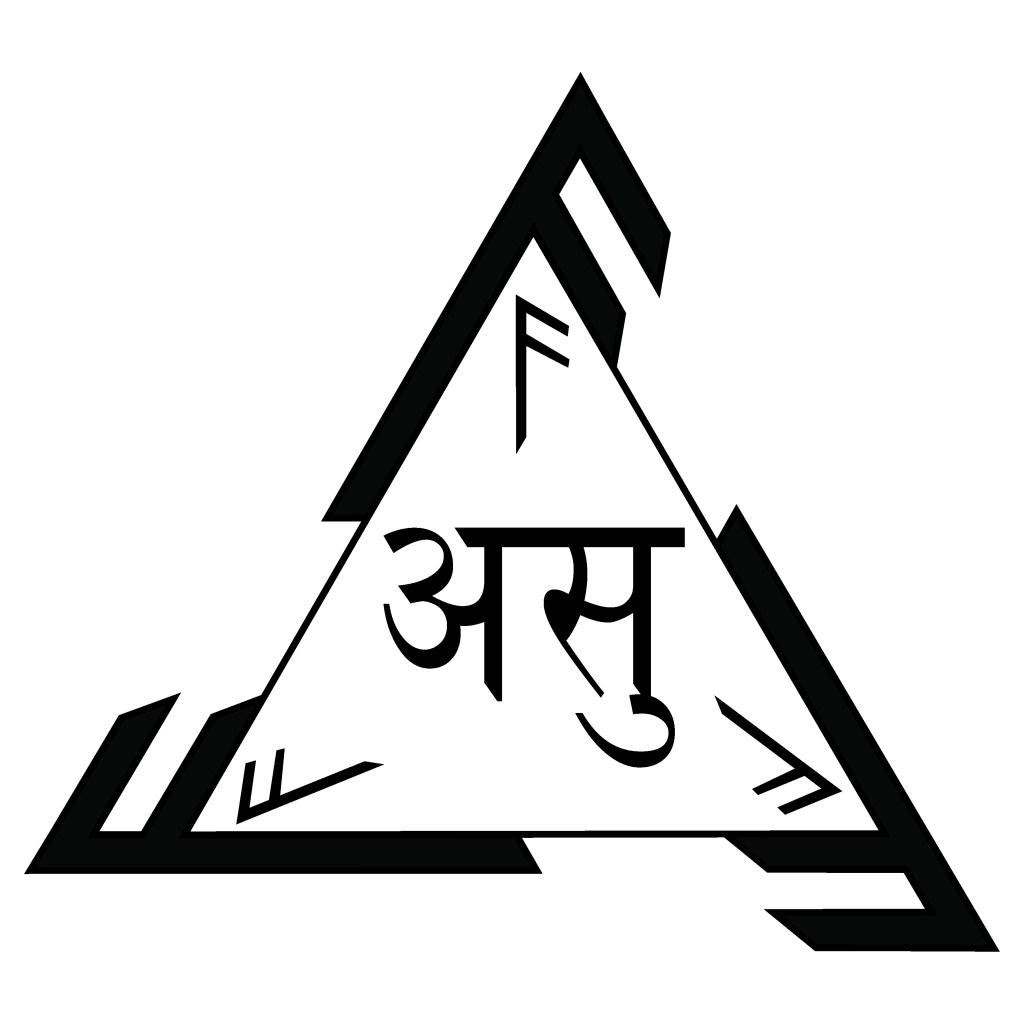
In Sanskrit, we have the relative words ásu meaning “life force, breath, spirit” and ásura meaning “godlike and powerful.” This word would evolve to become related to demons or foreign tribes in later Hinduism, similar to the Thurs of Germanic tradition. The original Asura can be equated with their cognate family of gods in the Norse pantheon, the Aesir, who were essentially Sky Gods. Ansuz encompasses this family of gods and ultimately represents the chief of the pantheon, Odin/Wotan/Wodanaz.
In Old English, the word ōs means “god,” which gives us insight as to what this word might have meant to a pre-Christian pagan. It would be fair to say this idea of god was entirely wrapped up with the concept of the breath, the mouth, and sounds that are created from within it.
Another connection we find is in the word animism, meaning “a belief that an immaterial force animates the universe,” and “a belief that spirits inhabit some or all classes of natural objects or phenomena.” Here, we are clearly looking at this belief as a fully established religious understanding, the oldest of what we have currently been able to uncover when discussing the long history of human spiritual practice. With absolute clarity, we can see this ancient system and secret was carried through time and culture into the North in the form of Odin and through this particular rune, which carries enormous weight in the entirety of the Futhark. Ansuz represents this encompassing force, which has been utilized and studied as an occult science for thousands of years in countless forms of yoga and meditation; the breath is the bellows of the forge within.
In the ‘Old Icelandic Rune Poem’ it is said:
“Oss is the old Gaut,
and Asgards prince,
and Valhalla’s leader.”
Here it is clear that this rune is connected to Odin and further to the ancient “Gaut,” Odin’s title in the Gothic tongue, the oldest recorded Germanic language.
Of course, when discussing all of this, it would be wrong to not include speech, wisdom, and poetry in our analysis of Ansuz and its’ god form of Odin. In both the “Old Norwegian Rune Rhyme” and the “Old English Rune Poem” this rune is associated specifically with the mouth. In the ‘Old Norwegian Rune Rhyme” it is said:
“Oss is the way of most journeys;
But a sheath is that for swords.”
Here I think we are seeing another allusion to Gaut, which is a title meaning “to pour or flow out of.” This may mean that most journeys were undertaken on water as opposed to on foot; as the sail goes “the way” of the wind. It can also mean that one must cultivate good speech, as “the way” here most certainly pertains to a type of heathen dharma system. One must follow the way of wisdom on most journeys. The mouth (as the pen wasn’t exactly a means for these people yet) was the tool and portrayer of wisdom, expressing the ideas, memories, and inner workings of the human being. The second line could be referring to those who hold their tongue too often or treat their mouth as a sheath, as one who stays silent may often not be viewed as the wisest or most able. The “Old English Rune Poem” reinforces these theories:
“Os is the source of all speech,
Wisdom’s upholder, and a comfort to counselors;
For every earl, happiness and hope.”
We must remember that the Germanic tribes prior to Roman conquest were a mostly illiterate and orally maintained people and culture. All of their stories and mythologies were encased and crystallized in poetry, song, and the runic system. With this in mind, we can understand why speech and it’s use, function, and manipulation, was of the most importance if one was to attain any merit in the realms of wisdom. Ansuz, in this way, is one of the most crucial runes for us to understand and incorporate if we are to learn the true secret beneath the layers of conscious existence.
-Ansuz Society





 Ansuz Society