Sunny weather today (Feb.1) implies the Winter Goddess Cailleach is out collecting more firewood and that Winter is to be prolonged. This observation would have been common to the various Celtic peoples of the British Isles and would have given them insight into what to prepare and plan for.
In America, this tradition is carried over in the form of Groundhog Day. This observance is identical to the Celtic Winter Goddess tradition because it is said that if the groundhog sees his shadow on Feb.2 (implying the sun is shining), we can expect six more weeks of Winter. If he does not see his shadow, it’s because the weather is poor and it is believed that Winter will end early. This tradition was brought over by German immigrants who used to observe the shadows of badgers or hedgehogs to judge the remaining duration of Winter.
You can see why this time of year is observed as significant, as it is the beginning of the transition into Spring, which holds many spiritual connotations for animistic religions and those who work the land or raise animals.
For us here in Western New York, it looks like Winter is not going anywhere anytime soon. So, we will plan accordingly!
Samhain is a time when the spirits of nature, the dead, and the gods are most likely to emerge to interact with the living. During these days, when daylight becomes shorter and shorter, nature around us seems to die and shed its vitality, leaving stalks, trunks and branches barren, resembling bones protruding from the soil. This is a time when we are meant to shift our focus from outdoors to indoors and shed our dead weight from the previous year, like the trees shed their leaves. By doing this, we are mirroring the process of nature and turning our energy inward. With Samhain come the final harvests, meaning that soon the workload will be drastically cut down and many daily activities will change. This time is to now be replaced with indoor tasks such as tending to animal pens, preserving food, repairing tools, spiritual practice, and performing various crafts such as woodworking, writing, or blacksmithing.
It is customary to make offerings to the deities, ancestors, and wandering spirits during this time in order to receive their favors, blessings, and good luck. We please the spirits to avoid their wrath. We offer to the ancestors to uphold family honor. We give our veneration to the gods to gain their power and visage. By performing rituals during this particular time of year, one enables themselves to better access various forces and gain insight into the past, future, and matters regarding cause and effect within the present which will aid one’s progress moving forward.
In “A History of Pagan Europe” by Jones & Pennick, they write:
“Samhain (1 November). This was the most important festival of the year, showing the pastoralist, rather than agricultural, origin of the calendar. Samhain was the end of the grazing season, when flocks and herds were collected together, and only the breeding stock set aside from slaughter. It was a time of gathering-together of the tribe at their ritual centre for rituals of death and renewal, dedicated to the union of the tribal god (in Ireland, the Daghda) with a goddess of sovereignty, the Morrigan, or, more localised, Boann, deity of the River Boyne.”
As the last of the great harvests, Samhain brings reward and celebration, the end of one year and the transition into the next. According to many European tribes, Samhain marked the turning point between the years and represented the New Year celebration of their cultures. With Samhain we descend into “night,” resembling the womb of the goddess or the abode in which she resides. The goddess reigning over this time of year was almost always in the form of a grim, fate-controlling hag or crone, such as Hel, Frau Holle, or the Morrigan.
In “Celtic Mythology and Religion,” Macbain writes:
“Equal to Beltane in importance was the solemnity of Hallowe’en, known in Gaelic as Samhuinn or ‘summerend.’ Like Beltane it was sacred to the gods of light and of earth; Ceres, Apollo, and Dis also, must have been the deities whose worship was honoured. The earth goddess was celebrated for the ingathering of the fruits; Apollo or Belinus and Proserpine were bewailed for their disappearing from earth, and Dis, who was god of death and winter’s cold, and who was especially worshipped by the Celts, as Caesar says, was implored for mercy, and his subjects, the manes of the dead, had special worship directed to them. It was, indeed, a great festival—the festival of fire, fruits, and death.”
In reference to Norse and Germanic paganism, we see the worship of elves and land spirits was also common during this time. In modern Germanic paganism, many people celebrate Samhain under the name Álfablót (Elf Sacrifice), which is when harvests are reaped and sacrifices are made to the elves and gods. Elves and the dead are strongly connected to the ancient burial mounds of the Pagans, therefore, much of the activity surrounding this festival would have likely involved distributing offerings to the gods and conducting sacrifices directly upon the mound (or grave) of the dead. This is where the elves were thought to reside.
In our own Samhain/Álfablót practice, the fair-weather god Freyr, king of the elves, is given one last celebration of reverence, being the center focus of the rites and rituals of the two-day celebration. He is invoked and offered substantial food and drink, as well as prayers and songs, showing devotion and thanks to the spirits and deities of abundance and prosperity. The event begins on the last day of October (Halloween) and ends the night of November 1st, when Freyr is returned to his resting place until the first of May. This cycle is reflected in “Myths and Symbols in Pagan Europe,” where Davidson writes:
“He [Freyr] is said to have brought good seasons and prosperity to the land, and so when he died the Swedes brought great offerings to his mound, and believed that he remained alive and potent in the earth. The connection which seems to exist between Freyr and the elves and land-spirits thus provides an additional reason to associate them with the dead in their graves.”
Because of these associations, we place the death and rebirth of Freyr (the power of good weather and abundance) within this span of time (Nov 1-May 1). However, this is not the only way to do things nor is it recommended to everyone, as how one celebrates these sacred events revolves much around one’s lifestyle, geography, deity devotion, and overall means. For us in Western New York, this timeline coincides seamlessly with the natural cycle of the weather, and therefore is easy to follow. For those in a different climate or location, this may not make as much sense, and it is recommended to follow the patterns around you regarding these things.
In “Sorcery and Religion in Ancient Scandinavia,” Vikernes gives us further examples pertaining to the Nordic new year and pre-Christian Halloween customs. He writes:
“The first holiday of the year was New Year’s Day, better known in English as Halloween (“initiation evening”), and in Gaelic as Samhain (“summer’s end”). The sorcerers and later the gods (i, e. religious kings) and their challengers dressed up as different creatures with access to the realm of the dead. They fasted and hung their clothes in a tree or the gallows, to make it look as if they had hanged themselves. They wounded themselves with a spear, to bleed, smeared ash or white mud all over their bodies to look like the dead, they put on masks and sacrificed a cow or an ox on the grave mound, so that the blood poured down and into the grave underneath; into the realm of the dead. They then blew a horn, in the Bronze Age a lure, to open up the entrance to the realm of the dead. They then travelled into hollow trees, caves in the mountain, holes in the ground, or more commonly into the burial mounds. These were all seen as entrances to the realm of the dead. Inside, in the darkness of the grave, a woman was waiting for them, sprinkled in the sacrificed animal’s blood and dressed like the queen of death. They then took at least some of the objects their dead forebears had been buried with and brought them back out.”
As we can see, Samhain (or Álfablót) type celebrations were not only distinct to Celtic and Germanic culture, but rather appear as a pan-European tradition representing a celebration of the dead, the ancestors, and the final harvests of the year. It is clear that no matter which form of paganism(s) one practices, the celebration and event known to us now as Halloween is of very ancient and sacred importance. Not only as a transitional period between the seasons, but as a time when it was believed to be easiest to pierce the veil between dimensions and interact with beings outside of our normal cognition. It is because of the superstitions and Pagan worldviews of the past that we have many (if not all) of our current yearly celebrations in the West.
The Autumn Equinox is the turning point in the year when daylight and darkness become even once again, tipping the scales towards the darkest period of the year when the nights grow longer than the days and the weather gets colder. Traditionally, harvests would be reaped during this time and various rituals were conducted for the gods and spirits residing over abundance. Attention was given to the spirits and ancestors as it was believed that this time was liminal and other realms were accessible. At the cusp of the Equinox, the dark half of the year begins to slowly gain dominance once again.
Bonfires are especially common as well as sacrifices, whether physical or symbolic. People give thanks and ask for future abundant harvests, ensuring a healthy stock of goods for the upcoming Winter months. Much depended on this pivotal time of year and many rites were undertaken to guarantee success. Feasts would be widespread as well as games, echoing other Summer/Fall festivals in atmosphere. For us here in the Northeastern United States, many crops are ripening at this time, such as squash, tomatoes, and beans. With this comes canning and drying to stock pantries for the Winter.
In “Teutonic Mythology” by Grimm, it says:
“In some parts of northern England, in Yorkshire, especially Hallamshire, popular customs show remnants of the worship of Frieg. In the neighborhood of Dent, at certain seasons of the year, especially autumn, the country folk hold a procession and perform old dances, one called the giant’s dance: the leading giant they name Woden, and his wife Frigga, the principal action of the play consisting in two swords being swung and clashed together about the neck of a boy without hurting him.”
As seen above, many early English (and Germanic) peoples would honor the god/goddess Frieg (Frigga) and Woden (Odin) during this time. Woden/Wotan in early Germanic belief was sometimes associated with wheat fields, where offerings were left for his horse Sleipnir during pivotal moments of the year. Certain epithets of Odin give reason to believe that he has been worshipped as a benevolent god to some extent, reigning over wealth, fate, and general prosperity. Names like this include Farmatýr (Lord of Cargoes) and Óski (God of Wishes).
Regarding Odin and continental Pagan belief, Grimm also states:
“As these names [Woden/Mercury/Hermes], denoting the wagon and the mountain of the old god, have survived chiefly in Lower Germany, where heathenism maintained itself longest; a remarkable custom of the people in Lower Saxony at harvest-time points the same way. It is usual to leave a clump of standing corn in afield to Woden for his horse.”
Of all the ancient celebrations, the Autumn Equinox was the most difficult one to find any references for. My belief is that it was a lesser celebratory event and more centralized in each community, where the harvest would be brought in and the local spirits offered to. People were likely working hard and didn’t have time to prepare for anything large like they would have during the last harvest of Samhain, which certainly would have taken the forefront in terms of importance, at least to the Pagan Celts.
In “The One-Eyed God” by Kershaw, it says:
“These times of transition are strange times, whether the transition is from month to month, or season to season, or year to year; they are times which are not quite one thing or the other. They are like boundary lines, which are not quite my property or yours, or doorways, which are not quite inside or outside. As Eitrem said, it is at these dividing lines of time and space that the dead and Hermes are particularly active.”
It was common to not only focus on the harvest at this time, but to also give special attention to the dead and gods (or spirits) associated with death. The year was to start its final stages of descent into darkness and the deified Sun/Light was to begin the darkest part of its journey through the underworld. Because of this, symbolic bonfires are lit in order to emulate the Sun and prolong the light.
In “Sorcery and Religion in Ancient Scandinavia” by Vikernes, it says:
“Odinn placed his eye in the grave, in the well of the past, every year, in order to learn from the past. This might sound strange, but his eye was the Sun, Baldr, that lost its power every autumn and therefore had to spend the winter in the world of the dead. In other words, Odinn had one eye in the world of the living and one eye in the world of the dead.”
Aside from the various gods, goddesses, and spirits of prosperity, it is clear that Odin and Frigga took a central role in (Germanic) Equinox observances in pagan Europe. Odin (Woden) was recognized as a god of wishes, death, darkness, gifts, and clairvoyance, mirroring the exoteric liminality of the period between light and dark invoked by the Equinox. Frigga, on the other hand, represented the Earth, love, fertility, wisdom, strength, and magic. Essentially, Frigga is the symbol of Nature herself.
This celestial event is to also be reflected internally, as darkness begins to gain supremacy after this transition. We begin to look inward and conduct deeper spiritual work, creating light within to combat the impending darkness of Winter.
-The Celto-Germanic Wheel of the Year According to Past and Present Pagan Customs
May Day marks the true climax of Spring and transition into Summer in the Northern regions. During this month, lots of plants and herbs begin to emerge after the long winter, bringing a plethora of flora and fauna to the land. On May Day, many Pagans resurrect (uncover) their idols of fertility and parade them through the towns and fields, blessing them for the upcoming agricultural year. In the past, this idol would have been housed in a cart or wagon and was presided over by specific individuals. Sometimes, these exclusive ritual participants were killed after laying eyes on the goddess in the wagon.
Jones & Pennick refer to this in “A History of Pagan Europe,” stating:
“The tribes around the mouth of the Elbe and in the south of modern Denmark are the ones who, as is now well known, worshiped Nerthus, Mother Earth. They saw her as intervening in human affairs and riding among her people in a wagon drawn by cows. The priest of Nerthus would sense when she was ready to leave her island shrine, and then with deep reverence would follow the wagon on its tour through the lands of her people, which would be the occasion for a general holiday, the only time when these warlike people put down their arms. At the end of the perambulation, the wagon and its contents would be washed in a lake by slaves who were then drowned. Noone was allowed to see the goddess on pain of death.”
In many cases, this idol was a goddess, and in others, a god would have taken its place, most notably Freyr. The idol that represented the god/goddess/spirit would be housed in the wagon, other times, a living person was chosen to embody the specific deity. Everyone would treat the person as if he/she was the actual deity themselves, dressing them in flowers and other pleasant things, parading them around in reverence.
Bonfires are customary during this time. Many people perform purification rituals using smoke and various other substances to cleanse themselves for the new year. Birch wood was most commonly used for these purposes and the smoke created would thus be walked through or “bathed” in. This was done to cleanse oneself and family of evil, sickness, and bad luck. Not only people, but livestock were said to be paraded through a pair of fires, ensuring a prosperous year, good health, and good harvests.
In “Celtic Mythology and Religion”, Macbain refers to the writings of Cormac:
“Most authorities hold, with Cormac, that there were two fires, between which and through which they passed their cattle and even their children. Criminals were made to stand between the two fires, and hence the proverb, in regard to a person in extreme danger, as the Rev. D Macqueen gives it, “He is betwixt two Beltein fires.”
Beltane bonfires are also referenced in “A History of Pagan Europe” by Jones & Pennick, where it says:
“The second great festival of the year was Beltane or Cétshamhain (1 May, May Day). This was the beginning of the summer half of the year, also a pastoralist festival. As at Samhain, the lighting of bonfires was an important rite. Cattle were driven through the smoke to protect them in the coming season. Beltane may be connected with the Austrian deity Belenos, who was particularly associated with pastoralism, or it may simply take its name from the bright (bel) fires which were part of its celebration. Beltane is the only festival recorded in the ninth-century Welsh tales, a time when the Otherworld communicates with the world of humans, either through portents such as the dragon fight in the tale of Lludd and Llevelys, or through apparitions such as the hero Pwyll’s sighting of the goddess Rhiannon.”
Later, around the 12th century, “May Baskets” became common practice in Germanic culture, which involved hanging flowers on strangers’ doorknobs or delivering flowers to friends, family, and the local community. This is still done today in many parts of the world, where people will anonymously leave flowers on people’s doorsteps in honor of the season. Essentially, May Day revolves around life, youth, and the beauty of the natural world around us. Through the blessing and beauty of the May Queen, we are propelled into the new farming season with inspiration and vigor.
As we can see from these various historical accounts, this particular event was of significant importance to not only Germanic and Celtic Pagans, but a pan-European celebration centered around a specific goddess, ritual cleansing, and Sun worship. Plenty of other cultures outside of Europe celebrate this occasion as well, such as some Native Americans, Persians, and Hindus. This renewal of life has been central to human experience for most of its history, promising us the glory of Summer and the proliferation of life.
In “Sorcery and Religion in Ancient Scandinavia,” Vikernes writes:
“On White Queen Monday they travelled the land to collect bacon, flour, eggs and other white food items for the large bride’s race. Dressed in white and wearing ribbons and wreaths of flowers they danced and sang all the way, from farm to farm, women and men, girls and boys, led by the king (alias the May King) and the queen (alias the May Queen), whether they were sorcerers or deities. The king and queen sat in a carriage, drawn by horses or the others in the procession. The queen did all the talking and the ladies and girls sang “Bride, bride, most beautiful bride”, to invite to the race all the women who believed they stood a chance at winning the bride’s race. The females in the procession wore men’s clothes on their upper bodies, and the men wore dresses, because they represented the hermaphroditic spirits. This custom remained even after the belief in spirits was supplemented with a belief in deities.”
On our homestead, May Day generally consists of uncovering our Freyr idol and walking him through the gardens and fields, either in a small mock-wagon or by hand. Once we have visited all the necessary areas, we return the idol to his altar and leave generous offerings for his blessings and fortune. Two fires are built in front of the altar and each ritual participant walks between them, purifying themselves of yearly baggage and giving personal thanks to the great Yngvi-Freyr. By doing this, each person can shed negative, dark, detrimental energies; inspiring wellbeing, clarity, and positive development.
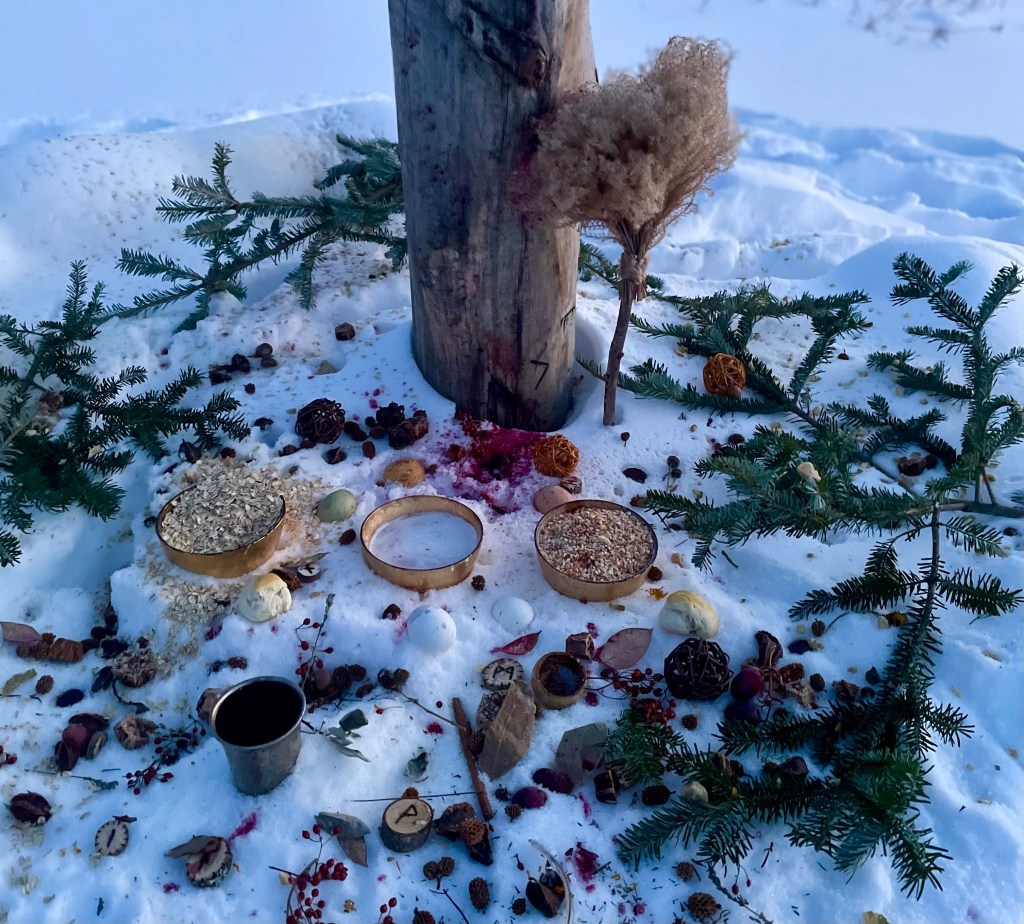
Imbolc, an Old Irish word meaning “in the belly”, is the time of year when we eagerly await the changing weather in order to judge the remaining duration of Winter. On this day, if it snows or is very harsh outside, we rejoice, because according to ancient Irish Celtic tradition, it means that the Winter Goddess, Cailleach (Veiled One), is asleep and Winter will likely end soon. However, if the weather is fair and fine, we can expect Cailleach to be out collecting more firewood and supplies, ensuring a longer and more treacherous Winter ahead. So, during this time, we hope for harsh weather and make offerings to various deities, generally Cailleach (Hel), Odin, and the local spirits in order to gain their favor. It is wise to be cautious of one’s noise production on this day so as to not wake the sleeping Crone.
Jones and Pennick give us a glimpse into these ancient Celtic customs:
“…the goddess known as Brighde in Ireland, Bride in Scotland and possibly Brigantia in the north of Britain. She had to do with warmth, fire, summer and possibly the Sun, since an Irish legend tells that in winter she was imprisoned in an icy mountain by a one-eyed hag.’ In some places she presided over thermal springs, presumably as the underground Sun, and in Scotland until the mid-twentieth century she was welcomed in at Imbolc (1 February) by the symbolic rekindling of the hearth fire after the house had been springcleaned from top to bottom.”
Reverence for fire and the Sun are important during this day, as soon the warmth of Spring will be arriving, bringing in longer days. Some European tribes marked Imbolc as their official beginning of Spring, but most considered it a celebration (and observation) of the ending Winter and the new beginning that lay ahead. Cleaning of the house and hearth would be essential during this time, preparing the living area for the next year of activities. Animal pens and beds would be changed and laundry would be washed. For those further North or in higher elevations, this day would have likely been celebrated differently, as we will see in the later quoted material.
In “Celtic Mythology and Religion,” Macbain writes:
“Candlemas day is known as La Fheill-Brighde, St Brigit’s day, who is really the canonised fire-goddess, the Vesta of the heathen Gaels. Some customs in regard to her worship were mentioned already, and Martin relates an interesting custom in the Western Isles on Candlemas, showing St Brigit clearly on the aspect of Vesta, the hearth and home goddess. The mistress and servants of each family take a sheaf of oats and dress it up in women’s apparel, put it in a large basket and lay a wooden club by it, and this they call Briid’s-bed, and then they cry thrice, “Briid is come, Briid is welcome.” Next morning they look in the ashes to see the impression of Briid’s club there, and if they do they reckon it a true presage of a good crop and prosperous year, and the contrary they regard an ill omen.”
As with the divination of ashes described above, various other means of prophecy would be undertaken to gather as much insight into the current (and future) situation as possible. Divination is a window into the workings of fate, a way to receive information directly from the wide Web of Wyrd. These cryptic bits of insight would be deciphered by a seer or seeress, sometimes a traveling witch, priestess, or the man of the household (priest). This would be their compass for how to focus their attention and energy as the year unfolded.
In “Sorcery and Religion in Ancient Scandinavia,” Vikernes writes:
“The 7th Sunday before Easter, usually the 1st of Þrúðheimr, was known as Washing, known from Gaelic as Imbolc or Imbolg (“washing”), and was regarded as the first day of spring. Washing lasted for a full week. The Sunday of Washing was called Pork Sunday, and this was the day Hel’s horse arrived with the news that Baldr would return. Everyone therefore gave thanks to Hel on this day. Pork Sunday was the day they transferred the fertility of spring to the women, by whipping their behinds with fresh birch branches. This custom survived well into the age of gods, and a form of this is in fact still practised in parts of Scandinavia.”
Common themes regarding this time of year include fire reverence, goddess worship, special recognition of the Sun, and special veneration to the Winter Crone Cailleach (Hel). Exceptional attention was paid to washing and cleaning, as well as creating a new fire in the hearth of the home. Offerings were made to various deities in order to be blessed with a prosperous year and good health. With Imbolc came the glimmer of Spring and the glorious days of plenty that lie ahead. In many ways, this celebration started the people off on a clean slate.
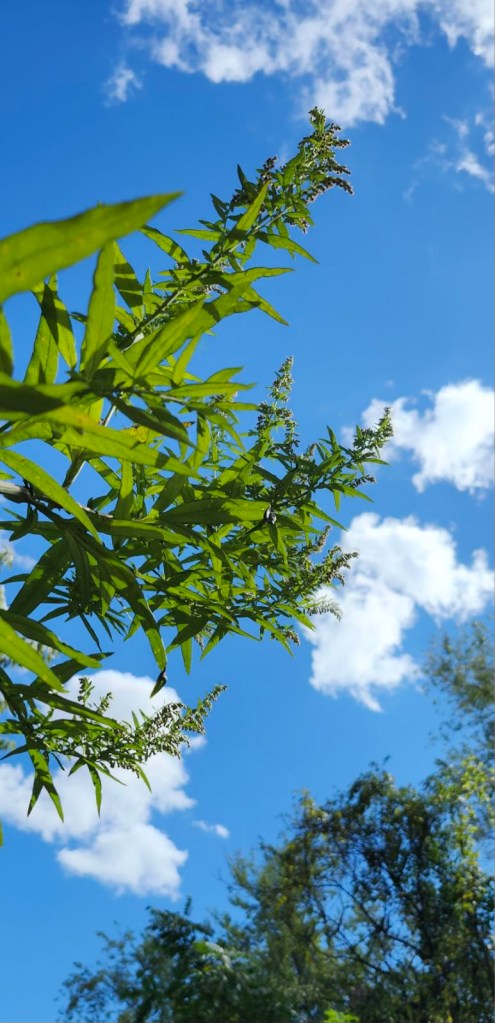
An herb as powerful as Mugwort is an invaluable way to connect and learn more about Goddesses of not only Greek, but Norse and Celtic mythology. Mugwort and its association with women, those who protect and champion women, as well as those seeking to expand their metaphysical world through dream and deity work, is as important today as it was thousands of years ago.
Artemis, the namesake of Mugwort, is the logical starting point. Artemis is a goddess of the hunt, the moon, and especially of female initiation and protection. She is associated with girls and women, but is also a goddess to boys and men in rites of initiation and the hunt. All who wish to learn more and work with her are welcome, as she is a goddess for everyone. Mugwort, having derived its name from her, is the mother herb mirroring her mothering prowess.
However, in the Greek mythos, she was not a goddess to suffer fools gladly. She vehemently defended her virginity and reputation as the greatest of hunters. Some sources suggest she was the patron goddess of the fearsome women warrior tribe, the Amazonians. A passionate and ferocious fighter for what she believes is right, a beacon for those who need strength.
Of everything that Artemis is known for, Mugwort is most closely related to her powers as midwife, a deity for both comforting women in labor and the newborn. Mugwort is also an important herb for dream and trance work, lending itself nicely to moon rituals, as Artemis was also a goddess of the moon. Using Mugwort in its tincture form, or burning as a smudge stick, will help to expand consciousness and enter a trance state for magical work. Adding Mugwort into your meditation on Artemis during the moon, especially the full moon, will greatly enhance communication.
In Norse mythology, Frigg, the most powerful volva, was believed to be the first practitioner of seidr magic. Frigg is the wife of Odin and a fiercely protective mother of Baldur. She is the goddess of family, motherhood, fertility and the balance of love and wisdom. Mugwort works perfectly with Frigg as it is an herb whose main use has been for assistance in prophetic dreaming and the overall health of women.
Runes that can be used when invoking Frigg are Fehu, Pertho and Berkano. Fehu, when related to Frigg, is a female rune for fertility concerned with livestock, and especially newly born cattle in spring. Fehu is always a rune of productivity. It can also be used for spiritual or artistic creativity, carrying a fiery power within. Fehu can also represent certain aspects of the life force.
Freya Aswin correlates Pertho with birth. Pertho can also be used to help find hidden aspects within yourself. The joining of these attributes with Frigg, who governs birth and is involved with weaving fate (through work as a volva and through seidr magic), very nicely encapsulates the magic of Mugwort.
The Berkano rune indicates birth, being rooted, and the feminine, has been called a rune of ‘bringing into being’, the first protection given to children at birth. Both Artemis and Frigg were known as unrelenting defenders of children and women. Incorporating Mugwort when working with Frigg can be very beneficial.
The goddess of Celtic mythology most closely associated with Mugwort is Brigid. Brigid is known as a goddess of fire, poetry, and healing; a maternal goddess who embodies the divine feminine. She is like spring, representing new beginnings.
As a goddess of fire and hearth, she was said to watch over all the fires in the homes of Ireland. She was closely associated with the sun and the warmth of spring, the time of renewal and rebirth. Mugwort is also an herb closely associated with fertility, the goddess, and of womanhood. Brigid, as a goddess that protected the flame (which was so important for ancient people’s survival), is like a mother radiating maternal compassion.
Poetry (and creativity) have always had close ties with the metaphysical and dream world, a world that Mugwort works so well in. Brigid was called upon to help with creativity and inspiration, especially with bards, who held a very high position in Celtic society. Bards were the keepers of history and culture, and Brigid was often invoked to help inspire creativity.
Brigid was also a goddess of healing. She was often called upon to help cure sickness and injury, as her touch was said to have healing powers. In addition to being a healer of sickness and injury, she was a goddess of childbirth, watching over women in labor. Her presence helped ease pain and ensured a safe delivery. She was also a protector of children and was asked by parents to watch over children’s safety and health. Brigid and her divine energies align well with Mugwort and its properties.



 Ansuz Society