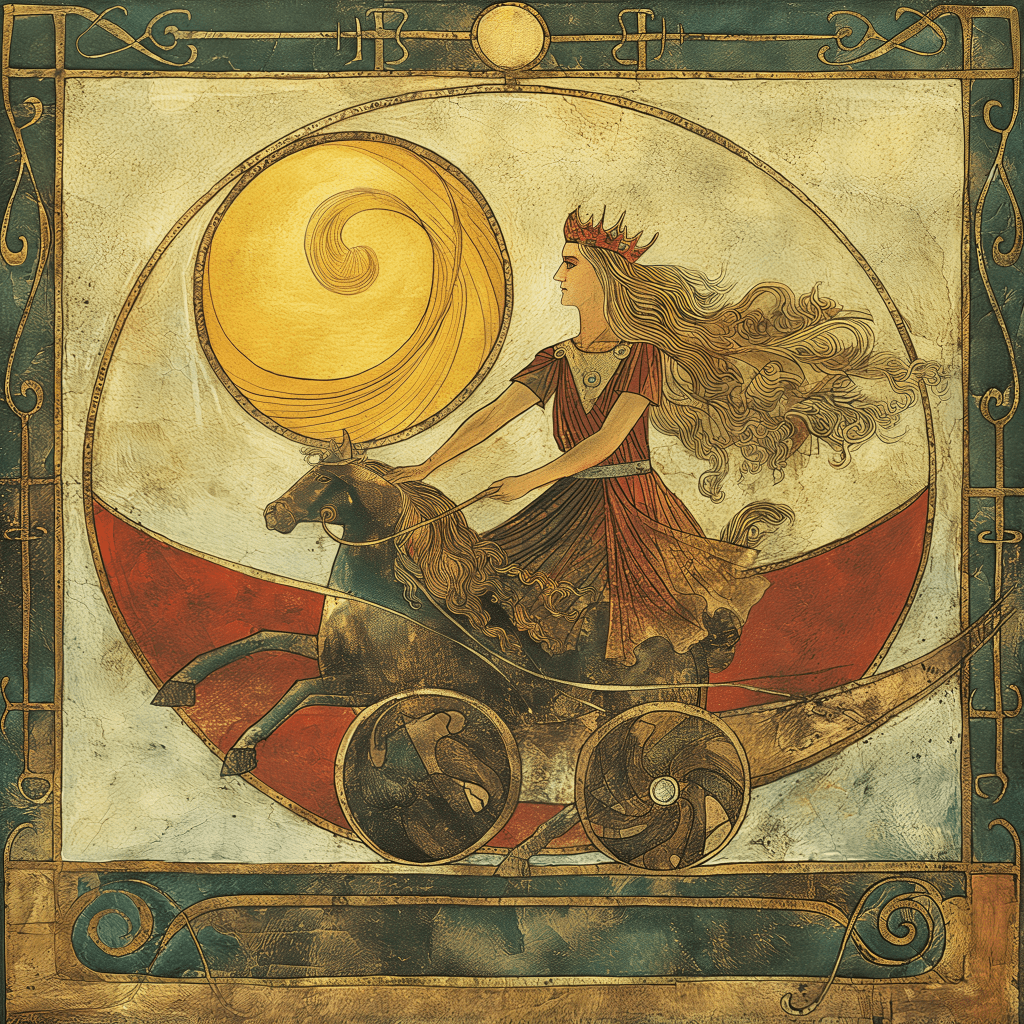
Mugwort (Artemisia Vulgaris) History and Uses

The beginning of Spring is a magical time. Everything starts to wake up from Winter’s sleep, the air becomes perfumed by unfurling buds and shoots of green, birthed under sky and warming Sun. The birds start to unleash their full songs, filling the landscape with sound. In short, pure magic. What better time than now for one of the most magical plants to start its ascent skyward. Mugwort is now lining roads and walkways, growing unchecked in fields. I’ve taken the plunge into the world of Mugwort and would love to take you with me.

Mugwort (Artemisia Vulgaris) is one of the oldest herbs referenced in Anglo-Saxon plant wisdom. Some of its earliest known uses were to help regulate menstrual cycles, as well as with divination and dreamwork. There is also evidence of Mugwort smoke as an offering to Isis in Ancient Egypt. It has been mentioned in poems dating back as far as 3 B.C. in China, such as the the Shi King/Jing Poetry Classic. It is also mentioned in the poem “Hortulus” by Walafrid Strabo (808 AD – 849 AD), as ‘the Mother of Herbs’. Mugwort’s roots pre-date modern history.

The name Mugwort comes from the Greek Goddess Artemis, Lady of the Moon. She is the Goddess of hunting and fertility, also assisting in the cultivation of willpower and self-reliance. She is a comforter to women in labor, a helper to midwives, and protector of young girls. Mugwort is ruled by the planet Venus, lending it even more feminine energy. Hippocrates and Dioscorides even endorsed the use of Mugwort to help ease childbirth, their works having influenced modern medicine. The “Hippocratic Oath” that says “First do no harm” is from, well, Hippocrates.

The herb has many healing properties, both physical and spiritual. Physically, Mugwort may help stimulate menstruation, keeping from stagnation. It can be used for help in treating rashes, sore joints, bruises, and bug bites. Mugwort has benefits for pain relief, especially from arthritis. It has powerful nervine qualities, nervines being things that help relieve stress on your nervous system, which can be very helpful when treating anxiety, depression, and stress. Mugwort also contains things like iron, phosphorus, potassium, zinc, and tannin. It’s also a nutrient dense plant found most everywhere.

Personally, Mugwort is one of my favorite herbs. It has the ability to induce incredibly vivid dreams and the ability to bring about lucid dreaming experiences. Those are two of the main reasons why I love mugwort. Dream work is an important part of my spiritual practice, and Mugwort has been the best tool I’ve used. It can be taken as a tincture in tea, smoked, or put in dream sachets and bundles for burning. Being an herb so deeply entrenched in feminine energies, it is perfect for those that want to connect to the divine feminine, bond with their personal intuition, and enhance sensitivity. It can help open yourself to being more empathetic and patient.    

Stagnation in body and mind can cause all sorts of problems. Mugwort increases circulation and warms the blood, helping a stagnating body. A stagnating mind will lead to frustration, detachment, and anxiety, just to name a few. Mugwort opens the mind, allowing for deep meditation and vision work. It can help with opening thoughts and deeper spiritual meanings. It moves the things in us which have lain dormant. It’s an herb for gentle but serious action.

Any phase of the Moon will work when using Mugwort for lunar practices, as it is a lunar herb. However, the best and most interesting time to use it would be during the Balsamic moon or when the moon is fully waned. The Balsamic moon is a time of going inward and recharging. This is the phase right before the new moon, making this moon perfect for meditation and really digging into the self. The Balsamic moon is the time to find what intentions you want to set and why you are trying to set that intention. Using Mugwort to explore your inner world will really help you bring your intentions to the surface; the perfect time to put your plans into action.

Om Cham Chandraya Namaha

We recorded another version of the popular mantra OM CHAM CHANDRAYA NAMAHA this Spring and are happy to share it with you.

This mantra is dedicated to the Moon god Chandra, also known as Soma, and can be translated many ways, such as “Homage! I Drink/Eat of the Moon!”.

The word cham comes from the Proto-Indo-European word kʷem which means “to swallow,” implying that one absorbs the energy of the Moon as one does when drinking water or eating food.

Chandra means “glittering/shining” and is a word used for the Moon personified. This light (or shine) is what we take in during meditation, transforming it into clarity of mind and peace in spirit.

Namaha comes from the Proto-Indo-Iranian word námas (respect, homage) which derives from the Proto-Indo-European word némos, meaning “to bend, sacrifice, worship.”

As this is chanted and visualized, one gives reverence with each repetition for the illuminating clarity that is given by the great Shining One, filling one’s consciousness with calm images of crystals, water, and moonlight.

Praise to the Shining One!

Rahu, Ketu, and the Eclipse

In Vedic astrology, eclipses are seen as a symbol of revenge or as a bad omen.

According to mythology, eclipses are caused by the Chaya Graha (shadow planets) Rahu and Ketu, who were once part of a divine serpent. The story is traced back to a time before creation in the tale of the churning of the ocean, known as the Samudra Manthan. The churning of the ocean represents our consciousness. After an awful and lengthy war, the devas (gods) and asuras (demons) cooperated to churn the galactic material called the Milk Ocean. The churning poured forth several gifts and treasures. They included the goddess of wealth Lakshmi, the wish-fulfilling tree Kalpavriksha, the wish-fulfilling cow Kamadhenu, and Dhanvantari, who carries a pot of amrita and a book of medicine called Ayurveda. Amrita is a Sanskrit word that means “immortality” and is a drink (or nectar) intended only for the gods.

A serpent demon (Svarabhānu) aspired to become invincible. Sitting between Surya (the Sun) and Chandra (the Moon), Svarabhānu disguised himself as a deva and managed to take a sip of Amrita during Samudra Manthan. Surya and Chandra recognized the imposter and informed Mohini (the female form of Lord Vishnu), preserver of life and order, who quickly decapitated him. As they were now immortal, Lord Vishnu needed to find a place for them, so he put them in two specific points in the sky.

The head of the serpent demon (without the body) became Ratu, who fell on one side of the sun. The tail without the head that fell on the opposite side of the sun became Ketu. The sun stopped all movement in order to keep Rahu and Ketu from meeting one another. Twice a year they can create confusion and exact revenge by consuming the Sun and Moon causing the world to suffer from darkness.Rahu swallows the Sun, and Ketu, the Moon. But only for a short while as the Sun and Moon have also taken in the amrita. Offerings of coal, mustard, sesame, saffron and lead are made to appease Rahu. For Ketu, offerings of lead, sugar, saffron and sesame are made along with offering food to a dog with black and white fur.

As seen above, eclipses can be seen as highly inauspicious. Light and power diminish which corrupts their positive qualities and creates disturbances in the natural order of things. It is believed that auspicious work should only be started in the light. Because of this, beginning any new ventures during this period of darkness is not recommended, as it can bring upheavals, obstacles, and turmoil.

#eclipse #vedic #astrology #rahu #ketu

Ostara / Equinox Hails!

The Spring Equinox marks the traditional Easter celebration, the moment when the Sun crosses the equator from south to north. This is when animals like rabbits, deer, chipmunks, and other creatures of the forest begin to have their offspring. Various flora also emerge around this time, dotting the landscape with hints of color. During the Spring Equinox we pay special attention to the great Goddess in her youthful form of Ostara, Goddess of the Dawn. Ostara is associated with the rising Sun in the East, fertility, and light; a beacon of joy and good fortune. To many ancient Germanic Pagans, Ostara was credited with Springs deliverance. From her name we derive the modern word Easter, nodding to the Pagan origins of this holiday. To Ostara we make offerings and pray for a good year, thanking her for the return of the light. In one particular myth, Ostara transforms a bird into a rabbit who would then lay colorful eggs for her, showing us where the core symbolism of our modern holiday came from.

Hailaz Austra!

#ostara #spring #equinox #paganism

Om Mani Padme Hum

The six-syllable mantra Om Mani Padme Hum (Tib. Om Mani Peme Hung) is the most popular mantra in Tibetan Buddhism and has been chanted for over 1500 years. The mantra can originally be found in the Kāraṇḍavyūha Sūtra and is associated with the deity Avalokiteśvara (Tbt. Chenrezig) whose name means something like “Lord of the World.” The mantra itself has many different meanings associated with it, but most commonly it is translated as something like “Hail the Jewel in the Lotus.” This phrase is an homage to the great “jewel” of primordial awareness (Buddhanature) that exists within the hearts of all sentient beings. May all beings thrive under the watchful eyes of compassion.

ॐ मणि पद्मे हूँ / Om Mani Padme Hum

#ommanipadmehum #avalokiteshvara #buddhism #mantra #meditation

Kenaz

ᚲ / C / K

Kenaz is a particular rune, changing dramatically in context from Elder to Younger runes. The continental Germans seemed to hold this rune in a more positive light than their Scandinavian neighbors in the North. Kenaz is a reconstructed word from Proto-Germanic meaning “torch,” associated with creative fire, skills, knowledge, and teaching. The torch is that which illuminates the darkness, showing us the way in places unknown. This has been equated with an internal creative “spark” as well, which I think is reflected in the hard “k” sound represented by this rune. If we look to the Gothic language, we find evidence for this theory in the kindred word kōnja which refers to pine sap. This must be directly related to the torch, as pine/spruce has long been a favored wood for this use. 

The Gothic name for this rune is kosma/kusma, stemming from kunnan meaning “to be able, to know how,” referring to one’s inner abilities and skills. This word travels through time and tribe almost unchanged in sound and meaning, showing up in modern English in the words know and keen. In my opinion, the best example of this concept is crystallized in the Swedish word konst, meaning “art, knowledge, science, magic, secret,” and in the cognate German word kunst meaning “skill, craft, ability, magic.” This internal power of knowledge, associated with a craft or specific artistic focus, is the secret “light” side of the Kenaz rune, symbolizing our ability to make things known, to teach them, and to exhibit mastery in arts, crafts, intellectual or occult matters. 

 When looking for clues in the rune poems, the only evidence we find in relation to a “torch” is from the ‘Old English Rune Poem,’ where it states: 

“Torch is known by each of the living through its fire

-bright and blazing- it burns oftest

Where the athelings are at ease indoors.”

 Here it is clear that the word “torch” is denoting skill as a display of one’s “inner fire.” This is something (as a torch in the dark) that all can witness. “Bright and blazing” is the external effect of mastery and true skill in craft, as creation is a bright and blazing power. The last line denotes a sense of peace inherent in the “athelings,” which means “nobles, lords, heroes.” This clearly reminds an English reader of the word athlete, which signifies “those competing to win a prize.” I believe this relates to the calm felt within an extremely wise, skilled, or focused group; where everyone’s flame is burning bright and clear, all can feel a sense of ease and comfort. We get another look at this concept with the Old English word kennan which means “to make known, declare” but also “to bring forth, produce.” This is essential to the function of a craftsmen, artist, musician, or anyone who actively works with creative energies and systems. 

 In Old Norse, this rune is represented in the word kaun, meaning “sore, ulcer, boil,” and carries a much more sinister and harmful aspect associated with it. In most old poetry and analysis, it seems this rune was more of a curse or fetter than something used for anything “positive.” Although, in some Freemason rites, it has been shown that the Younger rune (ᚴ) is still in effect as a “torch,” as it mimics the man holding his sword (torch) at this angle during initiation rituals. As one walks through this “tunnel of torches,” he is “illuminated/initiated” into a new reality. 

 In the ‘Old Norwegian Rune Rhyme” it is said: 

“A sore is a curse for children;

Bale makes a man pale.” 

 Likewise, in the “Old Icelandic Rune Poem” it is said: 

“A boil is bale for bairns, and a scourgeful spot,

 And a home for flesh-rot.” 

 Here we see how our Scandinavian ancestors viewed this rune, as a much darker and fearful tone is taken with it. They viewed this rune in the context of evil and pain, without any allusions to a “lighter” aspect within the poetry. However, all these physical ailments have in common the sensation of “burning” within those experiencing it. This gives us insight into the deeper layers of the rune, where “fire” is still present, albeit in a new form. This rune was probably used strictly as a curse unless by the most skilled of sorcerers, who may have been able to turn this internal strife and struggle into acts of creation or transcendence. If looking at the Younger Futhorc as a whole, we see Kaun landing next to another very sorcerous and powerful rune, Hagal, the hail stone of transformation. Seeing these very destructive and feared runes side by side, as fire and ice respectively, shows a sort of miniature Ragnarök within the cycle of the Futhorc, enhancing the importance of viewing them in their respective “aetts” or groups, as here we end the first and begin the second. This is something I plan to venture into with more thought later… 

 To conclude, Kenaz is a rune steeped in much power and is tied together throughout all linguistic changes in the concept of an internal “fire” or a “burning” sensation. We have the older associations with torches, knowledge, creation and skill; being associated with teachers, students, craftsmen, and artistic masters. We also have the concept of “keenness” tied in, being exceptionally skilled and knowledgeable, “sharp” of mind and highly productive. In the North, this rune carried a more malicious nature, representing sickness, pain, and struggle. When approaching this rune from all the previous angles, we see a very wide range of meanings one can attribute to this rune, depending mostly on which system of runes one is working with. If using the Elder or Anglo-Saxon runes, this rune is viewed in relation to the torch. If using the Younger runes, it is likely you will associate this rune with pain or sickness.

Taken from the book “Wandering the Runic Path: Esoteric Analysis of the Germanic Runes” by Hrukjan.

Om Mahakala Hum Phat

Mahakala, black in color and fearsome in appearance, represents spiritual activity beyond our comprehension; the true consciousness that is unseen. His name means “Beyond Time/Great Black One” because he is all pervasive and unmanifested in material form, free of the shackles of tangibility. As a presence beyond matter, he remains untouched by Samsara, residing in the very fabric of space (consciousness) that permeates the entirety of the cosmos. Mahakala, like all Yidam (Ishtadevata) deities, represents the Vajra mind, fixed and indestructible; the primordial state of sentient awareness. Surrounded by the flames of wisdom, he is beyond the reach of times’ destruction. Mahakala is the foundation of conscious reality; a force of gravity that pulls beings towards the practice and service of the Dharma.

“…Such undeluded energy, like a windblown fire, can burn away the dross.
Mahakala has strong legs and Mahakala has sure feet;
They are well able to trample down demonic thoughts and deeds!…”

Lord of the Earth (Ingwaz)

Our newest song is a farewell to Freyr (Ingwaz) until his resurrection in May.

As the embodiment of fair weather and the inhabited, fertile, cultivated spaces of man, Freyr is returned to his mound on Nov 1st as Winter descends on our area of the country. Freyr remains covered until May 1st, when he will be returned to his rightful position on the land as guardian and provider of abundance.

During the Winter, when walking past the altar and mound of Freyr, one is encouraged to drop coins through cracks in the mound. This guarantees that one remains blessed by the god during Winter and also ensures that when he is returned in May, there will be extra resources for the celebration.

Freyr represents the male aspects of the Earth, being revered as a god of fertility, abundance, and prosperity. His rune is Ingwaz, the primordial seed, which symbolically represents the gestative powers of the Earth itself. Freyr is the great overseer of farming and agriculture, creating peace and harmony in the lives of humans and the animals they work with.

The song includes a short prayer and list of offerings given to the god during celebrations. May it aid in your connection to Freyr and further your attainment of success.

Lyrics:

From the land, of golden sun
Bathed forever, in the light
God of days, without night
In Alfheim…

Milk and sugar
Seeds and wine
Herbs and fire
Flowers and pine
Coins and blood
Runes and water
Meat and eggs
Bones on the altar

Ingwaz, Lord of the Earth
Crops in the field, wood in the hearth
Carry the fire, to the tables
Of the gods…

Milk and sugar
Seeds and wine
Herbs and fire
Flowers and pine
Coins and blood
Runes and water
Meat and eggs
Bones on the altar

Mahamrityunjaya Mantra

We have recorded a rendition of the Mahamrityunjaya mantra with a new affiliate @kshatriyacowboy. This verse can be found in the Rigveda (RV 7.59.12) and is devoted to the great Rudra-Shiva in his form of Tryambakam or “The Three Eyed One.”

त्र्य॑म्बकं यजामहे सु॒गन्धिं॑ पुष्टि॒वर्ध॑नम्
उ॒र्वा॒रु॒कमि॑व॒ बन्ध॑नान् मृ॒त्योर्मु॑क्षीय॒ माऽमृता॑त् ।।

oṃ tryámbakaṃ yajāmahe sugandhíṃ puṣṭi-vardhánam
urvārukam íva bandhánān mṛtyor mukṣīya mā ‘mṛtā́t

There are many translations of this mantra, but it is generally referred to as the “Great Conquest Over Death” or “Death Destroying” mantra.

The Mahamrityunjaya mantra is a request to be separated from the clutches of death; a longing to be free of attachments to samsara and one’s inherent ignorance regarding the perception of self. The mantra expresses a specific wish to not be removed from the possibility of immortality; requesting to have one’s attachment to samsara be broken (the suffering of bodily/individual bondage) but for one’s consciousness (Self/Atman) to remain intact for eternity; completely overwhelmed and overflowing with devotion for the primeval essence. This is requested as a means to continue worshiping the divine Shiva for all of infinity, who is none other than the progenitor of primordial consciousness; the true state of one’s being. The mantra describes this metaphorically as a cucumber (or melon) being separated from its vine but continuing to live on as an emanation of its source (Shiva). This request is for consciousness to become free from the shackles of the flesh (vine) associated with the experience of samsara (change), ego, and death. Through this process, one’s true Self may live on forever in constant reverence of the primordial source; the original state of awareness from which one’s perception comes and to what one’s consciousness is inseparable from, no matter how obscured or hidden by one’s mundane delusions.

Oh Three Eyed one, great Shiva,

Fragrant (blissful, aromatic) sustainer of prosperity,

As the cucumber is removed from its vine (bondage),

May I be relinquished from death (attachment to samsara) but not from immortality.

Om Namah Shivaya

-Ansuz Society

Hungry Grass

In honor of the season and the veil soon thinning, I have taken to studying more macabre and spooky plant lore for fun.

I hope that you enjoy this first tale.

Hungry grass, also known as Féar Gortach is said to be a patch of grass that is indistinguishable from any other section of grass. However, it is said to be cursed by the dead that lay buried underneath.
Should you stand or walk upon hungry grass, you will be overtaken by weakness and hunger.

Variations of the hungry grass story tell of a person stepping upon the grave or burial plot of a victim from An Gorta Mór (the Great Famine) of the 1840’s. The Irish term “féar gorta” can be more accurately translated as “famine grass” rather than “hungry grass.”

This myth may be a folklore manifestation of the historical trauma suffered during the Great Famine (An Gorta Mór) of the 1840’s. When the Famine took hold, men, women and children were left to starve to death as a direct result of the Potato Blight and a misuse of resources under British Government rule at the time.

Over one million people died in poverty, starvation and agony. These poor souls were thrown into mass graves, usually in fields. These spaces became known as “Famine Graveyards”.

The grass eventually grew over the buried bodies and it was said to be cursed.

When scientific reasoning wasn’t particularly widespread, it was probably a fair attempt at rationalizing the unexplained deaths or episodes of fainting that would occur from time to time due to malnutrition.

An alternative version of the hungry grass tale relates that anyone walking through it is struck by temporary hunger. In order to safely cross the grass, one must carry a bit of food to eat along the way such as a sandwich or crackers and some ale.

In a few rare accounts, the hungry grass is said to actually devour humans.

There was the idea that the hungry grass may also eat crops too. Before the term “hungry grass” was coined, people thought that a spirit of a man was, in fact, eating people. The word “féar” in Irish is both “man” and “grass”. So, Hungry Man came to be because they feared him. It was said that if you give relief to Hungry Man, you will enjoy unfailing prosperity, even during the worst periods of famine and death.

Although the hungry grass superstition is outdated nowadays and seems very specific to Ireland, it has a lot of narrative appeal.

Beware the hungry grass!