Yarrow Practical Uses

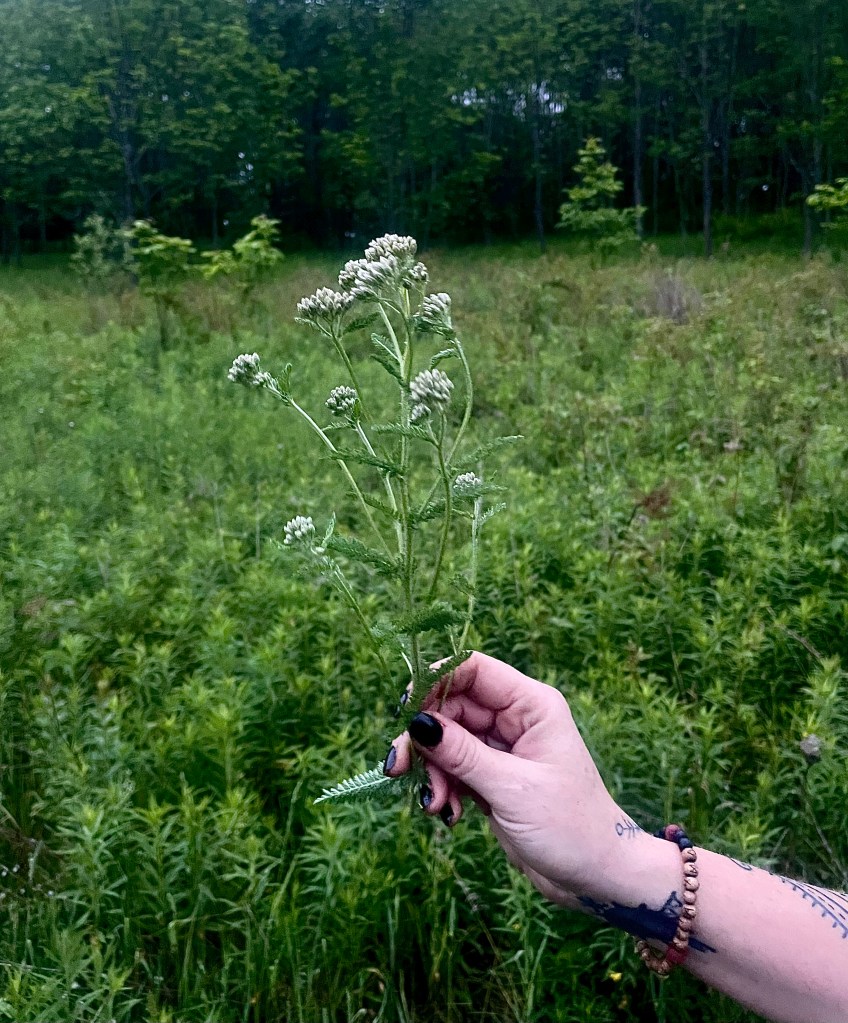
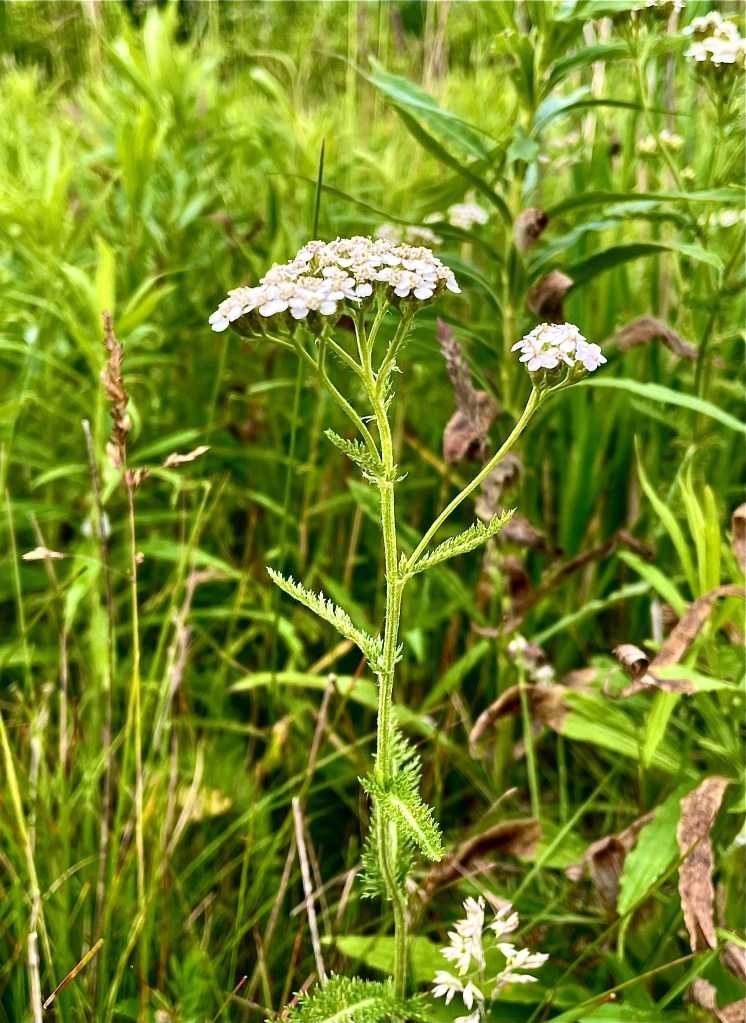
Yarrow is one of the most ancient herbs for practical medicine and ceremonial healing. Its pollen has been found in Neanderthal burial sites. Traces of yarrow leaf have been found in the teeth of a 50,000 year old Neanderthal man.  

Yarrow is a joy to gather as it usually symbolizes the first days of Summer here in Western New York. For ceremonial and divinatory use, yarrow is traditionally gathered on Midsummer’s Day. Otherwise, it can be harvested soon after the flowers have opened and once the morning dew has dried.  

Yarrow was named for the Greek warrior Achilles, whose longevity in battle was credited to being dipped in a warm bath of yarrow shortly after birth. Later in life, it’s said that he used yarrow leaves to heal the wounds of his men. 

Yarrow is a strong ally for heavy bleeding and also works as an antiseptic. It finds its way into the medicine cabinet as a diaphoretic for colds and flu, made from yarrow’s flowers. It is also used as a bitter for improving digestion when taken before a meal as an aperitif and is effective for stomach and menstrual cramps and intestinal flus. 

Yarrow’s roots have anodyne and anti-inflammatory qualities that can be used for tooth and teething pain. A frozen or cold cloth soaked in a decoction or diluted tincture will reduce inflammation when chewed. 

It may also be used as a mild sedative to promote sleep or to calm anxiety. As a traditional divinatory and ritual herb, yarrow has been used in Native American sweat lodges, Chinese oracular ceremonies and European love charms for millennia.  

A wash of the leaves or flowers will disinfect wounds and can be followed by a chew-and-spit poultice of fresh or dried leaves to stem bleeding and speed healing. Fresh yarrow leaves are preferred, as the dried leaves seem to lose their volatile oils very easily. 

Astringent tannins in yarrow have made it a valued remedy for the reproductive system among midwives and herbalists. 

Dried, powdered leaves are great for the medicine cabinet. A centuries-old Romani remedy is that it can be applied to cuts and wounds to prevent infection and stop bleeding. A pinch of the powder in the nose will also help quickly curb a nosebleed. Refrain from inserting fresh yarrow leaves into your nostrils. 

Tincture ratios and dosage: 

Leaf: Fresh (1:2 using 95% alcohol) or dry (1:5 using 50% alcohol); preparation 1–3 ml, three times a day. 

Flower: Fresh (1:2 95% alcohol) or dry (1:5 50% alcohol); preparation 1–3 ml, three times a day. 

Root: Fresh (1:2 95% alcohol) or dry (1:5 50% alcohol); preparation 1–3 ml, three times a day. 

Infusion ratios and dosage: 

Leaf: Infusion of 1 to 2 teaspoons (5–10 ml) of the dried leaves per 1 cup (240 ml) of boiling water, up to three times a day. Higher doses can be used acutely, as needed, for a short period. 

Flower: Infusion of 1 to 2 teaspoons (5–10 ml) of the dried flowers per 1 cup (240 ml) of boiling water, up to three times a day. 

Root: Decoction of 1 to 2 teaspoons (5–10 ml) of the dried roots per 1 cup (240 ml) of boiling water, up to three times a day. 

Avoid ingesting during pregnancy. Both internally and externally, yarrow may cause side effects for those with Asteraceae sensitivity (contact dermatitis, photosensitivity, and allergic reactions) although reactions are very rare. Be sure of your yarrow identification, as there are poisonous look-alikes, including poison hemlock.  

Be safe! 

Elderberry and Elder Lore

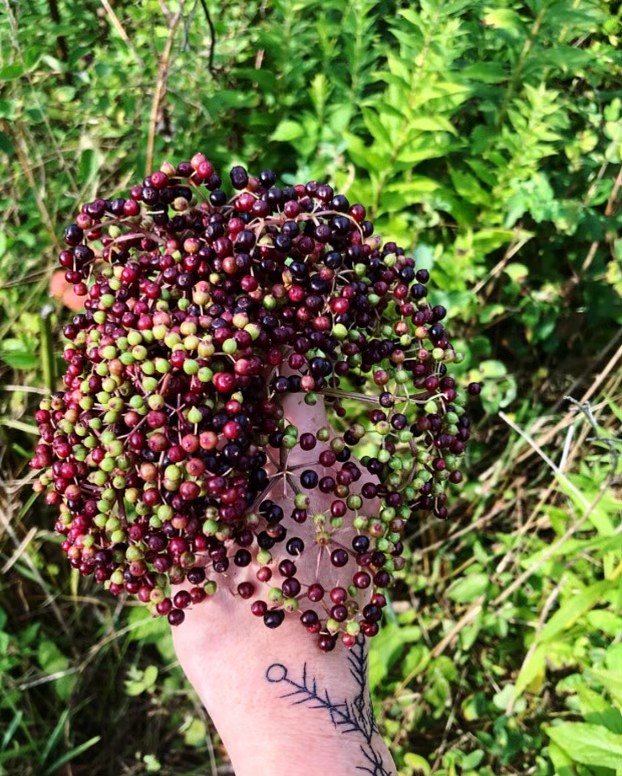
One could spend a lifetime soaking up Elderberry lore. Please, if we have missed something important, let us know!

Elder can be found most prominently in European history and mythos. Elderberry gets its name from the Old English aeld, which means “fire.”  This association with fire comes from archeological evidence suggesting the use of its hollow branches to blow into fire to get it going.

In Celtic Ogham, the Ruis (ᚏ) symbol represents the Elder. In Old Irish, ruise means “red” or “redness”. This Ogham refers to blushing, intense emotions, shame, being red in the face and the glow of anger. It also refers to the practice of using Elderberries to redden one’s cheeks. Ruis shows sacrifice must be made in order to gain. We must face our failures and pain on our path to achievements.

Elder is sacred to many goddess-traditions and especially to the goddess Frau Holle. It is said that Frau Holle lived inside of the elder bush and she has been referred to as the Elder Mother. Frau Holle has been represented in various ways in several cultures and has gone by many names in Germanic mythology including Mother Earth, Perchta, Odin’s Wife, Frigg, Holda, and several more. She has many faces.

Frau Holle is alternately a hag and a nurturing mother, believed to be a bridge between life and death; communicating with and helping souls to pass over. She holds the power to unleash a variety of magicks on all beings and things in the world. Not one part of the Elderberry bush is to be cut or burnt without permission from her. If one does, you may experience her wrath.

In Danish, the Elder Mother is called Hyldemoer and is associated with Elves, commonly perceived as living within the roots of the Elder tree. Elder wood was considered dangerous to use when building cradles for fear that the Elder Mother could torment or steal the child away.

In an ancient Irish collection of stories known as “The Lays of Fionn Mac Cumhail”, there is a tale called “The Headless Phantoms”. In this tale, Fionn stays in a strange and otherworldly house where elder logs are burnt. He spends the evening being forced to face a myriad of horrible monsters.

The Romani were so fearful of the wrath of the Elder Mother that they would go through great lengths to inspect each bundle of firewood to be sure there was no Elder before casting it upon the fire. It is said that “should you doze off under an Elder bush, you may be taken away to the otherworld or you may never wake at all.

The Elder is known as a great protector and powerful ward against evil. Elderberries are still commonly planted in gardens to watch over the plants. Leaves of the bush were placed above doors to ward off witches. Elderberries on windowsills are supposed to keep vampires from entering. The vampire’s compulsive need to count all the berries would keep them occupied until dawn.

It has also been used in a variety of burial rituals. Green Elder branches were placed in fresh graves to protect the dead from evil spirits. Carrying or wearing any part of the Elder would protect you from harm. Elderberry oil (or water) has been used in blessing rituals. Among Christian traditions, the Elder was a fearful symbol of sorrow and death. In medieval times, some Europeans would tie Elderberry twig hoops to parts of the body that had rheumatism and believed that this would cure it. The Romans created hair color from the dark juice of the berries.